

-
Prerna Payal

- Aug 07, 2025
- 3 minutes read
- 84 Views
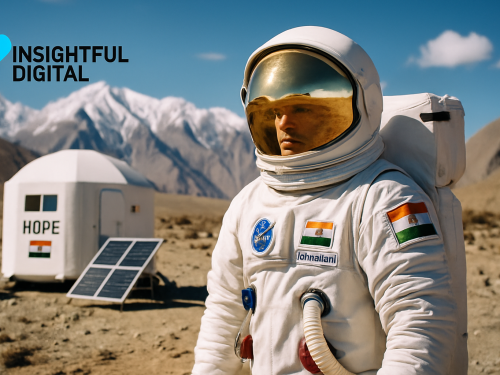
Imagine training for space without leaving Earth. That’s exactly what ISRO is doing with its HOPE Mission in Ladakh. Nestled at over 14,000 feet, this analogue experiment puts Indian astronauts through space-like challenges - isolation, cold, thin air - all to prepare for the upcoming Gaganyaan mission. It’s a bold rehearsal that bridges dreams with real readiness. Ready to dive in?

-
Prerna Payal
- Aug 05, 2025
- 4 minutes read
- 96 Views
On August 5, Earth was recorded spinning unusually faster than usual, leaving scientists puzzled. This mysterious acceleration raises questions about Earth’s rotation patterns and long-term effects. Here’s what you need to know about this rare phenomenon and what might be causing it.

-
DigiPro Consulting

- Aug 04, 2025
- 4 minutes read
- 169 Views
In a remarkable medical breakthrough, a 38-year-old woman from Karnataka’s Kolar district has been identified with a previously unknown blood group antigen-now officially named CRIB. This rare discovery has drawn international attention, reshaping the landscape of transfusion medicine and rare blood research.
-
DigiPro Consulting
- Aug 04, 2025
- 4 minutes read
- 104 Views
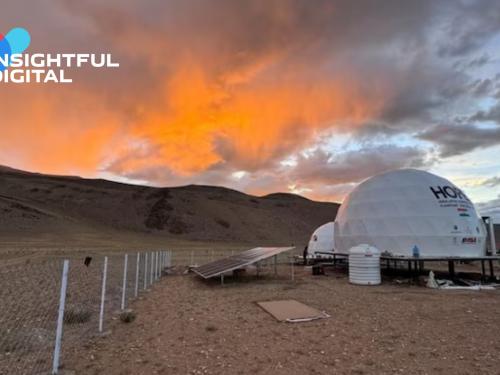
The question of whether humans can survive on Mars has intrigued scientists for decades. With countries intensifying efforts toward interplanetary missions, India has stepped into the spotlight with its Human Outer Planetary Exploration (HOPE) initiative, led by the Indian Space Research Organisation (ISRO). Conducted in the high-altitude region of Ladakh..
-
Prerna Payal
- Aug 04, 2025
- 4 minutes read
- 109 Views
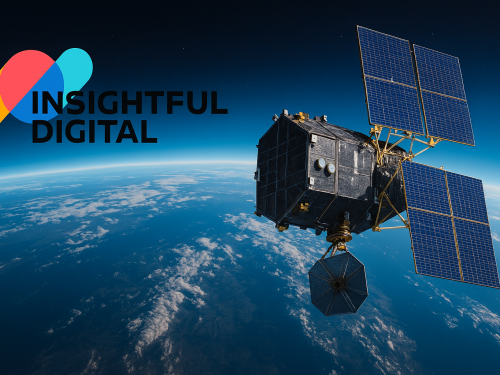
ISRO and U.S.-based SkyFront Labs join hands for the BlueBird satellite launch, offering real-time Earth observation for agriculture, disaster response, and climate monitoring.
-
DigiPro Consulting
- Aug 03, 2025
- 4 minutes read
- 92 Views
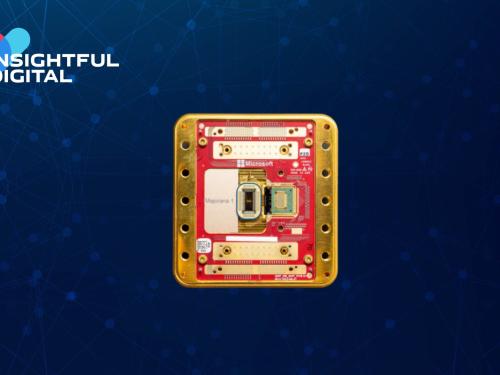
Microsoft has taken a bold leap into the future of quantum computing with the unveiling of Majorana 1, a pioneering quantum chip that introduces the use of topological qubits. Unlike traditional quantum systems plagued by instability and high error rates, this chip harnesses the stability of a new quantum state known as the topological superconductor..

-
DigiPro Consulting
- Aug 03, 2025
- 4 minutes read
- 133 Views
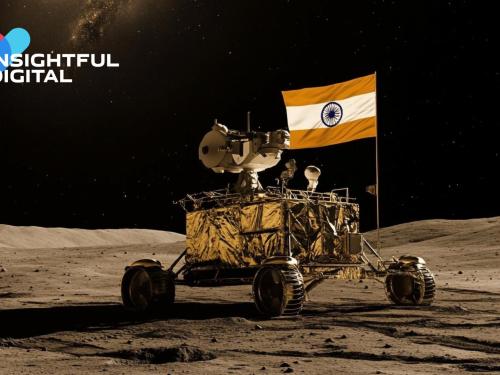
Microsoft has introduced Magma, a next-generation multimodal AI model designed to understand and interact with both visual and linguistic information in real-world settings. Unlike traditional AI models, Magma can analyze images, read texts, and physically interact with its environment through robotic control or digital navigation.
-
DigiPro Consulting
- Aug 03, 2025
- 4 minutes read
- 123 Views
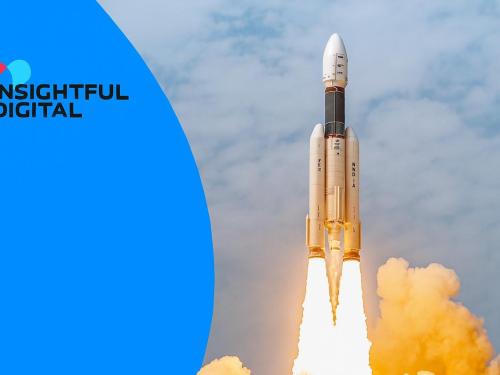
In a historic achievement, Indian scientists have developed the first comprehensive geological map of the Moon’s south pole. This groundbreaking map, created using high-resolution data from the Chandrayaan-3 mission, provides intricate insights into the topography, terrain features, crater distributions, and the geological evolution of the Moon’s least explored region.
-
Prerna Payal
- Aug 02, 2025
- 4 minutes read
- 105 Views
India's ISRO and NASA have launched one of the most powerful Earth-monitoring satellites ever built -NISAR. While it may not have the glamour of moon missions, this radar-loaded satellite has a far more critical job: saving our planet. From tracking floods and landslides to monitoring forests and climate shifts, Mission NISAR is all about turning satellite data into human survival tools.

-
DigiPro Consulting
- Aug 11, 2024
- 3 minutes read
- 298 Views
The Ministry of Railways is set to accelerate the deployment of its indigenous anti-collision system, 'Kavach 4.0.' The plan involves issuing tenders to install this system in 20,000 engines this year. Railway Minister Ashwini Vaishnaw stated that the development of the Kavach system is progressing systematically across the country. The work for making 'Kavach 4.0'...
-
DigiPro Consulting
- Aug 11, 2024
- 2 minutes read
- 576 Views
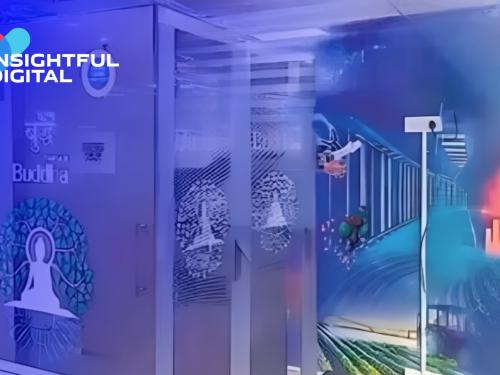
CDAC Patna has achieved a significant milestone by developing Bihar's first supercomputer, 'Param Budh.' This advanced AI-enabled computer was built at a cost of ₹4.5 crore. Param Budh will facilitate research in various important fields such as health, education, agriculture, science, and technology, making complex tasks simpler and more efficient.
-
DigiPro Consulting
- Jul 18, 2024
- 2 minutes read
- 338 Views
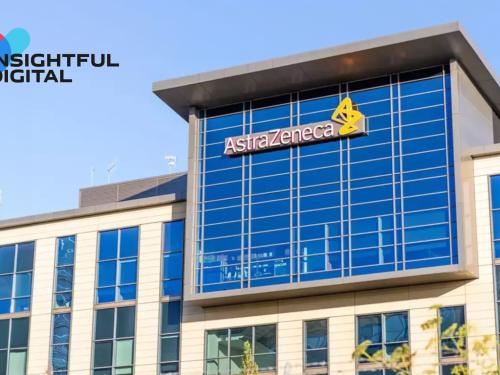
AstraZeneca PLC (LSE/STO/NASDAQ: AZN), a global biopharmaceutical company, has announced plans to invest $1.5 billion in the construction of a new manufacturing facility dedicated to the production of antibody drug conjugates (ADCs) in Singapore. This initiative marks the company's first venture into the manufacturing sector in Singapore and is expected to be fully operational by 2029.