

Farming is never easy. It requires the right balance of hard work, favorable weather, and expected profits. Among these challenges, one of the biggest concerns for farmers is protecting crops from harmful pests. Traditionally, most farmers rely on chemical pesticides to deal with insect attacks. However, pesticides are expensive, harmful to human health, and leave toxic residues in food, soil, and water.
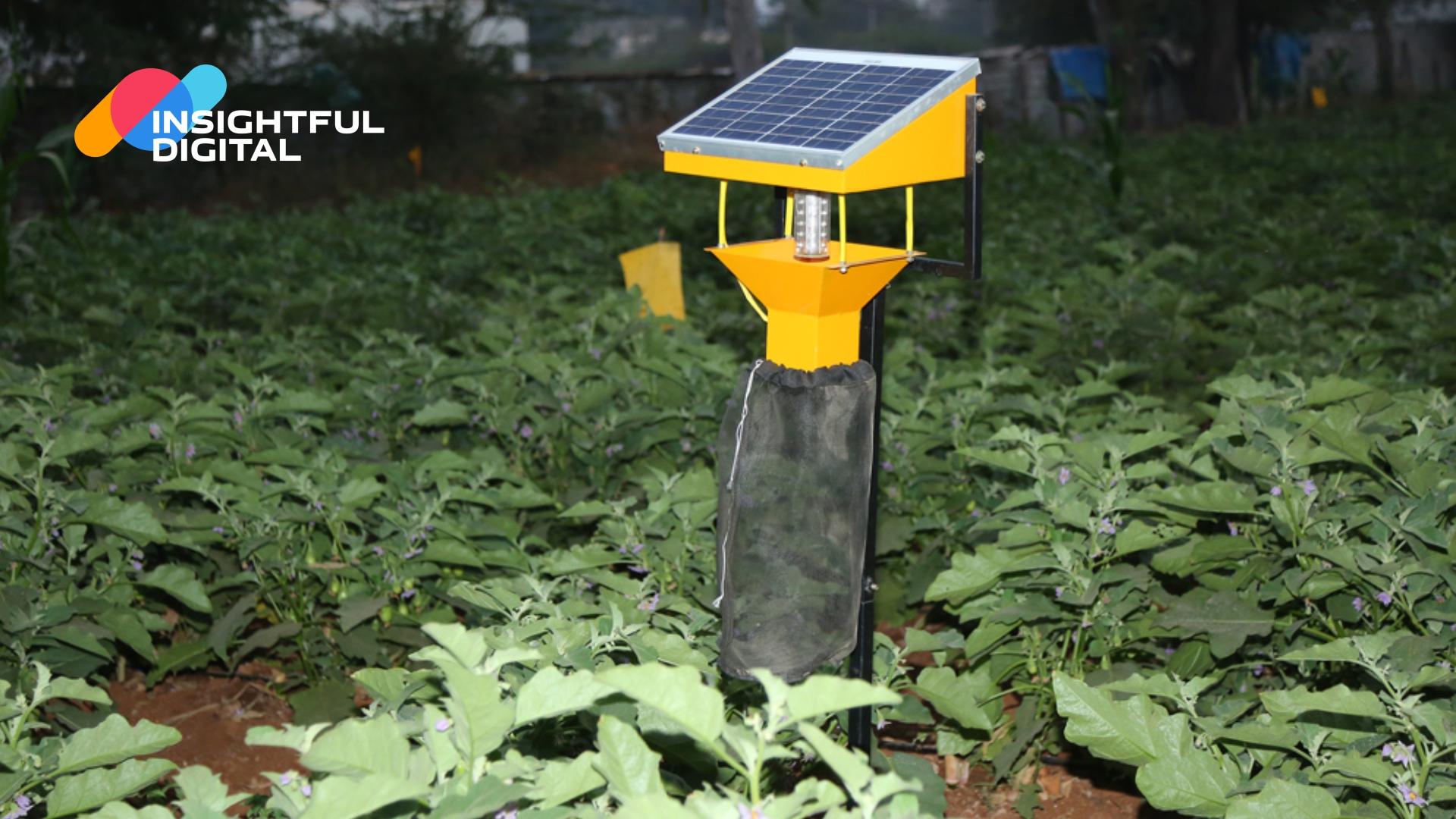
To address this issue, farmers now have access to a new, cost-effective, and eco-friendly solution—the Solar Traps.
What is a Solar Trap?
A solar trap is a device powered by solar energy or rechargeable batteries that emits light at night. Insects are naturally attracted to the light and get trapped inside the device. Over time, the pest population in the field decreases significantly, keeping crops safe without the use of toxic chemicals.
Key Benefits of Solar Traps
1) 100% Chemical-Free
Unlike pesticides, solar traps do not release harmful chemicals. This means your crops, soil, water, and air remain uncontaminated. It is especially beneficial for farmers practicing organic farming.
2) Low-Cost, Long-Term Solution
Once installed, solar traps work for years. They require minimal maintenance and no electricity costs, as they run entirely on sunlight. This makes them an economical option for small and large farmers alike.
3) No Need for Frequent Spraying
With solar traps, the hassle of spraying chemical pesticides every few days is eliminated. The device automatically attracts and traps pests at night, reducing the labor and cost involved in pest control.
4) Eco-Friendly Technology
Solar traps do not pollute the soil, water, or air. They promote sustainable agriculture and help maintain ecological balance by reducing chemical dependency.
5) Effective for All Crops
Whether you grow rice, wheat, cotton, tomatoes, chili, mango, or grapes, solar traps are equally effective. They work across different cropping systems and regions.
How to Use a Solar Trap Effectively
- Placement: Install the trap in the center or along the edges of the field.
- Number of Devices: For best results, use 1–2 traps per acre.
- Operation: Switch it on in the evening so that it works throughout the night to attract pests.
- Daily Maintenance: Empty the trapped insects in the morning.
- Regular Cleaning: Clean the trap once every 7–10 days to ensure the light remains bright and effective.
Important Tips for Farmers
- Avoid using chemical pesticides alongside solar traps, as it may reduce their effectiveness.
- Solar traps are an ideal solution for organic farming—farmers looking to grow crops without harmful chemicals should adopt them.
- Share this technology with neighboring farmers so that pest control can be implemented across the entire village, reducing infestation risks.
Why Solar Traps Are the Future of Crop Protection
Modern agriculture requires smart, sustainable, and affordable solutions. Solar traps save money by reducing pesticide costs, improve crop quality by preventing chemical contamination, and ensure better market prices for the produce.
They represent a simple yet powerful tool for farmers—low investment, long-term benefits, and environmentally safe. By adopting solar traps, farmers can move away from harmful chemical pesticides and embrace a modern, natural, and sustainable way of farming.
Conclusion
Solar traps are more than just a pest-control device—they are a step toward safer, healthier, and more profitable farming. They lower input costs, protect soil and water, and ensure that consumers get chemical-free food.
👉 Farmers, it’s time to upgrade your fields with smart and sustainable technology. Install Solar Traps today and protect your crops from pests—without poison, without pollution, and with greater profits.
Objective Questions for Competitive Exams
Q.1. What powers a typical solar trap used in fields?
a) Grid electricity
b) Solar energy or rechargeable batteries
c) Diesel generator
Answer: b) Solar energy or rechargeable batteries
Q.2. What is the recommended number of solar traps per acre for best results?
a) 1–2 traps
b) 5–6 traps
c) 10–12 traps
Answer: a) 1–2 traps
Q.3. When should a solar trap be switched on to attract pests effectively?
a) Early morning
b) Afternoon
c) Evening/night
Answer: c) Evening/night
Q.4. Which of the following is a major advantage of solar traps over chemical pesticides?
a) Higher toxicity
b) Leaves no chemical residue
c) Requires frequent spraying
Answer: b) Leaves no chemical residue
Q.5. Which practice should be avoided alongside solar traps to maintain effectiveness?
a) Night-time operation
b) Regular cleaning every 7–10 days
c) Spraying chemical pesticides
Answer: c) Spraying chemical pesticides
Q.6. Solar traps are suitable for which of the following crop types?
a) Only rice fields
b) Only fruit orchards
c) A wide range of crops like rice, wheat, cotton, tomatoes, chili, mango, and grapes
Answer: c) A wide range of crops like rice, wheat, cotton, tomatoes, chili, mango, and grapes