
Every year on September 21st, the world observes the International Day of Peace. More than just a symbolic gesture, this day, established by the United Nations, is a globally shared date for humanity to commit to peace above all differences and to contribute to building a culture of peace. It is a day of cease-fire and non-violence, a moment of unity, and a powerful call to action for a world free from conflict and fear.
The Genesis: A United Nations Resolution
The journey of the International Day of Peace began in 1981. The United Nations General Assembly, through Resolution 36/67, declared that the third Tuesday of September—the opening day of its regular annual sessions—would be officially dedicated to commemorating and strengthening the ideals of peace.
This initial declaration was a product of the era, a time of intense Cold War tensions. The day was conceived as an opportunity to "commemorate and strengthen the ideals of peace both within and among all nations and peoples."
A Fixed Date and a Profound Shift: From 2002 Onwards
Two decades later, the day was given a new, more powerful identity. In 2001, the UN General Assembly unanimously voted for Resolution 55/282, which officially fixed the date as September 21 annually, starting from 2002.
This resolution did more than just change the calendar; it redefined the day's purpose. The Assembly declared that the International Day of Peace would henceforth be observed as "a day of global ceasefire and non-violence," an invitation to all nations and people to honour a cessation of hostilities throughout the day. This transformed the day from a symbolic observance into a practical, if brief, intervention for humanitarian aid, diplomacy, and a tangible pause in fighting.
The Role of the Peace Bell Ceremony
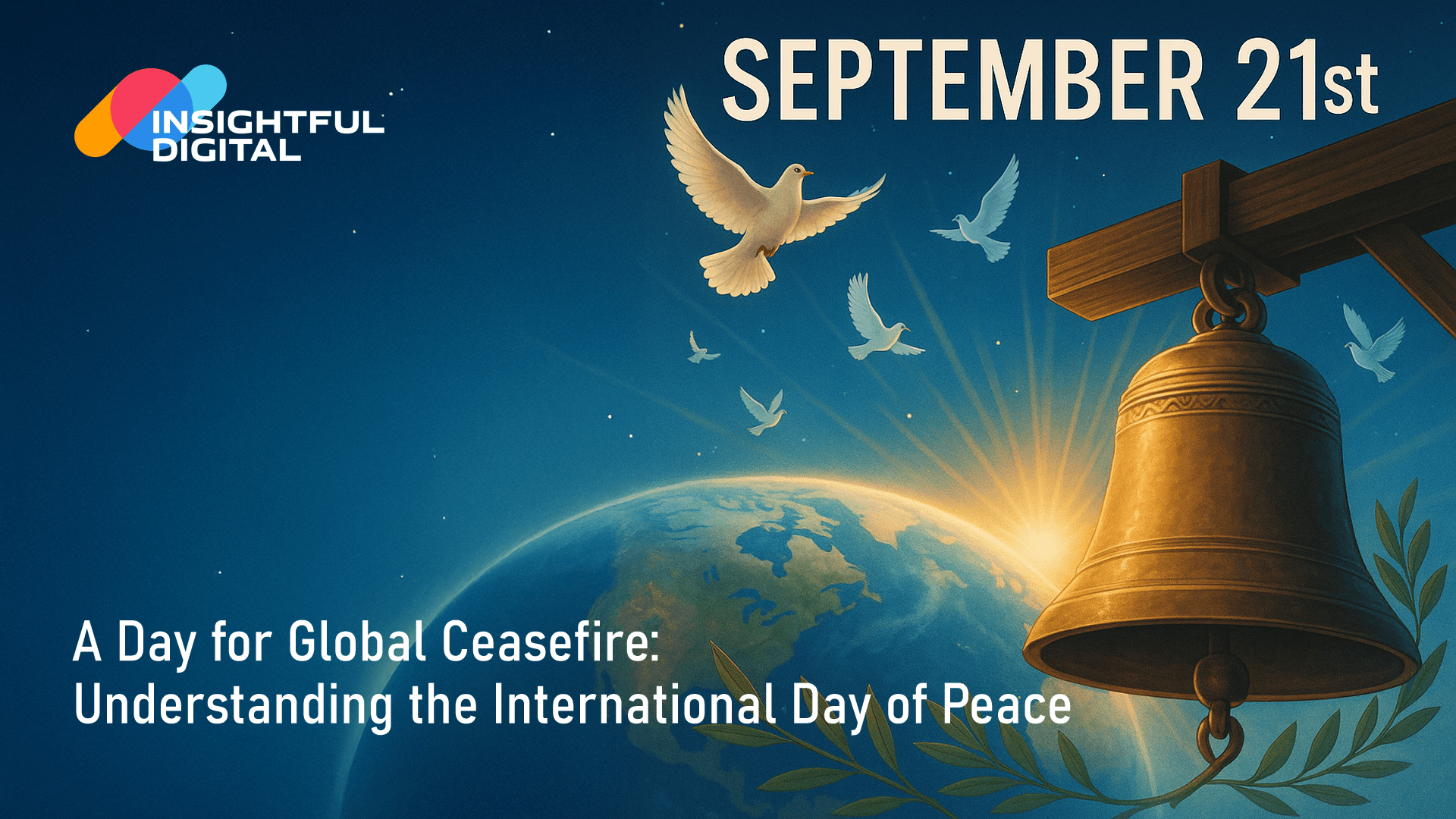
A central and poignant tradition of the day is the ceremony at the United Nations headquarters in New York. The Secretary-General rings the Japanese Peace Bell, a gift from Japan to the UN in 1954. This bell was cast from coins collected by children from 60 different countries, symbolizing a truly global desire for peace.
The bell’s inscription reads, “Long live absolute world peace.” Its solemn toll serves as a reminder of the human cost of war and the enduring hope for a peaceful future. A similar ceremony is often held at the Peace Bell in Olympic Park, a gift from UN Association of Korea.
Annual Themes: Focusing Our Efforts for Peace
Each year, the UN selects a specific theme for the International Day of Peace to focus attention and drive action on a particular aspect of the global peace agenda. These themes have evolved to address contemporary challenges:
2023: "Actions for Peace: Our Ambition for the #GlobalGoals" – Highlights the link between peace and sustainable development and calls for actions that support the UN's Sustainable Development Goals (SDGs).
2022: "End Racism. Build Peace." – Emphasizes combating racism and discrimination as root causes of conflict and violence.
2021: "Recovering Better for an Equitable and Sustainable World" – In the wake of COVID-19, stresses equitable healthcare and opportunity as pillars of a more peaceful world.
2020: "Shaping Peace Together" – Marked the day’s 20th anniversary by focusing on compassion, kindness, and hope during the global pandemic.
Why It Matters: More Than Just a Symbol
In a world where headlines are often dominated by conflict, the International Day of Peace serves as a crucial intervention with tangible, real-world impacts that go far beyond symbolism.
A Practical Humanitarian Pause: The UN's call for a 24-hour global ceasefire is one of the day's most concrete objectives. While challenging to enforce universally, there have been instances where it has facilitated critical humanitarian efforts. In past years, the "day of tranquility" has been used in conflict zones to:
Enable Vaccination Campaigns: Organizations like UNICEF and WHO have negotiated temporary pauses to immunize children against preventable diseases such as polio and measles in war-torn regions.
Deliver Aid: Aid convoys can access besieged cities and remote areas to deliver food, clean water, medical supplies, and other essentials to civilians cut off by fighting.
Evacuate the Wounded and Vulnerable: The temporary window allows safe evacuation of critically injured people and civilians—including women and children—from active front lines to safer locations or field hospitals.
A Catalyst for Dialogue and Diplomacy: A single day of silence can build confidence, opening the door to negotiations, even if initially to facilitate humanitarian aid. This pause can be a first step toward a longer truce.
Global Awareness and Grassroots Education: The day offers a unified platform for educators, community leaders, and NGOs. Schools use curricula on conflict resolution and non-violence; museums spotlight peacemakers like Mahatma Gandhi and Nelson Mandela—sowing the seeds of peace for the next generation.
A Moment for Critical Reflection and Advocacy: Governments, institutions, and citizens pause to assess the state of peace, identify overlooked conflicts, and consider how policies, investments, or consumption may contribute to instability—thereby redirecting resources toward sustainable peacebuilding.
A Unifying Force for Civil Society: The day fosters global solidarity, connecting local efforts—from tackling gang violence to reducing religious intolerance—to a larger movement and energizing grassroots organizations.
How to Observe the International Day of Peace: A Practical Guide
On a Personal & Community Level:
Join the "Peace Wave" of Silence: Observe a minute of silence at 12:00 noon local time, creating a rolling wave of reflection around the globe.
Educate Yourself Deeply: Use UN, Amnesty International, or International Crisis Group resources to learn about an ongoing conflict—its root causes, history, and human stories.
Host a "Peace Meal" or Dialogue Circle: Invite diverse viewpoints to a shared meal focused on listening and common values. Prompt with: “What does a peaceful community look like to you?”
Engage in Artistic Expression: Create and share art, poetry, music, or short films aligned with the year’s theme using #PeaceDay and #InternationalDayOfPeace.
On an Organizational & Advocacy Level:
Support Peacebuilding Organizations: Donate to or volunteer with groups such as Doctors Without Borders, International Red Cross/Crescent, Search for Common Ground, Crisis Group, Amnesty International, Human Rights Watch, or local mediation initiatives.
Advocate to Your Representatives: Urge support for diplomacy, humanitarian aid, and policies that address root causes like climate change, inequality, and arms proliferation.
Use Your Professional Platform: Teachers can craft lessons; business leaders can facilitate ethics discussions; journalists can highlight peacebuilders and solutions.
Promote Digital Peace: Share verified, constructive content; counter hate speech with facts and messages of tolerance.
The Enduring Message
The International Day of Peace reaffirms the UN’s founding mission “to save succeeding generations from the scourge of war.” Peace is an active, ongoing process requiring commitment from every global citizen. The day invites us to imagine a harmonious world—and challenges us to build it, one action, one conversation, and one day of ceasefire at a time. On September 21st, we are all invited to be part of that process.
Objective Questions (MCQs)
Q1. In which year did the UN first establish the International Day of Peace?
a) 1945
b) 1981
c) 2001
d) 2002
Answer: b) 1981
Q2. Which resolution initially created the observance tied to the UN’s opening session?
a) 55/282
b) 36/67
c) 1325
d) 217 A (III)
Answer: b) 36/67
Q3. From which year was Peace Day fixed on September 21 annually?
a) 1999
b) 2001
c) 2002
d) 2015
Answer: c) 2002
Q4. Resolution 55/282 redefined the day primarily as:
a) A fundraising campaign
b) A day of global ceasefire and non-violence
c) A cultural festival
d) A diplomatic summit only
Answer: b) A day of global ceasefire and non-violence
Q5. What object does the UN Secretary-General ring during the ceremony in New York?
a) Liberty Bell replica
b) Japanese Peace Bell
c) Temple gong
d) World Harmony Chime
Answer: b) Japanese Peace Bell
Q6. The Peace Bell was cast from coins collected by children of how many countries?
a) 30
b) 45
c) 60
d) 100
Answer: c) 60
Q7. Which 2023 theme linked peace with the SDGs?
a) End Racism. Build Peace.
b) Shaping Peace Together
c) Recovering Better for an Equitable and Sustainable World
d) Actions for Peace: Our Ambition for the #GlobalGoals
Answer: d) Actions for Peace: Our Ambition for the #GlobalGoals
Q8. Which organizations have used the day to negotiate immunization pauses in conflict zones?
a) UNESCO and UNEP
b) UNICEF and WHO
c) FAO and UNDP
d) ILO and WTO
Answer: b) UNICEF and WHO
Q9. Which of the following is not listed as a typical benefit of the 24-hour ceasefire?
a) Safe evacuations
b) Delivery of aid
c) Launching new military offensives
d) Vaccination campaigns
Answer: c) Launching new military offensives
Q10. The day helps civil society by creating a sense of:
a) Isolation
b) Global solidarity
c) Competition
d) Neutrality
Answer: b) Global solidarity
Q11. One recommended personal observance is to:
a) Boycott all news
b) Observe a minute of silence at noon
c) Travel to the UN HQ
d) Post any content without verification
Answer: b) Observe a minute of silence at noon
Q12. The day ultimately reminds us that peace is:
a) Passive and inevitable
b) A one-time event
c) An active, ongoing process
d) Solely a government responsibility
Answer: c) An active, ongoing process