
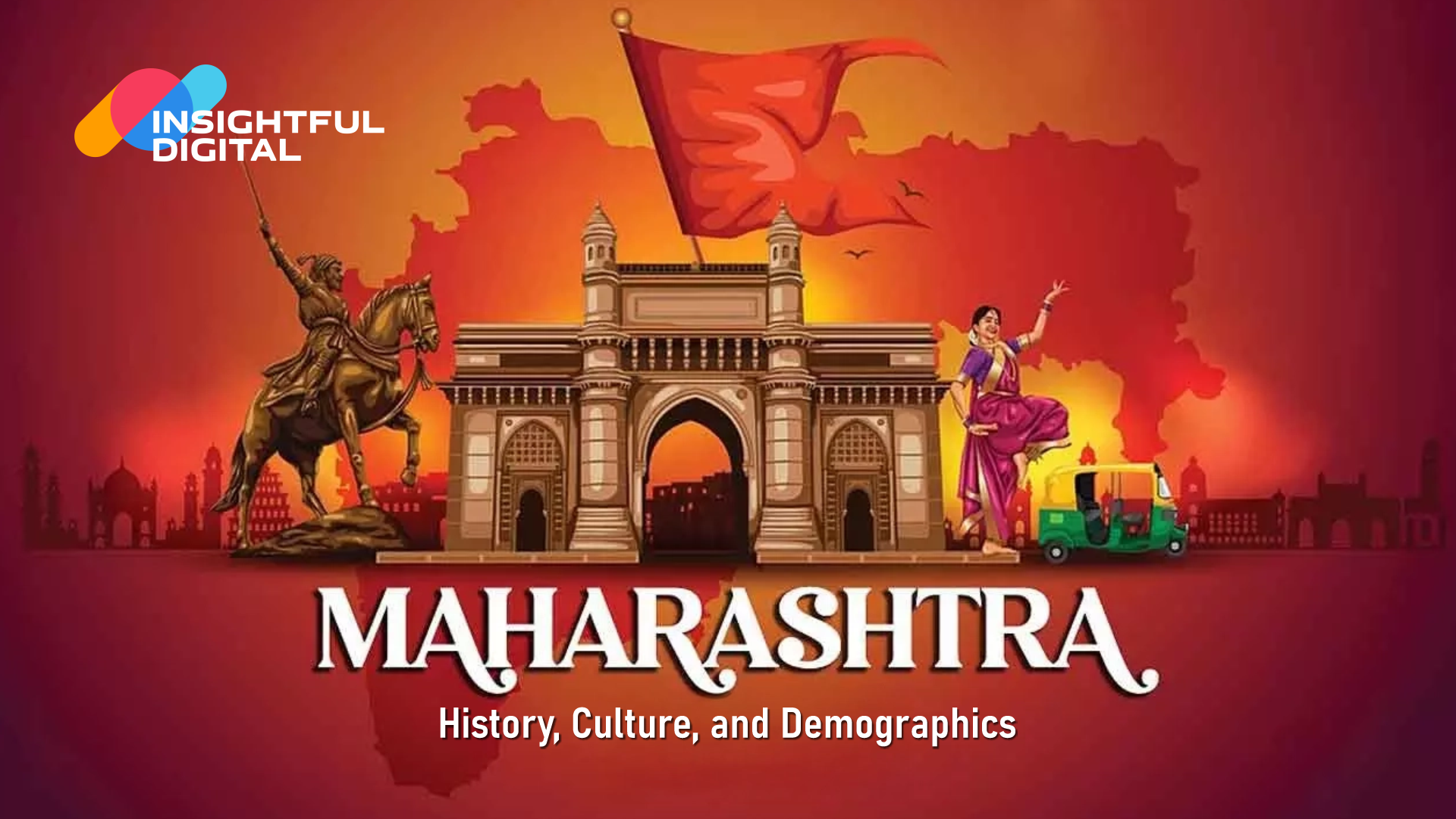
Maharashtra is located in western and central India. It is home to Mumbai, the financial capital of the country, and the birthplace of the Maratha Empire. The state is renowned for its historical monuments, UNESCO World Heritage sites, fertile plains, rich coastline, modern industries, and cultural vibrancy.
The state was formed on 1st May 1960 after the division of the Bombay State into Maharashtra and Gujarat. Its capital is Mumbai, while Nagpur functions as the winter capital. Maharashtra is also home to Pune, a cultural and IT hub, and Nashik, known as the “Wine Capital of India.”
Historical Significance
- Ancient caves: Ajanta–Ellora (UNESCO World Heritage Sites), Elephanta Caves, Karla and Bhaja caves.
- Ruling dynasties: Satavahanas, Chalukyas, Rashtrakutas, Yadavas.
- Foundation of the Maratha Empire by Chhatrapati Shivaji Maharaj in the 17th century.
- Colonial era: Mumbai emerged as a global industrial and trading hub under the British.
- Freedom fighters: Lokmanya Tilak, Gopal Krishna Gokhale, Veer Savarkar, and Dr. B.R. Ambedkar shaped India’s independence and social reforms.
Geography & Location
- Area: ~307,713 sq. km (third largest in India).
- Borders: Madhya Pradesh & Gujarat (north), Karnataka & Goa (south), Chhattisgarh & Telangana (east), Arabian Sea (west).
- Physiography: Western Ghats (Sahyadris), Deccan Plateau, Konkan coast.
- Rivers: Godavari, Krishna, Bhima, Wardha, Tapi, Mula–Mutha.
- Climate: Tropical monsoon; hot summers, heavy rainfall (June–Sep), mild winters.
- Important Cities: Mumbai, Pune, Nagpur, Nashik, Aurangabad, Solapur, Kolhapur, Amravati.
- Districts (36): Ahmednagar, Akola, Amravati, Aurangabad (Chhatrapati Sambhajinagar), Beed, Bhandara, Buldhana, Chandrapur, Dhule, Gadchiroli, Gondia, Hingoli, Jalgaon, Jalna, Kolhapur, Latur, Mumbai City, Mumbai Suburban, Nagpur, Nanded, Nandurbar, Nashik, Osmanabad (Dharashiv), Palghar, Parbhani, Pune, Raigad, Ratnagiri, Sangli, Satara, Sindhudurg, Solapur, Thane, Wardha, Washim, Yavatmal.
Culture & Traditions
- Performing Arts: Lavani, Tamasha, Powada (ballads), Koli dance.
- Festivals: Ganesh Chaturthi, Gudi Padwa, Diwali, Makar Sankranti, Holi, Eid, Christmas.
- Cuisine: Puran Poli, Misal Pav, Vada Pav, Bhakarwadi, Pav Bhaji, Pitla–Bhakri, Modak (especially during Ganeshotsav).
- Handicrafts: Paithani Sarees (Paithan), Kolhapuri Chappals, Warli Paintings.
Language & Literature
- Official Language: Marathi.
- Other Languages: Hindi, Urdu, Gujarati, Konkani, English.
- Notable Writers & Saints: Sant Dnyaneshwar (Bhavarth Deepika), Sant Tukaram (Abhangas), Lokmanya Tilak (Kesari), P.L. Deshpande.
- Folk Literature: Owis, Abhangas, Powadas.
Demographics & Society
- Population: ~125 million (2011: 112.3 million).
- Literacy Rate: ~82%.
- Major Religions: Hinduism, Islam, Buddhism, Christianity, Jainism, Zoroastrianism (Parsis).
- Society: Known for social reform movements – Dalit movement by Dr. Ambedkar, cooperative movement in sugar sector.
Economy & Development
- Agriculture: Sugarcane, cotton, soybean, grapes, rice, jowar, bajra.
- Industries: IT & software (Pune), Bollywood & entertainment (Mumbai), textiles (Solapur, Nagpur), sugar mills (western Maharashtra), automobiles (Pune, Nashik).
- Minerals: Coal (Chandrapur), manganese, iron ore.
- Tourism: Ajanta–Ellora caves, Shani Shingnapur, Trimbakeshwar, Mahabaleshwar, Lonavala, Alibaug, Elephanta caves.
Education & Institutions
- Universities: University of Mumbai, Savitribai Phule Pune University, Nagpur University, Aurangabad University.
- National Institutions: IIT Bombay, Tata Institute of Social Sciences (TISS), Film and Television Institute of India (FTII, Pune), National Chemical Laboratory (NCL), IIM Nagpur.
Conclusion
Maharashtra represents a perfect blend of history, culture, and modern progress. From the valor of the Marathas under Shivaji Maharaj to Mumbai’s global financial power, the state stands as a pillar of India’s diversity and strength. With strong contributions in literature, politics, cinema, IT, industry, and social reform, Maharashtra remains one of the most dynamic states of India.
Objective Questions for Competitive Exams
Q1. Maharashtra was formed on which date?
a) 26th January 1950
b) 1st May 1960
c) 15th August 1947
d) 14th April 1952
Answer: b) 1st May 1960
Q2. What is the capital of Maharashtra?
a) Pune
b) Nagpur
c) Mumbai
d) Nashik
Answer: c) Mumbai
Q3. Which city is known as the “Wine Capital of India”?
a) Kolhapur
b) Nashik
c) Solapur
d) Pune
Answer: b) Nashik
Q4. Who founded the Maratha Empire?
a) Peshwa Bajirao I
b) Chhatrapati Shivaji Maharaj
c) Sambhaji Maharaj
d) Shahu Maharaj
Answer: b) Chhatrapati Shivaji Maharaj
Q5. Ajanta and Ellora caves are located in which district?
a) Nashik
b) Aurangabad (Chhatrapati Sambhajinagar)
c) Pune
d) Kolhapur
Answer: b) Aurangabad (Chhatrapati Sambhajinagar)
Q6. Which is the winter capital of Maharashtra?
a) Pune
b) Nagpur
c) Solapur
d) Nashik
Answer: b) Nagpur
Q7. Which dance form is associated with Maharashtra?
a) Bharatanatyam
b) Kathak
c) Lavani
d) Odissi
Answer: c) Lavani
Q8. Which festival is celebrated most prominently in Maharashtra?
a) Bihu
b) Ganesh Chaturthi
c) Pongal
d) Onam
Answer: b) Ganesh Chaturthi
Q9. Which famous footwear is traditional to Maharashtra?
a) Mojari
b) Kolhapuri Chappal
c) Jutti
d) Khadau
Answer: b) Kolhapuri Chappal
Q10. Which saint is associated with “Abhangas”?
a) Sant Kabir
b) Sant Tukaram
c) Guru Nanak
d) Mirabai
Answer: b) Sant Tukaram
Q11. Which city is known as the cultural capital of Maharashtra?
a) Kolhapur
b) Pune
c) Solapur
d) Nashik
Answer: b) Pune
Q12. Bollywood, India’s largest film industry, is based in:
a) Nagpur
b) Pune
c) Mumbai
d) Nashik
Answer: c) Mumbai