

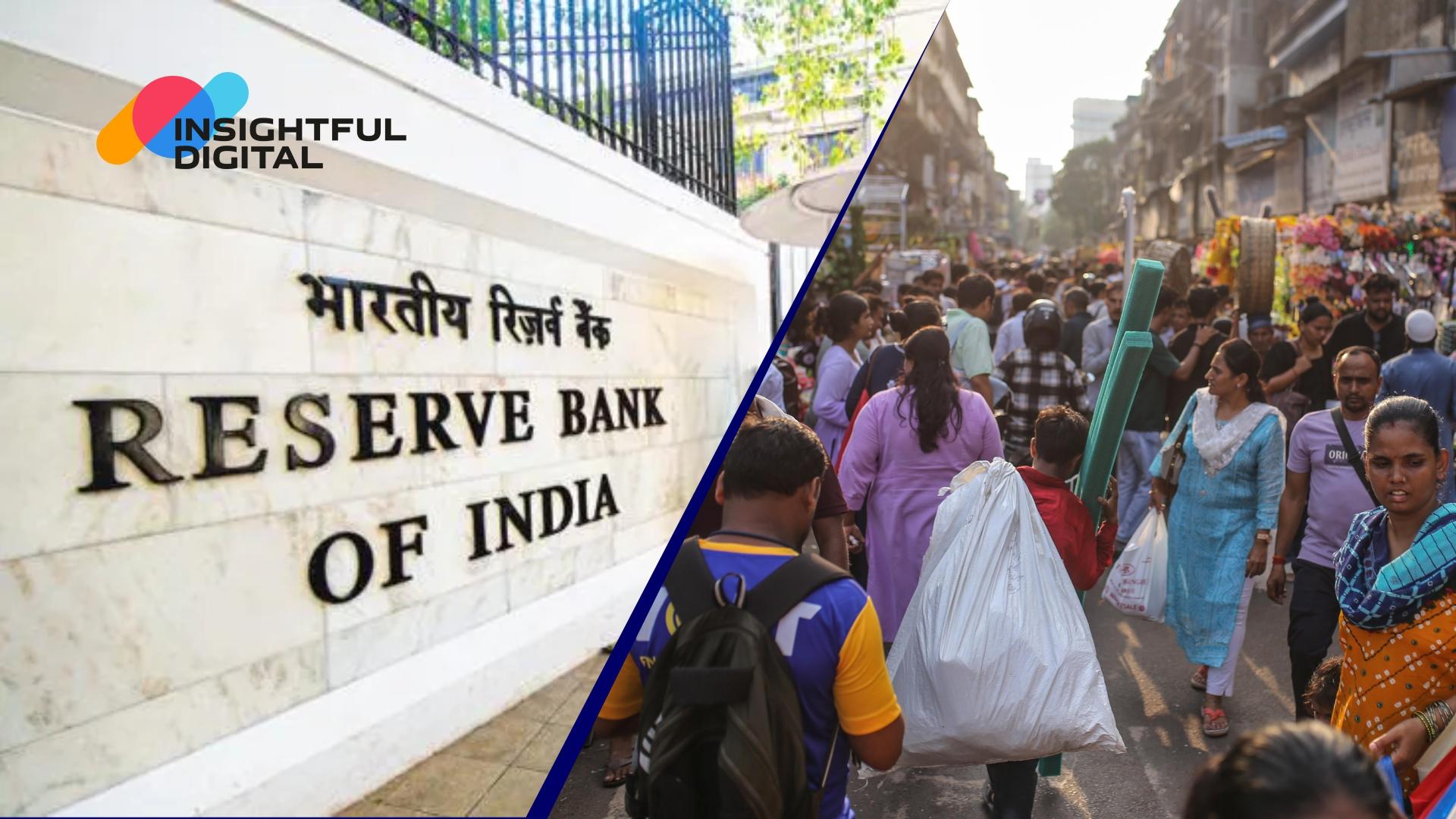
The Reserve Bank of India (RBI) has rolled out the September 2025 round of its Inflation Expectations Survey of Households (IESH), covering 19 major Indian cities. Conducted every quarter, this survey is a crucial tool that captures household-level perceptions about present inflation conditions and expectations of future price trends. The insights obtained provide a strong empirical base for monetary policy decisions, particularly for inflation targeting, interest-rate management, and economic stability.
Purpose and Significance of the IESH
The main purpose of the IESH is to understand how common households experience and anticipate inflation in their daily lives. Unlike headline inflation data published by the National Statistical Office (NSO), this survey provides a sentiment-driven, grassroots-level perspective on price movements. It asks people:
• How they view current inflation in essential goods and services.
• What they expect prices to be like in the next three months and the next one year.
• Whether they anticipate prices of food, fuel, medicines, transport, and education to rise, remain stable, or decline.
By combining this perception data with official statistics, the RBI creates a more comprehensive picture of inflationary pressures. This ensures that monetary policies are not based solely on numbers but also on consumer experiences and expectations.
Cities Covered – Representing India’s Diversity
The September 2025 round of IESH is being conducted across 19 cities, selected to reflect India’s diverse consumption habits and regional dynamics:
Metro Cities: Mumbai, Delhi, Chennai, Bengaluru, Kolkata, Hyderabad
Other Capitals and Key Cities: Ahmedabad, Bhopal, Bhubaneswar, Chandigarh, Guwahati, Jaipur, Jammu, Lucknow, Nagpur, Patna, Raipur, Ranchi, Thiruvananthapuram
This balanced city selection helps policymakers assess inflationary trends not only in metropolitan hubs but also in Tier-2 and Tier-3 regions, where consumption behavior may differ significantly.
Survey Methodology – How Data Are Collected
The RBI has appointed a Mumbai-based professional agency to collect data. The methodology is designed to ensure accuracy, reliability, and inclusivity:
• Face-to-Face Interviews: Enumerators visit selected households and ask structured questions on price experiences.
• Door-to-Door Approach: Ensures direct interaction and collection of unbiased, first-hand responses.
• Online Participation: The RBI also invites voluntary responses through its official website, enabling broader citizen involvement.
• Structured Questionnaires: Responses are categorized into qualitative (price will rise/fall) and quantitative (by what percentage) inputs.
Why the IESH Is Important for Policymaking
Inflation management is at the core of RBI’s monetary policy. The survey helps in multiple ways:
• Monetary Policy Calibration: Helps the RBI adjust the repo rate, reverse repo rate, and cash reserve ratio in alignment with inflation expectations.
• Consumer Behavior Insight: If households expect prices to rise, they may advance purchases, increasing demand, which can fuel inflation further.
• Forward-Looking Policy: Enables policymakers to act pre-emptively rather than reactively, ensuring better economic stability.
Impact on Everyday Citizens
The survey highlights the lived experiences of ordinary households. Respondents are asked about:
• Prices of essential goods like food grains, vegetables, cooking oil, and medicines.
• Fuel and energy costs that directly impact transport and electricity bills.
• Services such as healthcare, school/college fees, and public transport fares.
• General perception of whether the overall cost of living is rising, stable, or falling.
These insights make sure that policies are not just data-driven but also people-centric, addressing real challenges faced by citizens.
Conclusion
By conducting the IESH, the RBI ensures that household expectations form a central part of the economic policy dialogue. This integration of public perception with macroeconomic analysis strengthens inflation forecasting and makes monetary policies more effective. Ultimately, the survey bridges the gap between statistical inflation numbers and lived inflation experiences, making it a critical instrument for India’s economic stability.
Objective Questions for Competitive Exams
Q.1. What is the key purpose of the RBI’s Inflation Expectations Survey of Households (IESH)?
a) To measure GDP growth by states
b) To capture household perceptions of inflation
c) To track international trade flows
Answer: b) To capture household perceptions of inflation
Objective Questions for Competitive Exams
Q.2. How often is the IESH conducted?
a) Monthly
b) Quarterly
c) Annually
Answer: b) Quarterly
Objective Questions for Competitive Exams
Q.3. Which horizons of future price expectations are covered in the IESH?
a) Next one month and next six months
b) Next three months and next one year
c) Next five years
Answer: b) Next three months and next one year
Objective Questions for Competitive Exams
Q.4. Which of the following is not among the 19 cities covered in the IESH?
a) Mumbai
b) Jaipur
c) London
Answer: c) London
Objective Questions for Competitive Exams
Q.5. Who collects the survey data on behalf of the RBI?
a) National Statistical Office (NSO)
b) A Mumbai-based agency appointed by RBI
c) Ministry of Finance officials
Answer: b) A Mumbai-based agency appointed by RBI
Objective Questions for Competitive Exams
Q.6. Why are household perceptions of inflation important for the RBI?
a) They directly affect currency exchange rates
b) They shape consumer behavior and help in calibrating monetary policy
c) They are used for preparing the Union Budget
Answer: b) They shape consumer behavior and help in calibrating monetary policy