
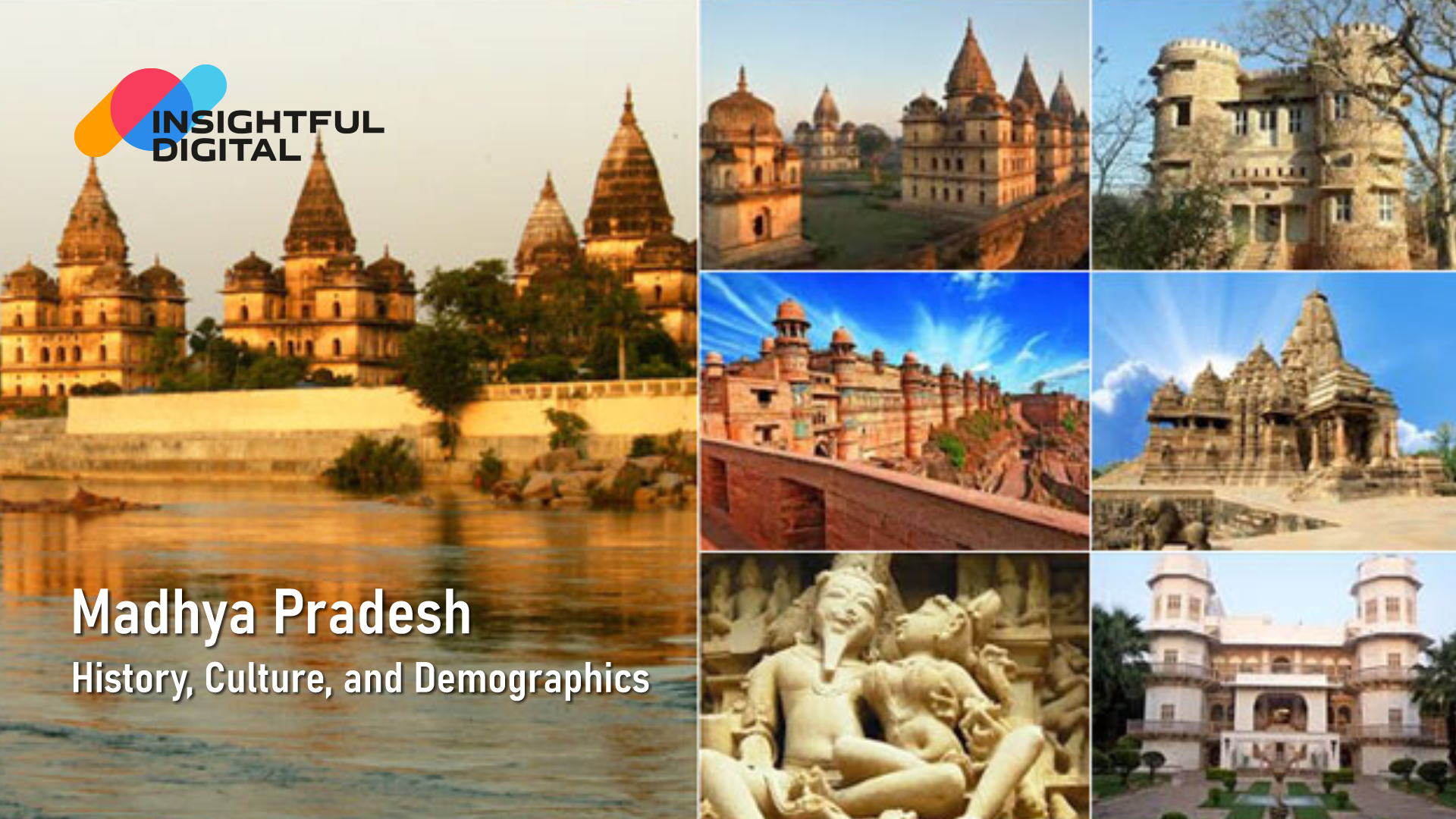
Situated in the center of the Indian subcontinent, Madhya Pradesh (MP) is often called the “Heart of India.” It is a state of plateaus and valleys framed by the Vindhya and Satpura ranges, nourished by the Narmada and its tributaries, and celebrated for UNESCO World Heritage Sites such as Khajuraho temples, Sanchi Stupa, and the Bhimbetka rock shelters.
The state was formed on 1 November 1956 under the States Reorganisation Act; later, on 1 November 2000, Chhattisgarh was carved out of MP. Its capital is Bhopal, while Indore is the largest city and industrial–commercial center. Madhya Pradesh is known for its forest wealth, mineral resources, agriculture (especially soybean and pulses), handloom traditions, classical music legacies, and some of India’s best wildlife parks.
For exam aspirants, MP is significant for its ancient and medieval heritage, Buddhist, Jain and Hindu monuments, freedom-movement contributions, large tribal population, biodiversity, and central role in India’s transport and trade networks.
Historical Significance
- Ancient centers like Ujjain (Avanti) linked to the Mauryan–Gupta eras; poet Kālidāsa is traditionally associated with Ujjain.
- UNESCO sites: Sanchi Stupa (Buddhist heritage), Khajuraho (Chandela temples), and Bhimbetka (prehistoric rock art).
- Medieval strongholds: Gwalior Fort, Mandu (Dhar), Orchha palaces/temples.
- Maratha and Bundela influences shaped politics and architecture across Malwa and Bundelkhand.
- Freedom movement: leaders and movements in Jabalpur, Indore, and Gwalior regions contributed to national struggle.
Geography & Location
- Area: ~308,000 sq. km (second largest by area after Rajasthan).
- Borders: Uttar Pradesh (north & northeast), Chhattisgarh (east & southeast), Maharashtra (south), Gujarat (west), Rajasthan (northwest).
- Physiography: Vindhya & Satpura ranges, Malwa Plateau, Narmada Rift Valley, Bundelkhand highlands, Baghelkhand.
- Rivers: Narmada, Chambal, Betwa, Son, Ken, Tawa, Shipra, Tapti (originates in MP).
- Climate: Tropical–subtropical; hot summers, monsoon rains (Jun–Sep), mild winters.
- Important Cities: Bhopal, Indore, Gwalior, Jabalpur, Ujjain, Sagar, Rewa, Satna, Ratlam, Khandwa.
- Districts (55): Agar Malwa, Alirajpur, Anuppur, Ashoknagar, Balaghat, Barwani, Betul, Bhind, Bhopal, Burhanpur, Chhatarpur, Chhindwara, Damoh, Datia, Dewas, Dhar, Dindori, Guna, Gwalior, Harda, Hoshangabad (Narmadapuram), Indore, Jabalpur, Jhabua, Katni, Khandwa, Khargone, Mandla, Mandsaur, Morena, Narsinghpur, Neemuch, Panna, Raisen, Rajgarh, Ratlam, Rewa, Sagar, Satna, Sehore, Seoni, Shahdol, Shajapur, Sheopur, Shivpuri, Sidhi, Singrauli, Tikamgarh, Ujjain, Umaria, Vidisha
Culture & Traditions
- Art & Music: Gwalior gharana, Maihar gharana (Ustad Allauddin Khan), Gond and Bhil folk arts, Gond painting, Dhokra metal craft.
- Festivals & Fairs: Tansen Samaroh (Gwalior), Khajuraho Dance Festival, Bhagoria (tribal fair), Simhastha Kumbh (Ujjain, periodic).
- Cuisine: Indori poha–jalebi, bhutte ka kees, dal bafla, sev, sabudana khichdi, Bhopali non-veg delicacies.
- Textiles & Crafts: Chanderi and Maheshwari sarees, stone & wood carving, leather toys (Gwalior), tribal jewelry.
- Tribal Heritage: Gond, Baiga, Bhil, Korku, Sahariya communities with rich oral traditions, music, and dance.
Language & Literature
- Official Language: Hindi.
- Other Languages/Dialects: Malwi, Bundeli, Bagheli, Nimadi, Gondi, Bhili; Urdu & Marathi in some regions.
- Notable Writers: Makhanlal Chaturvedi, Subhadra Kumari Chauhan, Harishankar Parsai; classical association with Kālidāsa.
- Folk Literature: Bundeli & Malwi folk ballads, tribal myths and epics, Garha and Gondi narratives.
Demographics & Society
- Population: ~8–9 crore (2011 Census: ~7.26 crore; current estimates higher).
- Literacy Rate: around 70% (has improved since 2011; urban higher than rural).
- Urban vs. Rural: Approximately one-fourth to one-third urban; large rural & tribal population.
- Major Religions: Hinduism (majority), Islam, Jainism, Buddhism, Sikhism; strong Jain heritage in Ujjain, Gwalior, and Bundelkhand.
- Society: Diverse tribal cultures; focus on health, education, nutrition, and women/child welfare programmes.
Economy & Development
- Agriculture: Soybean, wheat, gram (chana), pulses, maize; horticulture (onion, garlic); minor millets in tribal belts.
- Industries: Auto & engineering (Pithampur), pharmaceuticals & food processing (Indore), cement (Satna, Katni), textiles (Chanderi/Maheshwar), mining (diamond—Panna), forest products.
- Wildlife & Conservation: “Tiger State” with leading tiger population; famous reserves and eco-tourism.
- Connectivity: Central location with major rail corridors, national highways, and expanding airports (Indore, Bhopal, Gwalior, Jabalpur).
Education & Institutions
- Universities: Devi Ahilya Vishwavidyalaya (Indore), Barkatullah University (Bhopal), RGPV (Bhopal), Vikram University (Ujjain), Jiwaji (Gwalior), APSU (Rewa).
- National Institutes: IIT Indore, IISER Bhopal, AIIMS Bhopal, IIM Indore, NLIU Bhopal.
- Research Centers/Museums: RRCAT (Indore), Tribal Museum (Bhopal), IGRMS—Indira Gandhi Rashtriya Manav Sangrahalaya (Bhopal).
Tourist Attractions
- World Heritage: Khajuraho Temples, Sanchi Stupa, Bhimbetka Rock Shelters.
- Forts & Monuments: Gwalior Fort, Orchha Fort & Chhatris, Mandu’s Jahaz Mahal, Bhojeshwar Temple (Bhojpur).
- Pilgrimage: Mahakaleshwar (Ujjain, Jyotirlinga), Omkareshwar (Jyotirlinga), Chitrakoot (with UP), Bhedaghat (marble rocks).
- Hill/Scenic: Pachmarhi (Satpura), Mandu, Jheel–rich Bhopal.
- Wildlife Parks: Kanha, Bandhavgarh, Pench, Satpura, Panna, Madhav National Park.
Why Madhya Pradesh is Important
- Political/Administrative: Centrally located; influences pan-India connectivity and logistics; significant tribal policy focus.
- Cultural: Multi-layered heritage from prehistoric art to medieval forts and classical music gharanas.
- Economic: Agriculture powerhouse (soybean, pulses), minerals, manufacturing clusters, and pharma/food-processing hubs.
- Environmental: Tiger conservation leader; large forest cover and diverse ecosystems.
Conclusion
Madhya Pradesh brings together India’s deep past and dynamic present—rock art and Jain temples, gurukuls and IITs, tiger forests and industrial parks. From Khajuraho and Sanchi to Kanha and Indore, MP is where heritage meets hustle. For students, its geography, history, tribal cultures, conservation efforts, and economic corridors make it essential to understanding India’s unity in diversity.
Objective Questions for Competitive Exams
Q.1. Madhya Pradesh was formed (current form pre-2000) on which date?
a) 26 January 1950
b) 1 November 1956
c) 1 November 2000
d) 15 August 1947
Answer: b) 1 November 1956
Q.2. Which city is the capital of Madhya Pradesh?
a) Indore
b) Bhopal
c) Gwalior
d) Jabalpur
Answer: b) Bhopal
Q.3. Which river flows westward through the Narmada Rift Valley?
a) Ganga
b) Narmada
c) Yamuna
d) Godavari
Answer: b) Narmada
Q.4. Khajuraho temples are associated with which dynasty?
a) Chalukya
b) Chandela
c) Parmara
d) Maurya
Answer: b) Chandela
Q.5. Which city hosts the Tansen Samaroh?
a) Ujjain
b) Indore
c) Gwalior
d) Sagar
Answer: c) Gwalior
Q.6. Which is NOT a UNESCO World Heritage Site in MP?
a) Sanchi Stupa
b) Bhimbetka
c) Khajuraho
d) Ellora Caves
Answer: d) Ellora Caves
Q.7. MP is popularly called the “Tiger State” due to:
a) Largest number of sanctuaries
b) Highest tiger population in India
c) Oldest national park in India
d) Only state with white tigers
Answer: b) Highest tiger population in India
Q.8. Chanderi and Maheshwari are famous for:
a) Stone sculpture
b) Saree weaving traditions
c) Terracotta toys
d) Leather crafts
Answer: b) Saree weaving traditions
Q.9. Which wildlife park is renowned for barasingha conservation and inspired “The Jungle Book” landscape (regionally)?
a) Kanha
b) Desert National Park
c) Kaziranga
d) Sundarbans
Answer: a) Kanha
Q.10. The Simhastha Kumbh Mela is held in which MP city?
a) Bhopal
b) Ujjain
c) Jabalpur
d) Rewa
Answer: b) Ujjain
Q.11. Which industry cluster near Indore is called the “Detroit of India” (Central India) for autos/engineering?
a) Mandideep
b) Pithampur
c) Satna
d) Katni
Answer: b) Pithampur
Q.12. Which sacred Jyotirlinga shrines lie in MP?
a) Somnath & Kedarnath
b) Mahakaleshwar & Omkareshwar
c) Kashi Vishwanath & Trimbakeshwar
d) Baidyanath & Mallikarjun
Answer: b) Mahakaleshwar & Omkareshwar