
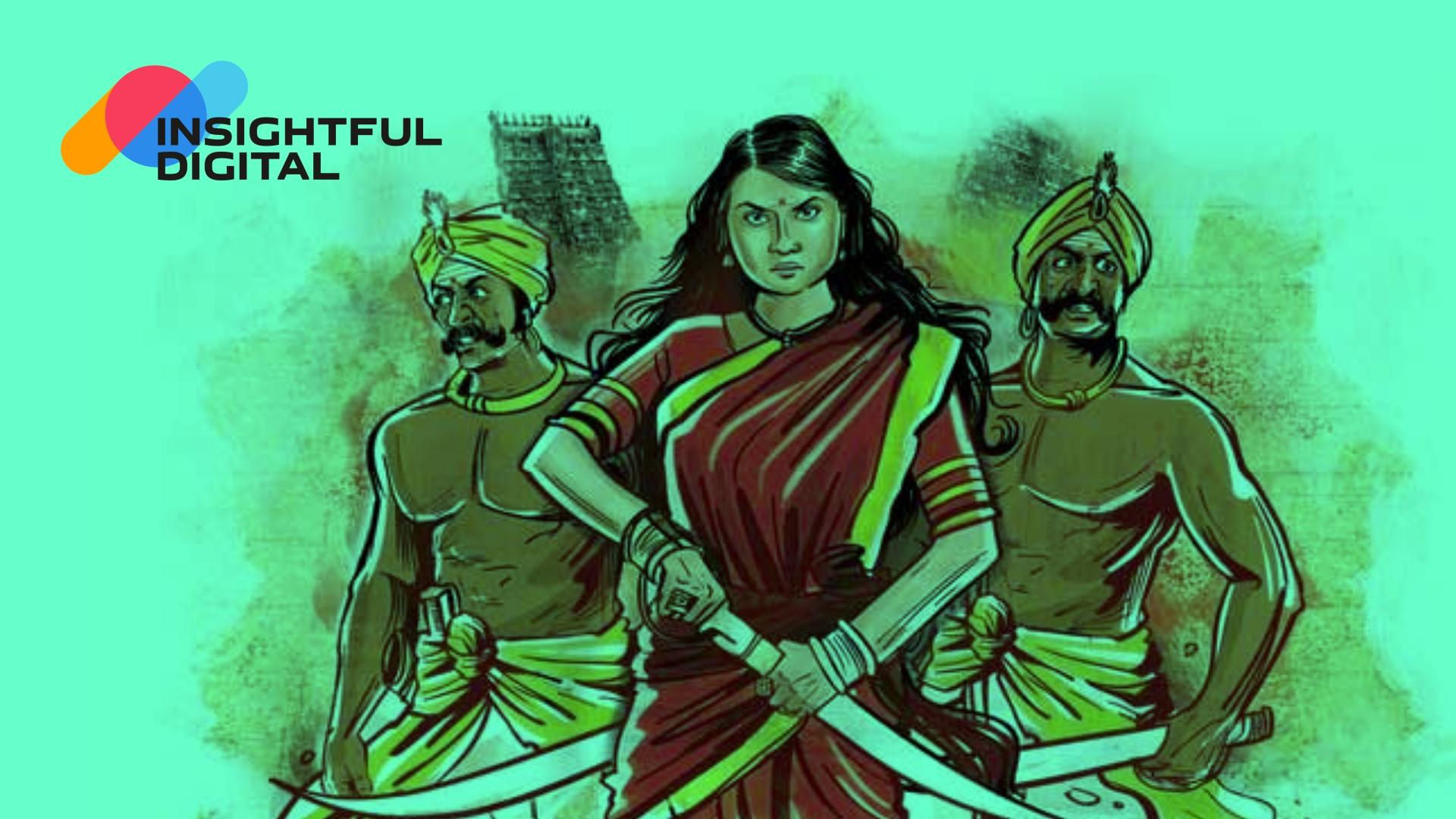
As India celebrates its Independence Day, it's essential to remember the countless sacrifices made by those who fought for the nation's freedom. While many male freedom fighters are widely recognized, the contributions of women, who played equally vital roles, often remain underappreciated. This article shines a spotlight on some of the most courageous women who fearlessly confronted the British Raj and made significant contributions to India's struggle for independence.
1. Rani Lakshmibai of Jhansi (1828-1858)
Rani Lakshmibai, the Queen of Jhansi, is one of the most iconic figures of India's First War of Independence in 1857. Known for her unparalleled bravery, she led her troops into battle against the British forces, refusing to surrender her kingdom. Her valor and resistance became a symbol of defiance against colonial rule. Despite being heavily outnumbered, she fought until her last breath, inspiring generations to come. Her famous cry, "Main apni Jhansi nahi doongi!" (I will not give up my Jhansi!) still echoes in the annals of Indian history.
2. Sarojini Naidu (1879-1949)
Sarojini Naidu, often referred to as the "Nightingale of India," was not just a poet but also a formidable freedom fighter. She was a key figure in the Indian National Congress and played an instrumental role in the Civil Disobedience Movement. As the first woman to become the President of the Indian National Congress, she led by example, encouraging women to participate actively in the freedom struggle. Her eloquence, leadership, and dedication made her a revered figure in India's fight for independence.
3. Begum Hazrat Mahal (1820-1879)
Begum Hazrat Mahal was another prominent leader of the 1857 uprising. The wife of Nawab Wajid Ali Shah of Awadh, she took charge of the rebellion in Lucknow after her husband was exiled. She led her troops with exceptional courage, resisting the British forces and capturing large parts of the kingdom. Though she eventually had to retreat, her leadership and tenacity were undeniable, making her one of the first women to lead an armed rebellion against British rule.
4. Aruna Asaf Ali (1909-1996)
Aruna Asaf Ali is best remembered for her role in the Quit India Movement of 1942, where she defiantly hoisted the Indian National Congress flag at the Gowalia Tank Maidan in Mumbai, despite a British crackdown on the movement. This act of bravery earned her the title of the "Grand Old Lady" of the Independence Movement. Her commitment to the cause continued even after independence, as she worked tirelessly for social reform and civil rights.
5. Kasturba Gandhi (1869-1944)
Kasturba Gandhi, the wife of Mahatma Gandhi, was a formidable freedom fighter in her own right. Deeply involved in the non-violent resistance against British rule, she participated in protests, led marches, and was frequently imprisoned for her activities. Her unwavering support for her husband and her own activism made her a key figure in the Indian independence movement, particularly in advocating for women's rights and social reforms.
6. Kamala Nehru (1899-1936)
Kamala Nehru, the wife of Jawaharlal Nehru, was a prominent activist who participated actively in the Non-Cooperation Movement. She worked closely with other leaders, mobilizing women to join the struggle against British rule. Her health deteriorated due to her relentless involvement in the freedom struggle, but her contribution left a lasting impact on the movement, particularly in involving women in the fight for freedom.
7. Annie Besant (1847-1933)
Annie Besant, though of British origin, was a fierce advocate for Indian self-rule. She was a key figure in the Home Rule Movement and became the first woman to preside over the Indian National Congress. Her efforts to unite Indians across different communities and her passionate advocacy for independence made her a respected leader in the freedom movement. Her work laid the groundwork for the broader acceptance of the demand for Swaraj (self-rule).
8. Durga Bhabhi (Durgawati Devi) (1907-1999)
Durga Bhabhi, a close associate of Bhagat Singh, played a crucial role in the revolutionary activities against the British. She is most famous for helping Bhagat Singh escape after the assassination of British officer John Saunders. Durga Bhabhi participated in several revolutionary activities, including the Kakori Train Robbery, and was a key member of the Hindustan Socialist Republican Association (HSRA). Her bravery and commitment made her a legendary figure in the fight for independence.
9. Kalpana Dutt (1913-1995)
Kalpana Dutt was a member of the Chittagong Armoury Raid, a daring plan led by Surya Sen to capture British armories and disrupt their control. After the raid, Kalpana went underground to avoid arrest but was eventually captured and sentenced to life imprisonment. Her courage in the face of danger and her role in one of the most audacious plans of the Indian freedom struggle made her an iconic figure in revolutionary circles.
10. Durgabai Deshmukh (1909-1981)
Durgabai Deshmukh was not only a freedom fighter but also a social reformer and an advocate of women's rights. She actively participated in the Salt Satyagraha and other movements, enduring imprisonment for her involvement. After independence, Durgabai played a pivotal role in drafting the Indian Constitution and was instrumental in establishing the Central Social Welfare Board, which aimed to uplift the status of women and children in India.
11. Jhalkari Bai (1830-1858)
Jhalkari Bai was a soldier in Rani Lakshmibai's army and played a critical role during the 1857 uprising. She is best known for disguising herself as Rani Lakshmibai to deceive the British forces, allowing the queen to escape. Jhalkari Bai's loyalty and bravery in battle made her a legendary figure, particularly among the Dalit community, as she broke traditional barriers to fight for her country.
12. Rani Chennamma (1778-1829)
Rani Chennamma, the queen of Kittur in Karnataka, was one of the first Indian rulers to lead an armed rebellion against British colonialism. In 1824, she fought valiantly against the British East India Company, resisting their attempts to annex her kingdom. Though ultimately defeated, her resistance was one of the earliest expressions of Indian defiance against British rule, and she remains a symbol of courage and patriotism.
13. Usha Mehta (1920-2000)
Usha Mehta was a Gandhian and freedom fighter best known for organizing the Congress Radio, an underground radio station that operated during the Quit India Movement in 1942. Despite the dangers, Usha Mehta and her team broadcasted messages of resistance, news of the freedom struggle, and patriotic songs, reaching a wide audience and keeping the spirit of the movement alive. Her dedication to the cause, even in the face of arrest and imprisonment, made her an iconic figure in India's fight for freedom.
14. Tara Rani Srivastava (1919-unknown)
Tara Rani Srivastava was a freedom fighter from Bihar who actively participated in the Quit India Movement alongside her husband. The couple led a procession to hoist the Indian flag at the Siwan police station, where they faced heavy police firing. Even after her husband was shot and succumbed to his injuries, Tara Rani bravely continued to lead the protest and attempted to hoist the flag. Her courage and determination made her a symbol of resistance and sacrifice in the freedom struggle.
15. Bhikaiji Cama (1861-1936)
Bhikaiji Cama was a prominent figure in the Indian independence movement, known for her work in promoting the cause of Indian independence abroad. A fiery orator and a dedicated nationalist, she is perhaps best remembered for unfurling the first version of the Indian national flag at the International Socialist Conference in Stuttgart, Germany, in 1907. Bhikaiji Cama used her wealth and resources to support revolutionary activities and was a key figure in the Indian independence movement in Europe.
Conclusion
These women, through their unparalleled courage and determination, played pivotal roles in India's fight for independence. Their contributions, often overshadowed by their male counterparts, are an essential part of the narrative of India's freedom struggle. As we celebrate Independence Day, it is crucial to recognize and honor the sacrifices of these brave women, whose legacies continue to inspire generations. Their stories remind us that the fight for freedom was a collective effort, with women standing shoulder to shoulder with men, facing the same dangers and making the same sacrifices for the nation's liberty.