
Introduction: Beyond a Mere Symbolic Day
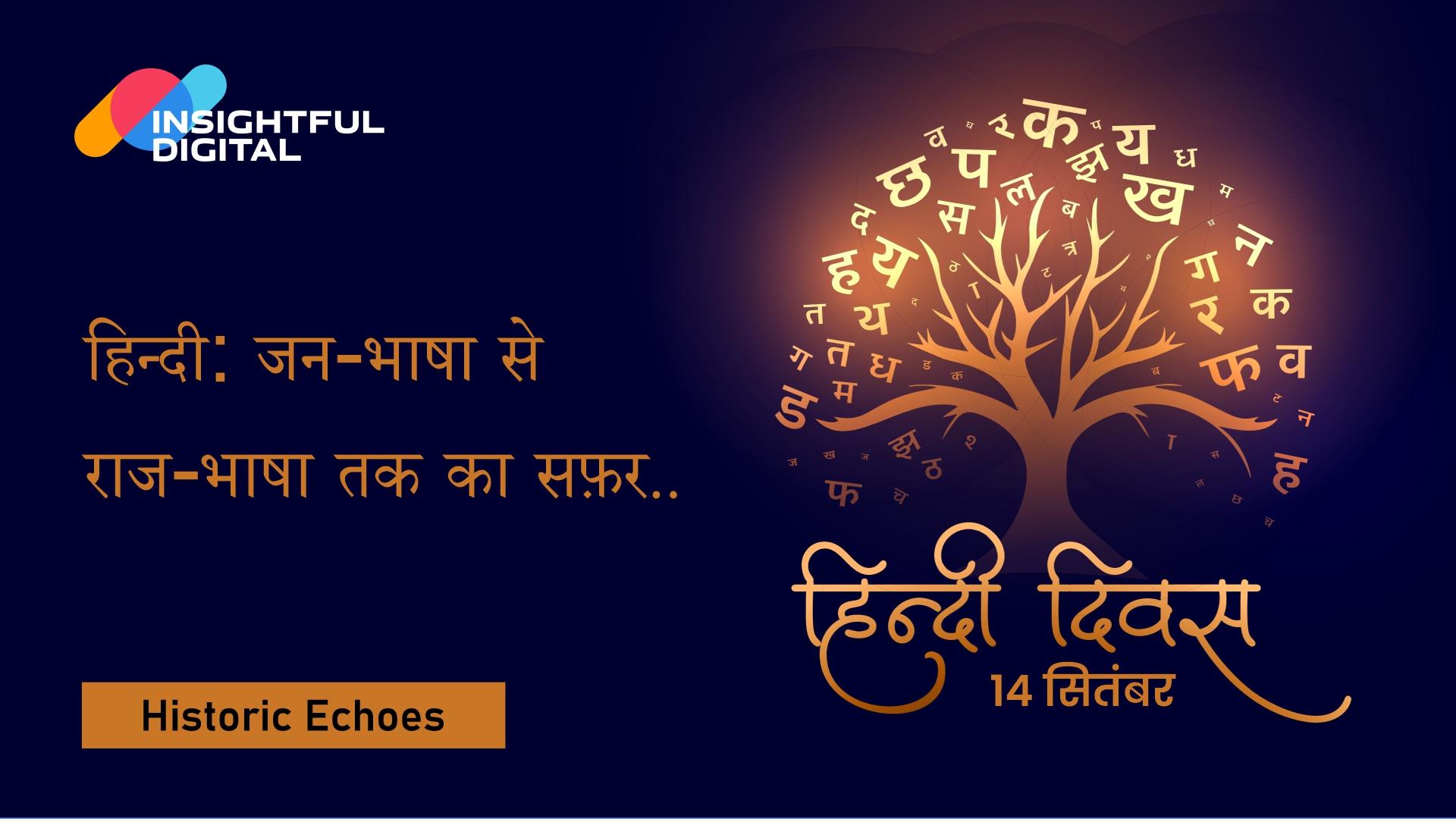
Every year on 14th September, schools, government offices, and cultural institutions across India come alive with special programs—competitions, speeches, and awards—all in honor of Hindi Diwas. But to reduce this day to just ceremonial observance is to overlook its deeper constitutional and cultural meaning.
Hindi Diwas commemorates September 14, 1949, the day when the Constituent Assembly adopted Hindi in the Devanagari script as the Official Language (Rajbhasha) of India under Article 343. This was not just a linguistic choice but a historic compromise that sought to balance India’s unity with its vast linguistic diversity.
I. The Historical Crucible: The Language Question Before 1949
The Colonial Legacy of English
For nearly a century, English dominated governance, law, and higher education in India. While it symbolized privilege, it also carried the shadow of colonial subjugation. For freedom fighters, reclaiming indigenous languages became a matter of identity and cultural revival.
The Rise of Hindi as a Lingua Franca
During the freedom struggle, Hindi in Devanagari became a rallying tool for mass mobilization. Mahatma Gandhi advocated for Hindustani (a mix of Hindi & Urdu) as a unifying language for both Hindus and Muslims.
The Dravidian Resistance
In Tamil Nadu and other southern states, however, the fear of Hindi imposition triggered strong anti-Hindi agitations in the 1930s–40s. This wasn’t just about language—it was about resisting political domination from the Hindi-speaking North.
II. The Constituent Assembly Debates: A Theatre of Compromise
The language debate (1946–49) was one of the most heated in the Constituent Assembly.
The Hindi Lobby: Leaders like Beohar Rajendra Simha, R. V. Dhulekar, Seth Govind Das, and Pandit Lakshmi Kanta Maitra demanded Hindi as the sole national language.
The Voices of Caution: Leaders like T. T. Krishnamachari and N. Gopalaswami Ayyangar warned against forcing Hindi on non-Hindi states, calling it a form of “tyranny.”
The Munshi–Ayyangar Formula
The eventual compromise was enshrined in Articles 343–351 of the Constitution:
Article 343: Hindi in Devanagari script was declared the Official Language (Rajbhasha), but English would continue for official purposes for 15 years.
Article 351: Directed the development of Hindi, enriched by Sanskrit vocabulary.
Eighth Schedule: Recognized 14 regional languages (now 22), safeguarding India’s linguistic diversity.
Thus, 14 September 1949 became the day when Hindi was officially adopted—not as “Rashtrabhasha” (national language), but as Rajbhasha (official language).
III. राष्ट्रभाषा नहीं बल्कि राजभाषा
To end the deadlock, a historic compromise was reached—Hindi was not given the status of Rashtrabhasha but of Rajbhasha (Official Language).
This was a deliberate choice: Hindi was entrusted with official responsibilities, but without being elevated as the sole “national language,” avoiding alienation of non-Hindi speakers.
Over time, Hindi grew beyond government files—into Bollywood, literature, social media, and the internet, blending naturally with English and evolving as a living, modern language.
Hindi Diwas today reminds us not only of its official recognition but also that language thrives not by force but by love and acceptance in people’s hearts.
The Dream of Hindi Becoming the National Language
During the freedom struggle, the dream of making Hindi the national language was envisioned. The reason was clear—Hindi was the most widely spoken and understood language across India at that time.
Mahatma Gandhi also strongly supported Hindi as the national language. He believed that Hindi was the only language capable of connecting the entire nation—from North to South and East to West.
In the independence movement, Hindi was used as a powerful tool of mass communication and awakening. It was called the “language of the people” because it was the tongue most commonly spoken among the masses.
To make it more inclusive, words from Sanskrit, Urdu, Persian, and several regional dialects were blended together, giving rise to a simplified form known as “Hindustani.”
IV. The Official Languages Act, 1963–67: The Permanent Settlement
When the 15-year deadline (1949–1965) neared, anti-Hindi protests, particularly in Tamil Nadu, turned violent. To ease tensions, the Official Languages Act (1963, amended in 1967) ensured English would continue indefinitely as an associate official language alongside Hindi.
This dual-language system still defines India’s linguistic framework today.
V. The Multifaceted Celebrations of Hindi Diwas
Governmental Celebrations: Awards like Rajbhasha Kirti Puraskar and seminars on Hindi in administration and technology.
Academic & Cultural Events: Essay writing, poetry recitals, debates, and literary festivals celebrating Hindi’s vast heritage.
Digital Celebrations: Social media trends (#HindiDiwas), Bollywood tributes, memes, and Hinglish expressions highlight Hindi’s modern reach.
VI. Contemporary Debates & the Road Ahead
The Imposition Debate: Hindi promotion continues to trigger fears of cultural dominance in non-Hindi states.
Hindi in a Globalized World: With over 600 million speakers, Hindi is the third most spoken language globally, powered by Bollywood, yoga, and India’s diaspora.
The English–Hindi Balance: India’s linguistic reality is pragmatic bilingualism. English drives global mobility, while Hindi thrives as the language of popular culture and politics.
Conclusion: A Celebration of Pluralistic Integration
Hindi Diwas is not about imposing a single language but about celebrating India’s linguistic compromise.
It is a day to:
Honor the constitutional wisdom of balancing unity with diversity.
Celebrate Hindi’s cultural depth and literary richness.
Reaffirm India’s pluralistic identity, where many languages coexist and thrive.
In truth, Hindi Diwas is not just about Hindi—it’s about the Indian model of unity in diversity, proving that harmony can be achieved through respect, not uniformity.
Objective Questions for Competitive Exams
Q.1. On which date did the Constituent Assembly adopt Hindi (Devanagari) as the Union’s Official Language?
a) 26 January 1950
b) 14 September 1949
c) 15 August 1947
Answer: b) 14 September 1949
Q.2. Under which Article is Hindi declared the Official Language of the Union?
a) Article 345
b) Article 343
c) Article 351
Answer: b) Article 343
Q.3. The Munshi–Ayyangar formula relates to:
a) Three-language formula in schools
b) Constitutional compromise on Union language policy
c) Phonetic reform of Devanagari
Answer: b) Constitutional compromise on Union language policy
Q.4. Which Article directs the development of Hindi with vocabulary primarily from Sanskrit?
a) Article 351
b) Article 344
c) Article 350A
Answer: a) Article 351
Q.5. The Eighth Schedule initially recognized how many languages?
a) 22
b) 18
c) 14
Answer: c) 14
Q.6. The Official Languages Act (1963, amended 1967) ensured the continued use of:
a) Hindi only
b) English as an associate official language
c) Sanskrit as Union language
Answer: b) English as an associate official language
Q.7. Gandhi promoted which language blend to foster unity?
a) Pure Hindi
b) Hindustani (Hindi + Urdu)
c) Dravidian–Hindi mix
Answer: b) Hindustani (Hindi + Urdu)
Q.8. The anti-Hindi agitations were most intense in which state?
a) Maharashtra
b) Tamil Nadu
c) West Bengal
Answer: b) Tamil Nadu
Q.9. Hindi Diwas marks a celebration of:
a) Linguistic nationalism
b) Constitutional compromise and linguistic diversity
c) Abolition of English
Answer: b) Constitutional compromise and linguistic diversity
Q.10. Which constitutional Part contains Articles 343–351 on language?
a) Part XV – Elections
b) Part XVII – Official Language
c) Part XXI – Temporary, Transitional and Special Provisions
Answer: b) Part XVII – Official Language
Q.11. In contemporary India, the English–Hindi relationship is best described as:
a) Total replacement of English by Hindi
b) Pragmatic bilingualism and code-switching
c) Exclusive use of English in governance
Answer: b) Pragmatic bilingualism and code-switching
Q.12. Which award is presented on Hindi Diwas for excellence in official language implementation?
a) Sahitya Akademi Award
b) Rajbhasha Kirti Puraskar
c) Padma Shri
Answer: b) Rajbhasha Kirti Puraskar