
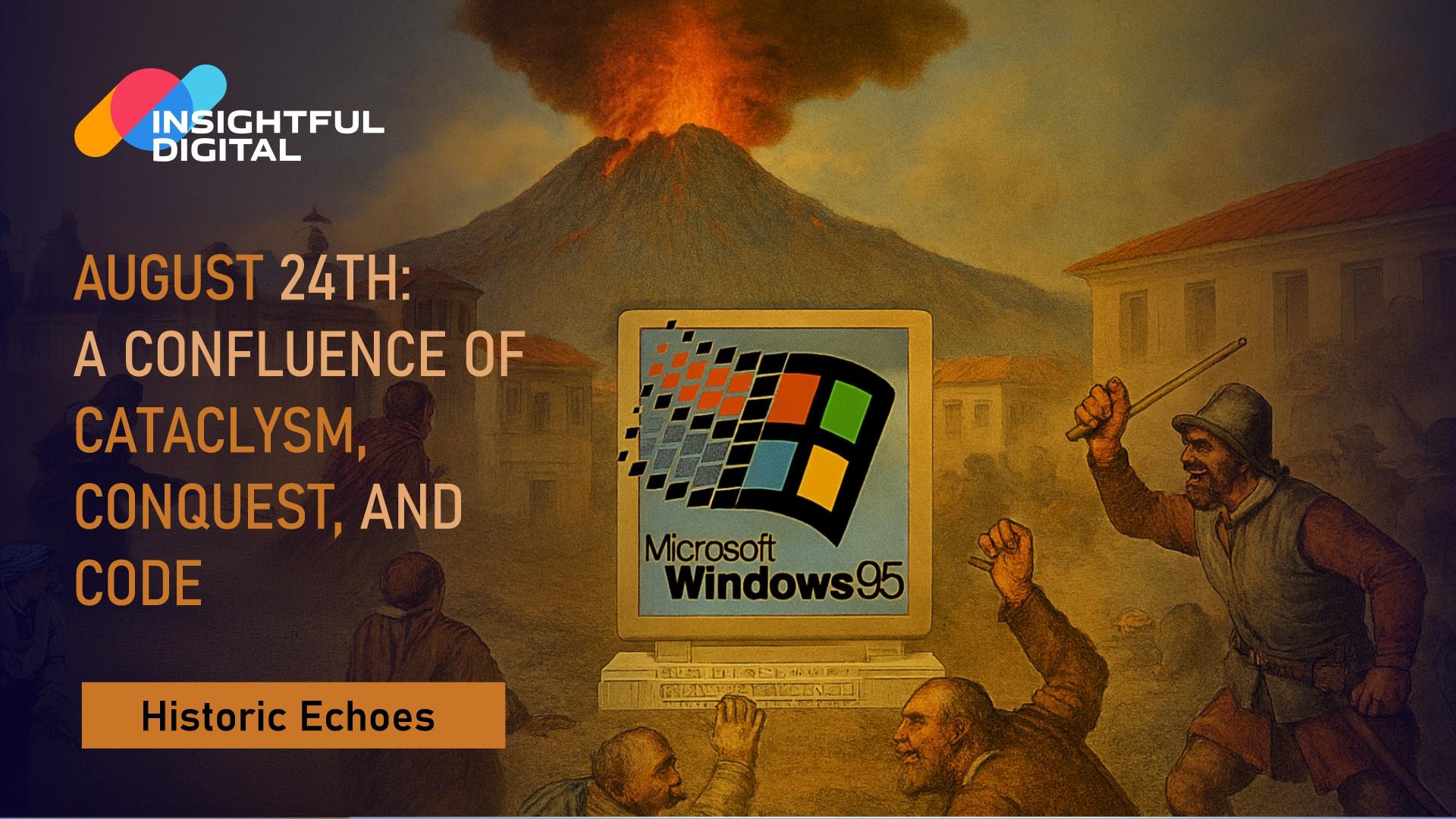
History is not a uniform stream but a series of rapids and waterfalls - moments where the current of human events accelerates, plunges, and is forever altered. The date of August 24th is a remarkable confluence of such moments, representing a microcosm of the forces that shape our world: the raw power of nature, the brutal clash of empires, the darkness of religious strife, and the brilliant spark of technological innovation that changes everything that follows. To examine this date is to take a journey through the pivotal turning points of Western and, ultimately, global civilization.
A Day That Echoes Across Eras
August 24th is not just a date on the calendar - it is a reminder that history unfolds in sudden turns. From the ashes of Pompeii to the fall of Rome, from the cries of massacre in Paris to the silence of the Soviet collapse, and finally to the digital hum of Windows 95 booting up, each event reflects humanity’s fragility and resilience. It is a date where destruction and innovation coexist, shaping civilizations and redefining what the future could be.
The Main Event: Windows 95 and the Democratization of Computing
The launch of Microsoft Windows 95 on August 24, 1995, was far more than a successful product rollout; it was the culmination of a decade of research and a bold bet on the future of personal computing. Its significance lies not just in its technical features but in its profound psychological and cultural impact.
The Architectural Revolution: Windows 95 was a hybrid 16/32-bit operating system that represented a monumental engineering effort. While it sat atop MS-DOS, it was a radical departure. Its innovations included the Start button, taskbar, desktop, preemptive multitasking, centralized registry, and the Win32 API - features that defined modern computing.
The Cultural Phenomenon: Microsoft’s $300 million launch campaign featuring the Rolling Stones’ "Start Me Up" made Windows 95 a cultural icon. Midnight launches turned a software release into a lifestyle moment, shifting public perception of computers from complex office machines to essential, user-friendly tools for creativity and communication.
Ancient Foundations: Vesuvius and the Preservation of History
On August 24, 79 AD, Mount Vesuvius erupted, destroying Pompeii and Herculaneum. The pyroclastic flows suffocated life but preserved the cities in volcanic ash, creating archaeological time capsules. Frescoes, graffiti, and even bread loaves offer a haunting glimpse into Roman life. Pliny the Younger’s accounts introduced the term "Plinian eruption."
The Unraveling of Empires: The Sack of Rome and the Fall of the USSR
On August 24, 410 AD, Visigoth King Alaric sacked Rome, shaking the ancient world’s confidence in the "Eternal City." It symbolized the fall of the old order and the dawn of the Dark Ages. Over 1,500 years later, on August 24, 1991, Mikhail Gorbachev resigned as General Secretary of the CPSU, marking the quiet death of Soviet communism and the Cold War’s end.
A Dark Chapter: The St. Bartholomew's Day Massacre
On August 24, 1572, Paris witnessed the beginning of the St. Bartholomew’s Day Massacre. What started as a political assassination of Admiral Gaspard de Coligny escalated into sectarian violence, killing thousands of Huguenots across France. The massacre shattered hopes of Catholic-Protestant reconciliation and intensified the Wars of Religion.
Conclusion: The Axis of August 24th
From Vesuvius to Windows 95, from Rome’s sack to Soviet collapse, August 24th embodies humanity’s fragility, conflict, and innovation. It is a date of irreversible transformation - moments after which the world could never return to what it was before.
Objective Questions for Competitive Exams
Q.1. Which operating system did Microsoft launch on August 24, 1995?
a) Windows 3.1
b) Windows 95
c) Windows XP
Answer: b) Windows 95
Q.2. What was the codename for the new Windows 95 interface?
a) Neptune
b) Chicago
c) Longhorn
Answer: b) Chicago
Q.3. Which Roman cities were destroyed by the eruption of Mount Vesuvius in 79 AD?
a) Athens and Sparta
b) Pompeii and Herculaneum
c) Carthage and Alexandria
Answer: b) Pompeii and Herculaneum
Q.4. Who documented the eruption of Vesuvius in 79 AD?
a) Julius Caesar
b) Pliny the Younger
c) Tacitus
Answer: b) Pliny the Younger
Q.5. Which king led the Visigoths in the sack of Rome in 410 AD?
a) Attila
b) Alaric
c) Charlemagne
Answer: b) Alaric
Q.6. In which year did Gorbachev resign as General Secretary of the CPSU?
a) 1989
b) 1991
c) 1993
Answer: b) 1991
Q.7. What event marked the quiet collapse of the Soviet Union?
a) Fall of Berlin Wall
b) Resignation of Gorbachev
c) Signing of START treaty
Answer: b) Resignation of Gorbachev
Q.8. Which massacre began on August 24, 1572, in Paris?
a) Night of Long Knives
b) St. Bartholomew’s Day Massacre
c) Massacre of Magdeburg
Answer: b) St. Bartholomew’s Day Massacre
Q.9. Which Protestant leader’s assassination triggered the St. Bartholomew’s Day Massacre?
a) John Calvin
b) Admiral Gaspard de Coligny
c) Martin Luther
Answer: b) Admiral Gaspard de Coligny
Q.10. Which theological work did St. Augustine begin after the sack of Rome?
a) Confessions
b) The City of God
c) Summa Theologica
Answer: b) The City of God
Q.11. Which rock band’s song was used in the Windows 95 launch campaign?
a) The Beatles
b) The Rolling Stones
c) Pink Floyd
Answer: b) The Rolling Stones
Q.12. What common thread unites the events of August 24th across history?
a) Economic prosperity
b) Irreversible transformation
c) Peaceful resolutions
Answer: b) Irreversible transformation