
A few months ago, I met a young café owner who was doing really well on Instagram. His reels had thousands of views, people tagged his café every weekend, and he thought-why spend on a website when social media is already bringing in customers?
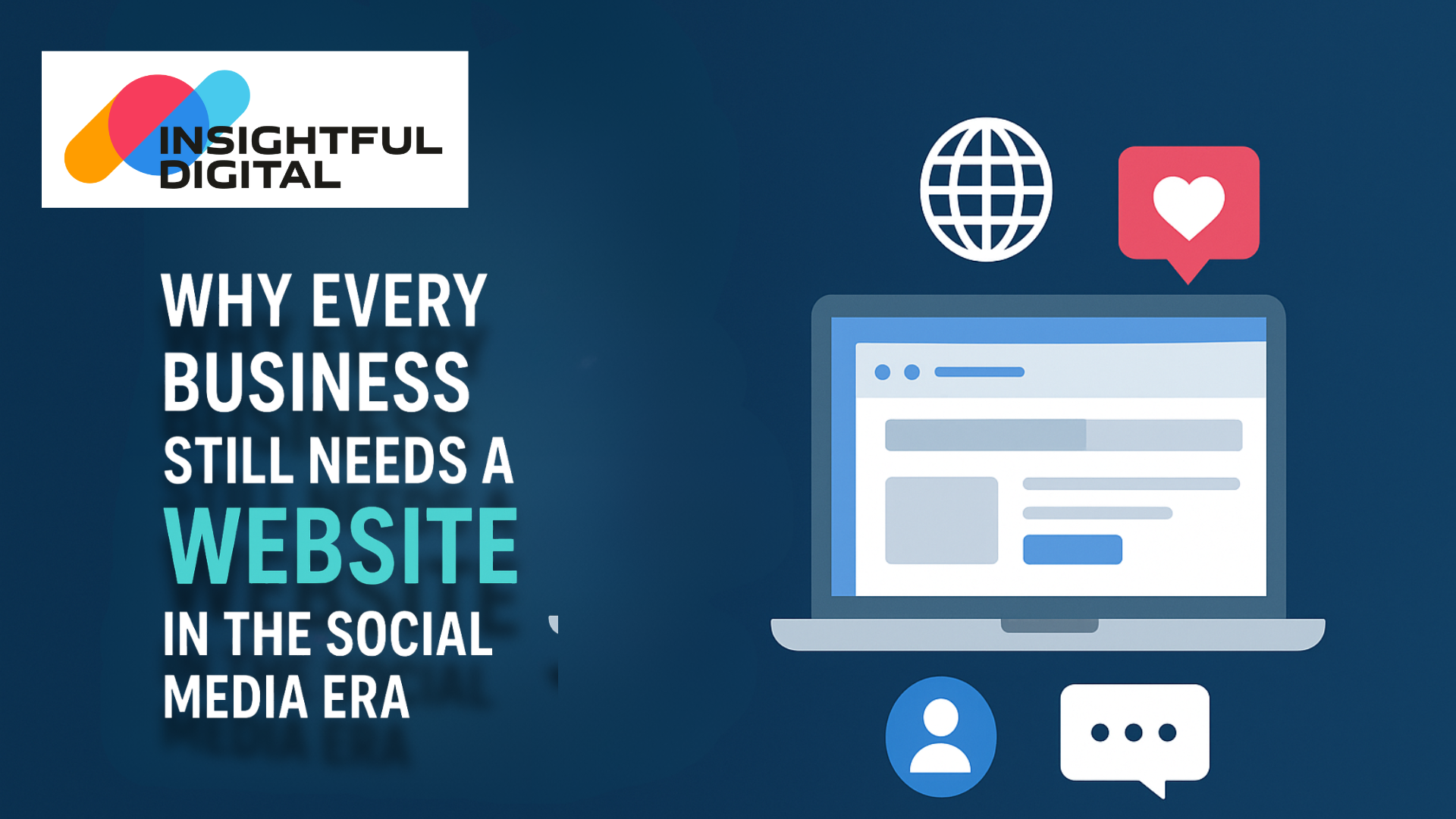
It’s a common thought. After all, social platforms give us visibility, engagement, and even sales. But here’s the truth: relying only on social media is like renting a shop in someone else’s mall-you never really own it.
1. You don’t control the rules
Algorithms change overnight. One week your posts reach thousands, the next week they barely reach a hundred. A website is different-it’s your own space. No sudden rule changes, no hidden filters. You decide how people experience your brand.
2. Customers trust websites more
Think about it: when you want to order from a new brand, don’t you quickly Google their website? A professional site creates credibility. Without one, many customers hesitate, even if your Instagram is flashy.
3. It’s your permanent digital home
Social platforms come and go. Remember Orkut? Vine? Tomorrow, even popular apps can lose relevance. A website, on the other hand, is your long-term identity. It grows with you, and you’re not at the mercy of trends.
4. Search engines bring new customers
Social media mostly shows your content to people who already follow you. But with a website, search engines like Google can introduce you to brand-new customers who were never looking at your Instagram page.
5. It ties everything together
A website works like the center of your online universe. Your social media, ads, email campaigns-all roads should eventually lead people to your site, where they can actually buy, sign up, or connect.
Social media is powerful, no doubt. But your website is where your brand lives. If social platforms are the stage where you perform, your website is the home where your business truly belongs.
So, don’t think of it as “website vs. social media.” Use both. One gives you reach; the other gives you reliability. And when they work together, your business becomes stronger, safer, and more trusted.
MCQs for Readers:
Q1. Why is a website often considered more reliable than social media pages?
a) Because it looks fancier
b) Because it is owned and controlled by the business
c) Because it has more followers
d) Because it is free to create
Answer: b) Because it is owned and controlled by the business
Q2. What is one major limitation of relying only on social media for business?
a) Social media doesn’t allow posting content
b) Social media has no users
c) Algorithms and policies can change anytime
d) Social media is not accessible on mobile
Answer: c) Algorithms and policies can change anytime
Q3. How does a website support SEO compared to social media?
a) Social media has better ranking on Google
b) Websites allow content to rank on search engines
c) Websites don’t appear on Google
d) SEO only works on Instagram
Answer: b) Websites allow content to rank on search engines
Q4. Which of the following is a long-term digital asset for a business?
a) Paid ad campaigns
b) Temporary reels and stories
c) A professionally built website
d) Social media likes and comments
Answer: c) A professionally built website
Q5. What role does a website play in customer trust?
a) It makes a business look less serious
b) It reduces credibility
c) It provides an official, professional presence
d) It is only useful for big companies
Answer: c) It provides an official, professional presence