

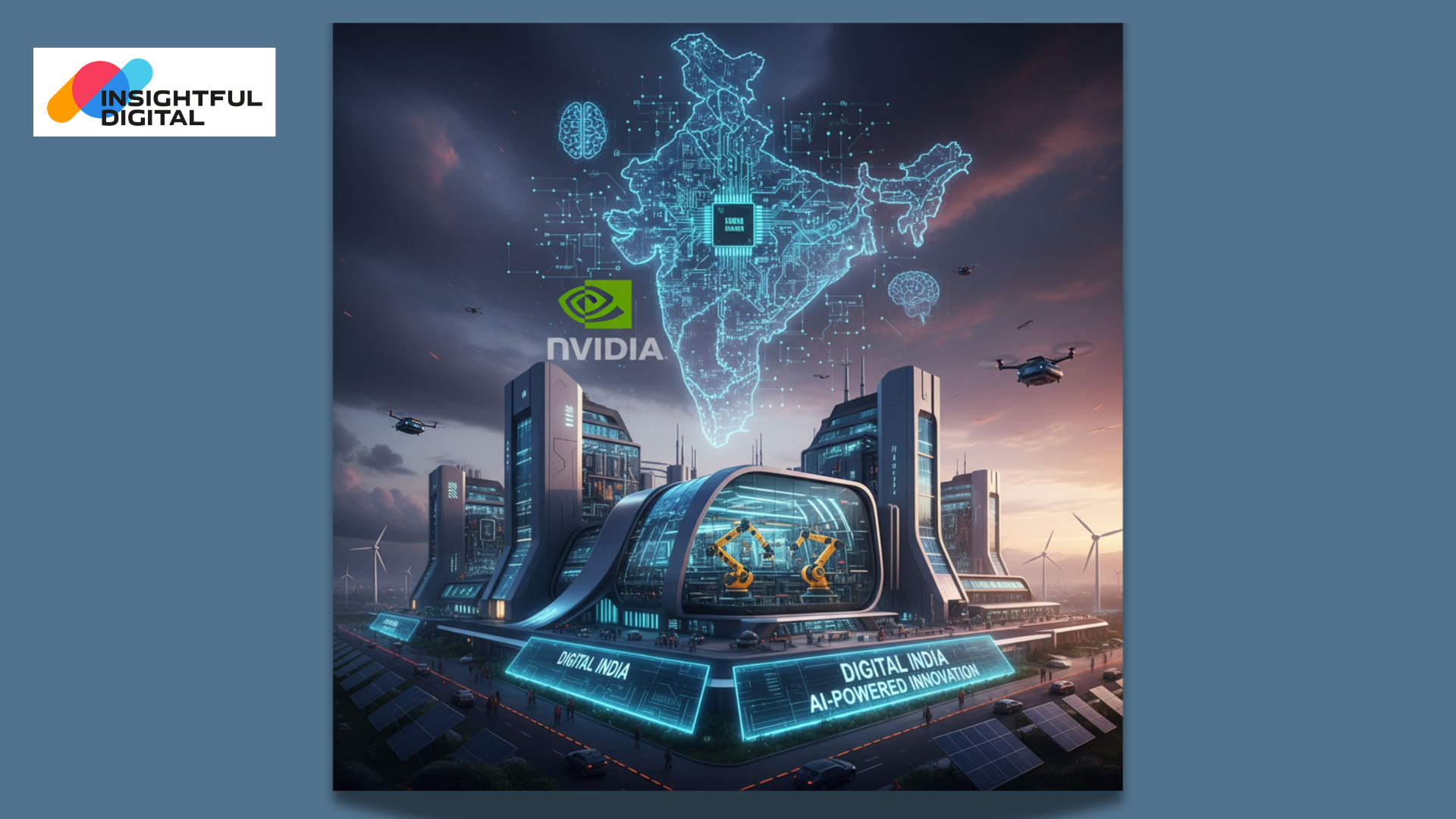
When people talk about the semiconductor race, names like NVIDIA, TSMC, or Intel dominate the conversation. These giants have built global reputations not just by designing chips, but by shaping the very backbone of artificial intelligence, gaming, and data centers. The obvious question now doing the rounds is - can India ever create a success story on that scale?
Why this question matters
India is positioning itself as a serious player in the semiconductor ecosystem. With government-backed incentives worth billions and strategic partnerships with global chipmakers, the country wants to reduce dependence on imports and secure its tech future. The ambition is huge - to go from being a major consumer of chips to producing them at world-class scale.
But replicating an NVIDIA is no small feat. After all, NVIDIA didn’t just make chips - it rewired the way computing worked with GPUs, powering everything from ChatGPT to self-driving cars. For India, the goal may not be to mimic the same model, but to carve its own identity in this crowded arena.
The ground realities
On paper, India has advantages - a massive engineering talent pool, a strong IT services backbone, and rising demand for electronics and AI applications. The government’s semiconductor mission has already attracted players like Micron and AMD to announce big-ticket investments.
Yet, the missing link is fabrication. Fabless design companies can thrive in India, but fabs themselves are expensive, risky, and require decades of experience to perfect. That’s why Taiwan and South Korea dominate. India, for now, is still in the early innings.
What India can actually aim for
Instead of chasing NVIDIA head-on, India could focus on:
Specialized design startups that build chips for local markets such as IoT, electric vehicles, and telecom.
Strategic partnerships where global giants set up R&D or assembly lines in India while training local talent.
Long-term ecosystem building, from universities to supply chains, to make chip development sustainable.
The “India way” might not mean creating a GPU empire overnight, but building the world’s most affordable, scalable, and inclusive semiconductor ecosystem.
The roadblocks ahead
Still, there are hurdles. Supply chain gaps, limited research spending, and slow project timelines can drag momentum. Even with policy support, India’s semiconductor journey will require patience, political will, and continuous capital infusion.
So, can India do an NVIDIA?
The honest answer is - probably not in the exact same way. But that’s not necessarily a bad thing. India doesn’t need to replicate NVIDIA’s model to win. Instead, the opportunity lies in creating its own story - one where chips serve not only global AI and cloud giants, but also local industries and everyday consumers.
If NVIDIA is the Ferrari of semiconductors, India has the chance to build the Maruti Suzuki - widely used, reliable, and perfectly tuned for its own roads.
MCQs for Readers:
1. Which global chipmaker is often cited as the benchmark for India’s semiconductor ambitions?
a) Intel
b) NVIDIA
c) TSMC
d) Qualcomm
Answer: b) NVIDIA
2. What is India’s current main challenge in the semiconductor sector?
a) Shortage of engineers
b) Lack of consumer demand
c) Absence of large-scale fabs
d) Overproduction of chips
Answer: c) Absence of large-scale fabs
3. What major advantage does India have in building a semiconductor ecosystem?
a) Abundant oil reserves
b) Strong IT talent pool
c) Large existing fabs
d) Exclusive global patents
Answer: b) Strong IT talent pool
4. Which global firms have announced investments in India’s semiconductor space?
a) Samsung and Apple
b) Micron and AMD
c) Intel and IBM
d) TSMC and Qualcomm
Answer: b) Micron and AMD
5. What role could fabless design companies play in India?
a) Running large fabrication plants
b) Building software-only solutions
c) Creating chip designs for niche markets
d) Importing chips at low cost
Answer: c) Creating chip designs for niche markets
6. Why is it difficult for India to replicate Taiwan’s dominance in chipmaking?
a) Lack of government policy
b) Decades of supply chain expertise missing
c) No demand for electronics
d) Resistance from global markets
Answer: b) Decades of supply chain expertise missing
7. Which local markets could India target with specialized chip designs?
a) Gaming PCs and consoles
b) Electric vehicles and telecom
c) Luxury consumer electronics
d) Space exploration only
Answer: b) Electric vehicles and telecom
8. What might be India’s unique approach to semiconductors compared to NVIDIA?
a) Building ultra-high-end GPUs only
b) Focusing on affordable, scalable solutions
c) Avoiding AI-related chips
d) Outsourcing all production
Answer: b) Focusing on affordable, scalable solutions
9. In the article, NVIDIA is compared to a Ferrari. What is India’s potential equivalent?
a) Lamborghini
b) Tesla
c) Maruti Suzuki
d) Toyota
Answer: c) Maruti Suzuki
10. What is the key requirement for India’s semiconductor journey?
a) Quick wins
b) Continuous capital and patience
c) Limiting global collaborations
d) Exclusive government control
Answer: b) Continuous capital and patience