
When stars die, they don’t always go quietly. Some collapse into black holes, others become white dwarfs, and many transform into neutron stars - dense, city-sized objects left behind after a supernova explosion. But what puzzled astronomers for decades was this: why do some of these neutron stars rocket through space at astonishing speeds, as if something gave them a cosmic shove?
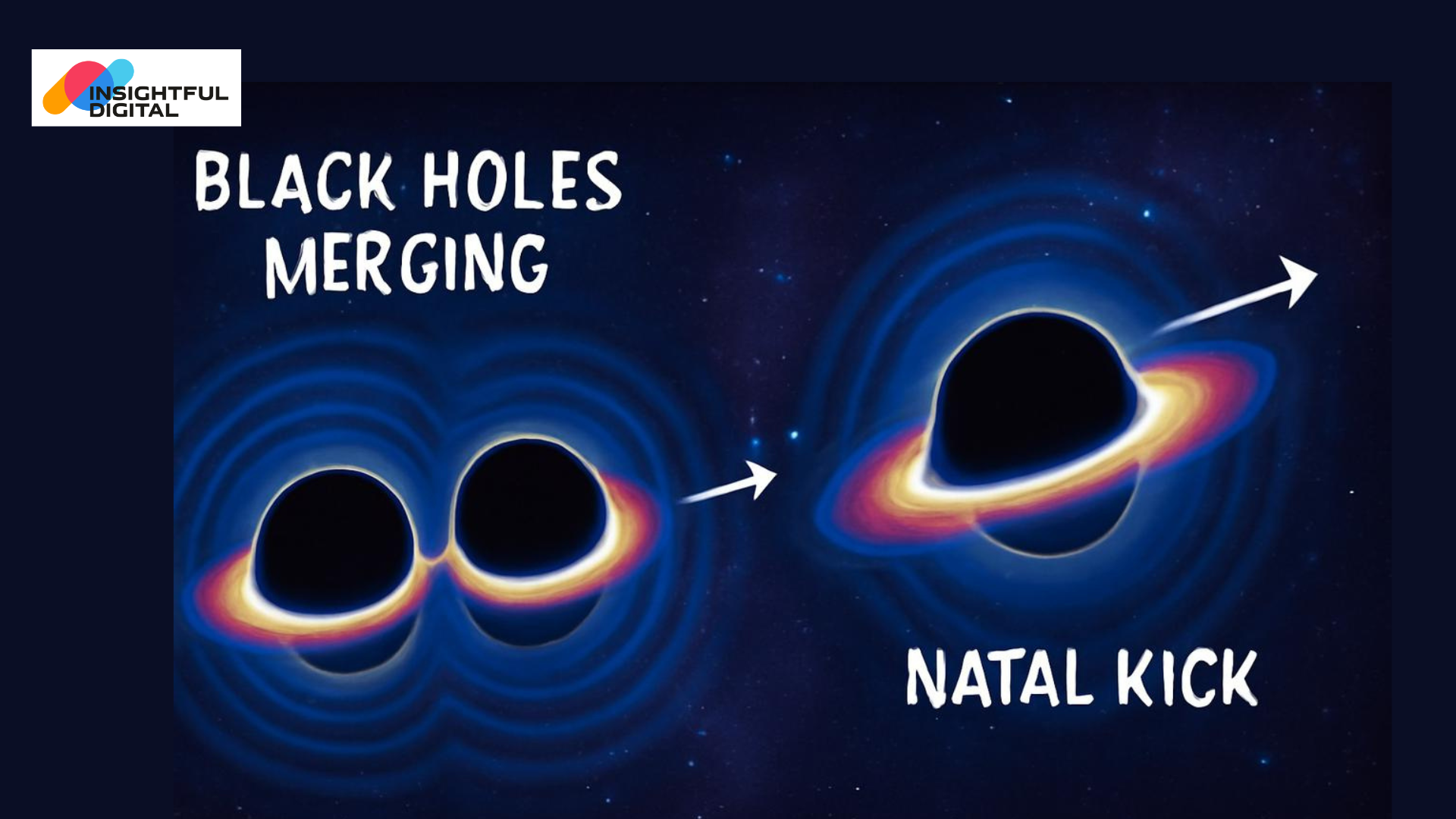
That mysterious push has long been called a “natal kick.” And for the first time, scientists say they have measured one directly.
A Puzzle Born from Chaos
Every massive star lives a dramatic life - burning furiously for millions of years before collapsing under its own weight. When that collapse ends in a supernova, the explosion is so powerful that it briefly outshines entire galaxies. What remains afterward can be a neutron star, an object so dense that a teaspoon of its matter would weigh billions of tons.
Yet when astronomers tracked some neutron stars, they found something unexpected. Instead of staying near their birthplaces, many were hurtling across space at speeds up to 1,000 kilometers per second. Imagine a stellar cannonball launched across the galaxy. The term “natal kick” was coined to describe this strange phenomenon.
But the big question lingered: what actually causes the kick? And could anyone measure it directly, instead of inferring it from later motion?
The Breakthrough Observation
Recently, an international team of astronomers observed a supernova remnant in extraordinary detail. Using data from powerful telescopes, they tracked both the expanding cloud of gas from the explosion and the compact neutron star at its center. What they noticed was striking - the neutron star was not sitting neatly in the middle. Instead, it was offset, moving away from the explosion site, evidence of the kick it received at birth.
For decades, researchers speculated that asymmetries in a supernova - uneven shock waves or jets of particles - might act like a slingshot. This observation provided direct proof. For the first time, the team could calculate the neutron star’s velocity and trace it back to the precise moment of its violent birth.
Why the Kick Matters
You might wonder, why do scientists care about how a dead star moves? The answer lies in galactic dynamics. Neutron stars are not just exotic leftovers - they are laboratories for physics under extreme conditions. Knowing how and why they move helps astronomers map the life cycles of stars, track gravitational wave sources, and even understand how elements are distributed across galaxies.
If natal kicks are common, it means neutron stars can escape their stellar nurseries, wander far from their origins, and sometimes merge with companions in unexpected parts of space. That influences everything from where heavy elements like gold are formed to how future supernovae might occur.
A Window into the Universe’s Messy Side
This measurement is not just about one neutron star. It opens a window into the chaotic nature of stellar death. Supernovae are not neat explosions. They are turbulent, uneven, and sometimes downright lopsided. Those imperfections are what give neutron stars their cosmic boot out the door.
In a way, the natal kick is a reminder that the universe does not always follow symmetry. Just as people rarely walk a straight path, stars too can stumble, twist, and get shoved into unexpected directions.
The Road Ahead
Now that astronomers have nailed down one natal kick, they hope to measure more. With next-generation observatories like the James Webb Space Telescope and the upcoming Extremely Large Telescope, researchers will be able to spot newborn neutron stars in unprecedented detail. Each new observation will refine our understanding of how these kicks work - and perhaps reveal why some stars get gentle nudges while others are blasted out at breathtaking speeds.
The first measurement of a natal kick marks more than a technical achievement. It’s a story of persistence - decades of chasing a mystery finally rewarded with evidence. It shows how science thrives on asking simple questions: why does a star move this way? And from that curiosity, we get not only answers but also a deeper appreciation for the universe’s restless, messy, and beautiful nature.
MCQs for Readers:
1. What is the primary goal of Natal Kick?
a) To provide fashion tips for new mothers
b) To enhance maternal healthcare with AI-powered support ✅
c) To promote baby products
d) To track hospital expenses
2. Which technology forms the backbone of Natal Kick’s platform?
a) Blockchain
b) Artificial Intelligence ✅
c) Virtual Reality
d) Robotics
3. How does Natal Kick help in maternal healthcare?
a) By predicting health risks early ✅
b) By offering discounts on medicines
c) By selling wearable devices
d) By scheduling hospital appointments only
4. Natal Kick is most relevant for which stage?
a) Only during childbirth
b) Postnatal care only
c) Entire pregnancy journey ✅
d) Fitness and diet after pregnancy
5. Which industry does Natal Kick belong to?
a) EdTech
b) HealthTech ✅
c) FinTech
d) AgriTech
6. Why is AI important in maternal healthcare according to Natal Kick’s model?
a) It reduces hospital construction costs
b) It allows real-time monitoring and personalized care ✅
c) It replaces doctors
d) It provides free insurance
7. Where is Natal Kick making its biggest impact?
a) Urban entertainment sector
b) Maternal healthcare in India ✅
c) Food delivery services
d) E-commerce
8. What is one major benefit of Natal Kick for expecting mothers?
a) Discounts on baby clothes
b) Safer pregnancies through predictive insights ✅
c) Free hospital rooms
d) Shopping assistance