
India’s space program has always been known for doing more with less. From low-cost Mars missions to ambitious satellite launches, ISRO has surprised the world many times. Now, with the Gaganyaan mission - India’s first attempt to send humans into space - the spotlight has shifted to something quite unusual: a half-humanoid robot named Vyommitra.
The name is a mix of two Sanskrit words - “Vyoma” meaning space and “Mitra” meaning friend. And honestly, that’s the perfect description. Vyommitra is being built not just as a machine, but as a companion and test subject rolled into one.
So, who exactly is Vyommitra?
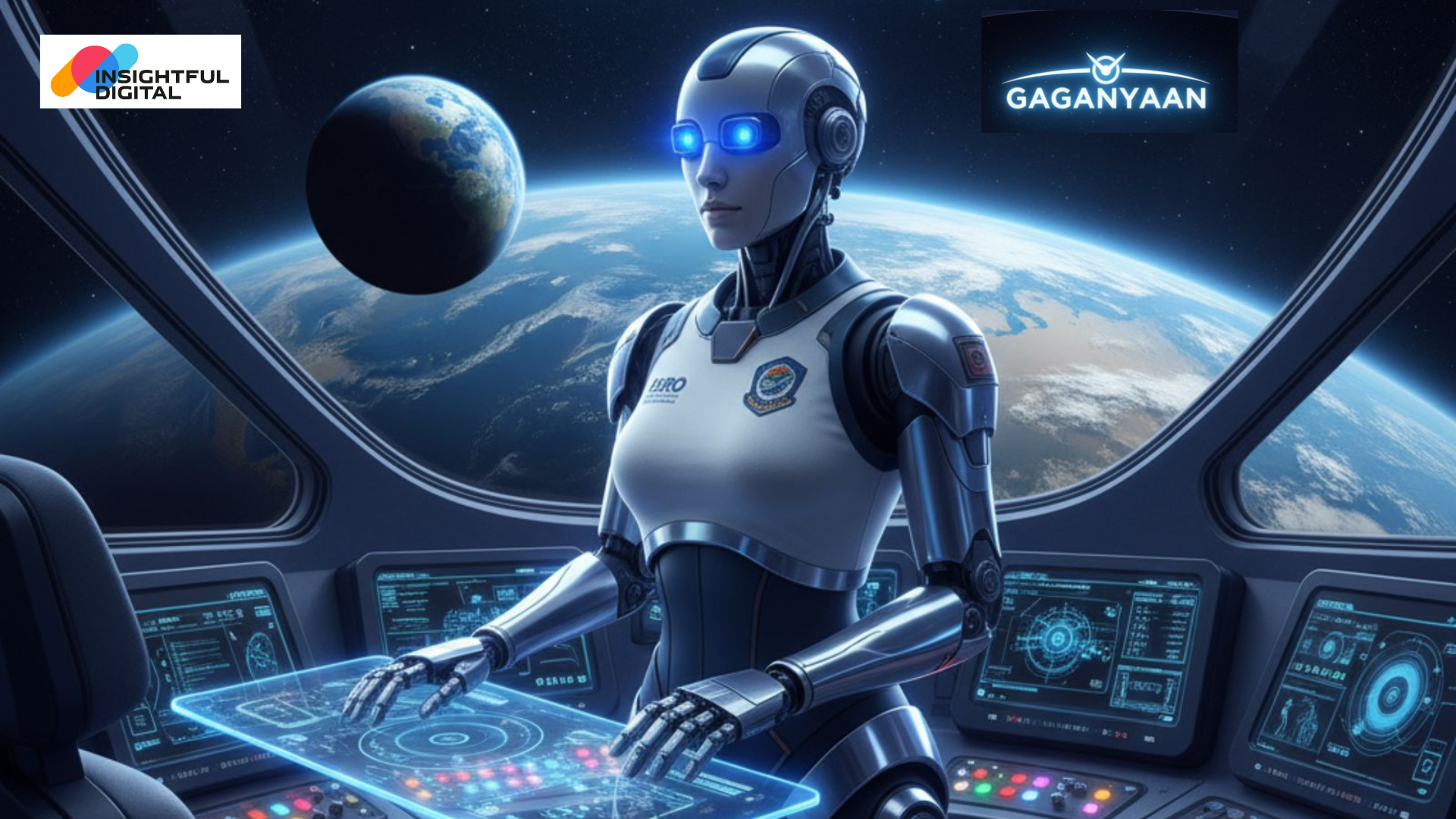
Picture the upper half of a human figure, designed to look like a woman, fitted with sensors, cameras, and an AI system that can talk back. That’s Vyommitra. It can blink, move its arms, and carry on a conversation in English or Hindi. You can imagine astronauts feeling a bit less alone with something like this inside the spacecraft.
But it’s not only for company. Vyommitra can monitor conditions inside the cabin, track oxygen and pressure, operate panels, and send updates to ground control. In many ways, it’s like a very calm co-pilot who never panics.
Why send a robot instead of people?
The simple answer - safety. Before anyone risks human life in space, ISRO needs to test every system. Vyommitra takes the place of astronauts during the uncrewed flights. It will perform basic tasks, respond to situations, and let engineers know if something isn’t working as expected.
Think of it like a rehearsal before the main show. The robot gets to “live through” the experience first so that humans can enter later with fewer risks.
Some of its abilities
Vyommitra isn’t about advanced robotics that can walk or run, but it does have a few pretty useful tricks:
It can talk naturally and answer questions.
It observes changes in the spacecraft’s environment.
It can carry out panel operations and give status reports.
It uses gestures and expressions so interaction feels less mechanical.
Nothing flashy, but exactly what’s needed in a small, pressurized spacecraft.
Why it matters so much
Human spaceflight is one of the toughest challenges for any space agency. For India, this isn’t just about sending someone up and bringing them back - it’s about showing the world that we can do it safely and on our own terms.
Vyommitra helps by being the middle step between machines and humans. It also shows that India is not just catching up with countries like the US or Russia - it’s adding its own flavor. While NASA had Robonaut and Russia tried Skybot, ISRO built something simpler yet perfectly suited for the mission.
What’s next for Vyommitra?
In the coming test flights, Vyommitra will be on board, checking systems and collecting data. If everything works as planned, astronauts will follow in later missions. And who knows - Vyommitra might still be there as an assistant or even as a source of comfort during long hours in orbit.
Final thought
Vyommitra might look like just a robot, but it carries a much bigger idea. It represents India’s careful approach - blending innovation with caution. It’s a test subject, a safety measure, and maybe even a morale booster for astronauts. For a country taking its first human steps into space, having a “space friend” like Vyommitra seems like the right way to start.
MCQs for Readers:
1. What is Vyommitra?
a) Full humanoid astronaut
b) Half-humanoid robot
c) Space satellite
d) AI-powered drone
Answer: b) Half-humanoid robot
2. Vyommitra is being developed by ISRO for which mission?
a) Chandrayaan 3
b) Mangalyaan 2
c) Gaganyaan
d) Aditya-L1
Answer: c) Gaganyaan
3. What is Vyommitra’s primary role in the mission?
a) Flying the spacecraft
b) Monitoring systems and safety
c) Sending signals to Earth
d) Repairing satellites
Answer: b) Monitoring systems and safety
4. Why is Vyommitra called a “half-humanoid”?
a) It has no robotic functions
b) It mimics human form only from the waist up
c) It is smaller than astronauts
d) It is not AI-powered
Answer: b) It mimics human form only from the waist up
5. Which ability makes Vyommitra unique?
a) Cooking meals in space
b) Performing spacewalks
c) Communicating in multiple languages
d) Generating oxygen
Answer: c) Communicating in multiple languages
6. How does Vyommitra help before astronauts are sent?
a) By testing life-support and spacecraft systems
b) By training astronauts on Earth
c) By collecting samples on the Moon
d) By providing navigation maps
Answer: a) By testing life-support and spacecraft systems
7. What kind of technology powers Vyommitra?
a) Blockchain
b) Artificial Intelligence
c) Quantum computing
d) Virtual Reality
Answer: b) Artificial Intelligence
8. When is the Gaganyaan human mission expected to launch?
a) 2024
b) 2025
c) 2026
d) 2030
Answer: c) 2026
9. Which organization created Vyommitra?
a) DRDO
b) NASA
c) ISRO
d) HAL
Answer: c) ISRO
10. How does Vyommitra support astronauts during missions?
a) By reducing spacecraft weight
b) By assisting with communication and operations
c) By replacing mission control
d) By piloting the spacecraft alone
Answer: b) By assisting with communication and operations