
Artificial Intelligence (AI) is no longer just a buzzword – it’s shaping how we live, work, and even think about the future. But with so much power in its hands, the big question is: who decides the rules of AI?
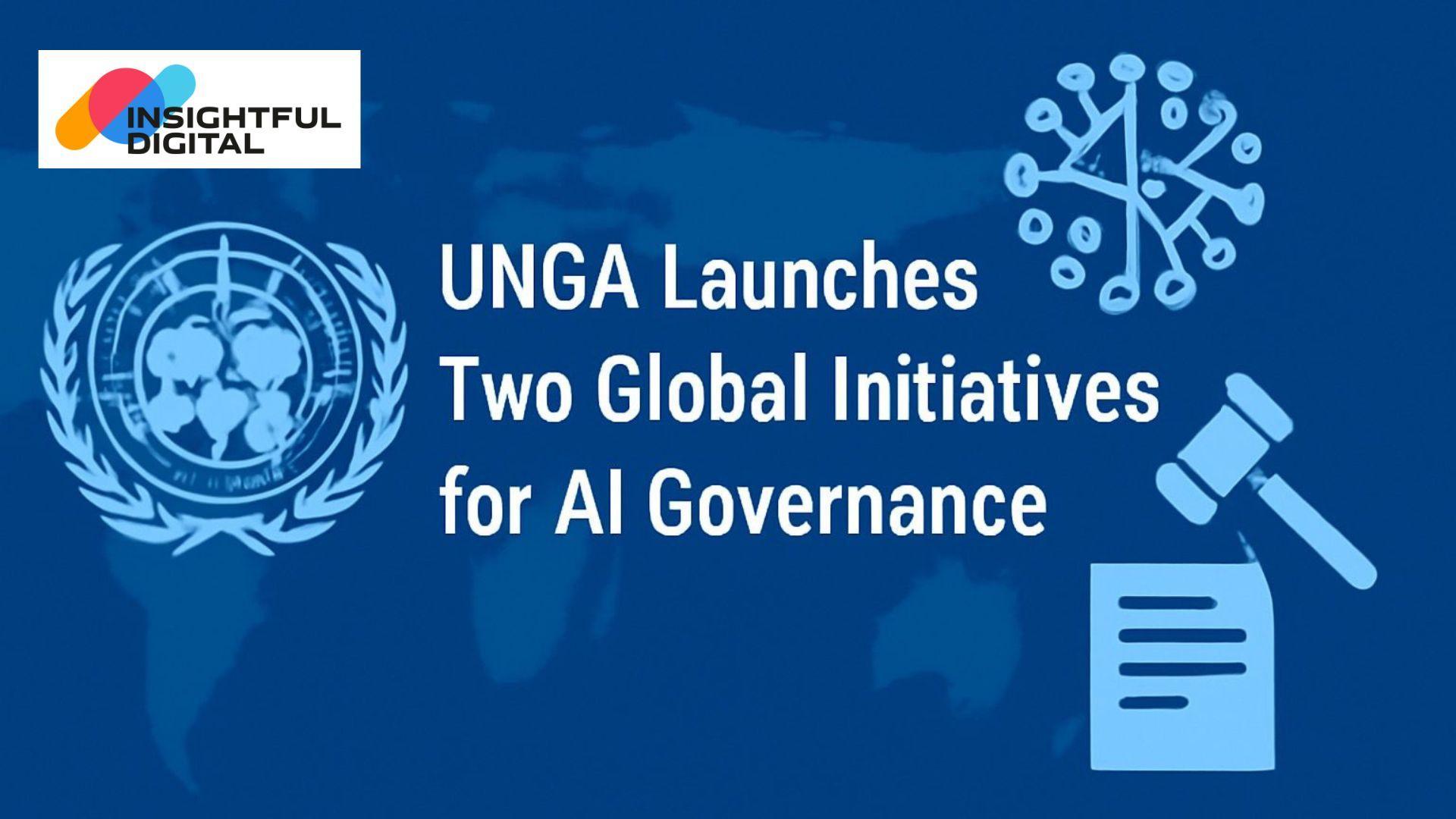
This week, the United Nations General Assembly (UNGA) tried to answer that question. In New York, world leaders came together and launched two major initiatives that could guide how AI is developed and used across the globe.
Why now?
The timing is important. AI tools are spreading fast – from chatbots and healthcare apps to military technologies. Some countries are pushing for rapid adoption, while others are worried about job losses, bias, privacy issues, and misuse. Without shared rules, the risks can spill over borders.
That’s why the UN wants to bring nations under one roof. Unlike tech companies or regional groups, the UN represents all member states – big and small, developed and developing.
What are the two initiatives?
A Global AI Governance Framework
This will be a set of guiding principles. Think of it as a roadmap that countries can use to design their own AI laws while keeping global standards in mind.
Issues like safety, fairness, accountability, and transparency are likely to be the core focus.
An International AI Research & Coordination Hub
The idea is to create a shared space where governments, researchers, and civil society can exchange knowledge.
It will also look at capacity-building, so that smaller or developing nations aren’t left behind in the AI race.
What does this mean for India?
For India, which is pushing AI in healthcare, agriculture, and governance, this is both an opportunity and a challenge. On one hand, global frameworks can help India align with best practices and attract international partnerships. On the other hand, it must ensure that global rules don’t ignore the specific needs of developing nations.
The bigger picture
The truth is this is just the beginning. Drafting principles is easier than enforcing them. But by launching these initiatives, the UN has signaled that AI can’t be left to a few tech giants or a handful of countries. If the “cosmic dawn” of AI is to benefit everyone, the world needs a common playbook.
And maybe, just maybe, these two initiatives are the first step toward that.
MCQs on UNGA’s AI Governance Initiatives
Q1. Which international body recently launched two global initiatives for AI governance?
a) G20
b) World Bank
c) United Nations General Assembly (UNGA)
d) OECD
Answer: c) United Nations General Assembly (UNGA)
Q2. Where did the UNGA announce the two AI governance initiatives?
a) Geneva
b) New York
c) Paris
d) London
Answer: b) New York
Q3. What is the primary aim of the Global AI Governance Framework?
a) To promote AI gaming
b) To provide guiding principles for national AI policies
c) To replace national AI laws
d) To create AI-powered social media tools
Answer: b) To provide guiding principles for national AI policies
Q4. Which of the following is NOT a focus area of the UNGA’s AI framework?
a) Safety
b) Fairness
c) Transparency
d) Entertainment
Answer: d) Entertainment
Q5. The International AI Research & Coordination Hub aims to:
a) Build AI robots for the UN
b) Facilitate global cooperation and capacity-building
c) Regulate cryptocurrencies
d) Promote only Western AI models
Answer: b) Facilitate global cooperation and capacity-building
Q6. Why is AI governance becoming urgent now?
a) AI adoption is slowing down
b) AI is being used only in entertainment
c) AI tools are spreading rapidly with cross-border risks
d) AI has been banned worldwide
Answer: c) AI tools are spreading rapidly with cross-border risks
Q7. What is one of the key challenges for global AI governance?
a) Drafting principles is easier than enforcing them
b) AI has no risks at all
c) Only developing nations use AI
d) AI cannot be regulated
Answer: a) Drafting principles is easier than enforcing them
Q8. For India, the UNGA’s AI initiatives are:
a) Only a challenge
b) Only an opportunity
c) Both an opportunity and a challenge
d) Irrelevant
Answer: c) Both an opportunity and a challenge
Q9. Which of the following is a core benefit of international cooperation on AI?
a) Monopoly of big tech companies
b) Shared knowledge and fair development
c) Elimination of research
d) Reduced transparency
Answer: b) Shared knowledge and fair development
Q10. The UNGA’s AI initiatives mark the beginning of what?
a) An AI ban
b) A global AI playbook for responsible use
c) AI replacing the UN itself
d) A focus on entertainment tech
Answer: b) A global AI playbook for responsible use