
In my previous article, I talked about why GST matters for new entrepreneurs. After reading it, one of my friends who runs a small café told me something funny – a customer once asked, “Bhaiya, bill pe GST kahan hai?” He laughed it off but later realized he actually didn’t know which type of GST applied to his business.
That’s a very common situation. Most small business owners hear about GST all the time, but when it comes to CGST, SGST, IGST – things get confusing. Let’s clear that up.
Why Different Types of GST Exist
India is a country where both the Centre and the States need their share of tax. Before GST, there were dozens of overlapping taxes – VAT, excise, service tax. It was messy. GST brought them under one umbrella, but to make sure both Centre and State get their fair share, the system was divided into different types.
So the type of GST depends on whether you sell something inside your state or to another state.
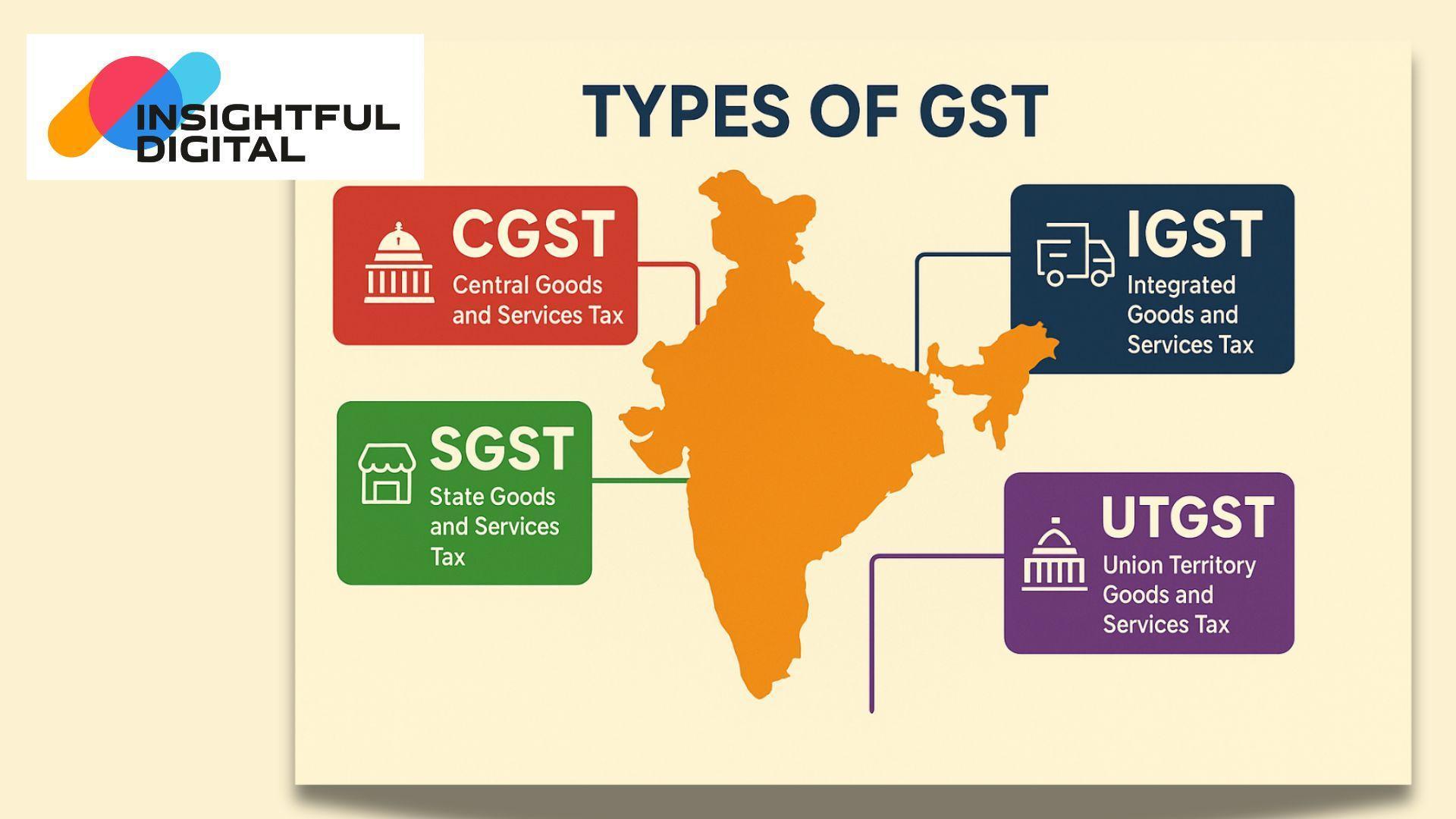
1. CGST – Central Goods and Services Tax
This is the Central Government’s part of GST. For example, if my friend sells a coffee in Patna itself, part of the GST on that coffee goes to Delhi – to the Centre.
2. SGST – State Goods and Services Tax
The other part goes to the State Government. Using the same coffee example, if the GST rate is 12%, then 6% is CGST and 6% is SGST. So both Centre and Bihar government share the tax.
3. IGST – Integrated Goods and Services Tax
Now imagine my friend gets an online order from Kolkata. Since that’s an interstate transaction, IGST is applied. In this case, instead of splitting, a single IGST is charged, and the Centre later passes the share to West Bengal.
4. UTGST – Union Territory GST
If the business is in a Union Territory like Chandigarh or Lakshadweep, instead of SGST, UTGST is charged. It’s basically the same concept but for Union Territories.
Real-Life Example
- Intra-state sale (Patna café to Patna customer): Coffee ₹100 + 6% CGST + 6% SGST = ₹112
- Inter-state sale (Patna café to Delhi customer): Coffee ₹100 + 12% IGST = ₹112
See? The amount is the same, but the tax division works differently.
GST 2.0 – What’s New?
Recently, you may have heard about GST 2.0. Don’t worry – it doesn’t change the types of GST. Instead, it’s about making compliance simpler. Features include:
- Easier return filing
- Better tracking of input tax credit
- Fewer errors in interstate transactions
So if you’re an entrepreneur, GST 2.0 won’t confuse you with new tax types – it will simply reduce the headache of filing.
Why Entrepreneurs Should Care
Understanding the types of GST isn’t just for accountants. It helps you:
- File the right returns
- Claim correct input tax credit
- Avoid penalties during audits
- Build trust with customers (like my friend does now by explaining bills confidently)
Final Thoughts
When you run a business, clarity matters. GST may look like just one tax, but knowing the difference between CGST, SGST, IGST, and UTGST makes all the difference. My friend who once panicked when a customer asked about GST? He now trains his staff to explain the bill correctly.
For any entrepreneur, that’s the kind of confidence you need – not just to comply with the law, but to grow your business smoothly.
MCQs for Readers:
Q1. Which of the following taxes is levied by the Central Government on intra-state sales?
a) SGST
b) IGST
c) CGST
d) UTGST
Answer: c) CGST
Q2. In an intra-state sale, GST is shared between –
a) Central and State Governments
b) Only Central Government
c) Only State Government
d) Central and Local Bodies
Answer: a) Central and State Governments
Q3. If a café in Delhi sells coffee to a customer in Mumbai, which type of GST applies?
a) CGST + SGST
b) SGST + UTGST
c) IGST
d) Only CGST
Answer: c) IGST
Q4. SGST is collected and retained by –
a) The Central Government
b) The respective State Government
c) The Reserve Bank of India
d) The Supreme Court of India
Answer: b) The respective State Government
Q5. UTGST is applicable in which of the following regions?
a) States with high population
b) All metropolitan cities
c) Union Territories without legislatures
d) Special Economic Zones
Answer: c) Union Territories without legislatures
Q6. What is the role of IGST in GST structure?
a) To replace CGST
b) To handle interstate transactions
c) To provide subsidy to exporters
d) To fund Panchayati Raj bodies
Answer: b) To handle interstate transactions
Q7. In an intra-state supply of goods worth ₹1,00,000 with 18% GST, how much is collected as SGST?
a) ₹9,000
b) ₹18,000
c) ₹12,000
d) ₹6,000
Answer: a) ₹9,000
Q8. Which of the following is NOT a type of GST in India?
a) CGST
b) SGST
c) IGST
d) PGST
Answer: d) PGST
Q9. GST 2.0 primarily focuses on –
a) Introducing new tax types
b) Simplifying return filing and ITC tracking
c) Increasing tax rates across states
d) Abolishing CGST and SGST
Answer: b) Simplifying return filing and ITC tracking
Q10. Who is responsible for collecting IGST in India?
a) State Governments
b) Local Municipal Bodies
c) Central Government
d) Union Territories
Answer: c) Central Government