When you’re building a startup, your energy often goes into product development, fundraising, or just keeping the lights on. Intellectual Property (IP) usually feels like something only big corporations worry about. But here’s the truth – ignoring IP early on can create roadblocks that hurt your business later.
I’ve seen founders pour their hearts into building an idea, only to lose momentum because they overlooked basic IP practices. To help you avoid those pitfalls, let’s walk through some of the most common IP mistakes startups make – and how you can steer clear of them.
1. Skipping Trademark Checks
Many startups jump into branding without checking if their chosen name or logo is already trademarked. Imagine investing in packaging, marketing, and a website – only to get a legal notice asking you to stop using your brand name.
A quick trademark search on the IP India portal (https://ipindiaonline.gov.in/eregister/) can save you from rebranding headaches. Even better, file your trademark early to secure exclusive rights.
2. Ignoring Patents Until It’s Too Late
Some founders hesitate to file patents because they think it’s “too early” or “too expensive.” The risk? Someone else could patent a similar idea, leaving you unable to scale your own innovation.
If your product involves a unique process, design, or technology, consult a patent professional. Provisional patents are a good starting point – they give you a one-year head start at relatively low cost.
3. Overlooking Copyrights for Creative Work
Whether it’s your website content, product manuals, or app design, creative assets are automatically covered under copyright law once created. But here’s the catch – enforcement is easier if you formally register them.
I know a small digital agency that lost clients because competitors copied their pitch deck design. Registering copyrights could have given them stronger grounds to fight back.
4. Sharing Too Much Without NDAs
Pitching your idea to investors, potential partners, or freelancers feels exciting. But if you do it without a Non-Disclosure Agreement (NDA), you risk losing control of your concept.
Startups sometimes trust verbal assurances – a big mistake. NDAs create a paper trail, ensuring that your business know-how remains protected even when others get access.
5. Not Assigning IP Ownership Properly
Here’s a subtle but dangerous mistake: when you hire developers, designers, or freelancers, the IP they create may legally belong to them unless you transfer rights in writing.
For example, if a freelance coder builds your app, and you don’t have a contract transferring ownership, that person technically owns the code. Imagine the disaster if they walk away.
Always include “IP assignment clauses” in contracts to ensure your startup owns what it pays for.
6. Believing “One Size Fits All” Protection
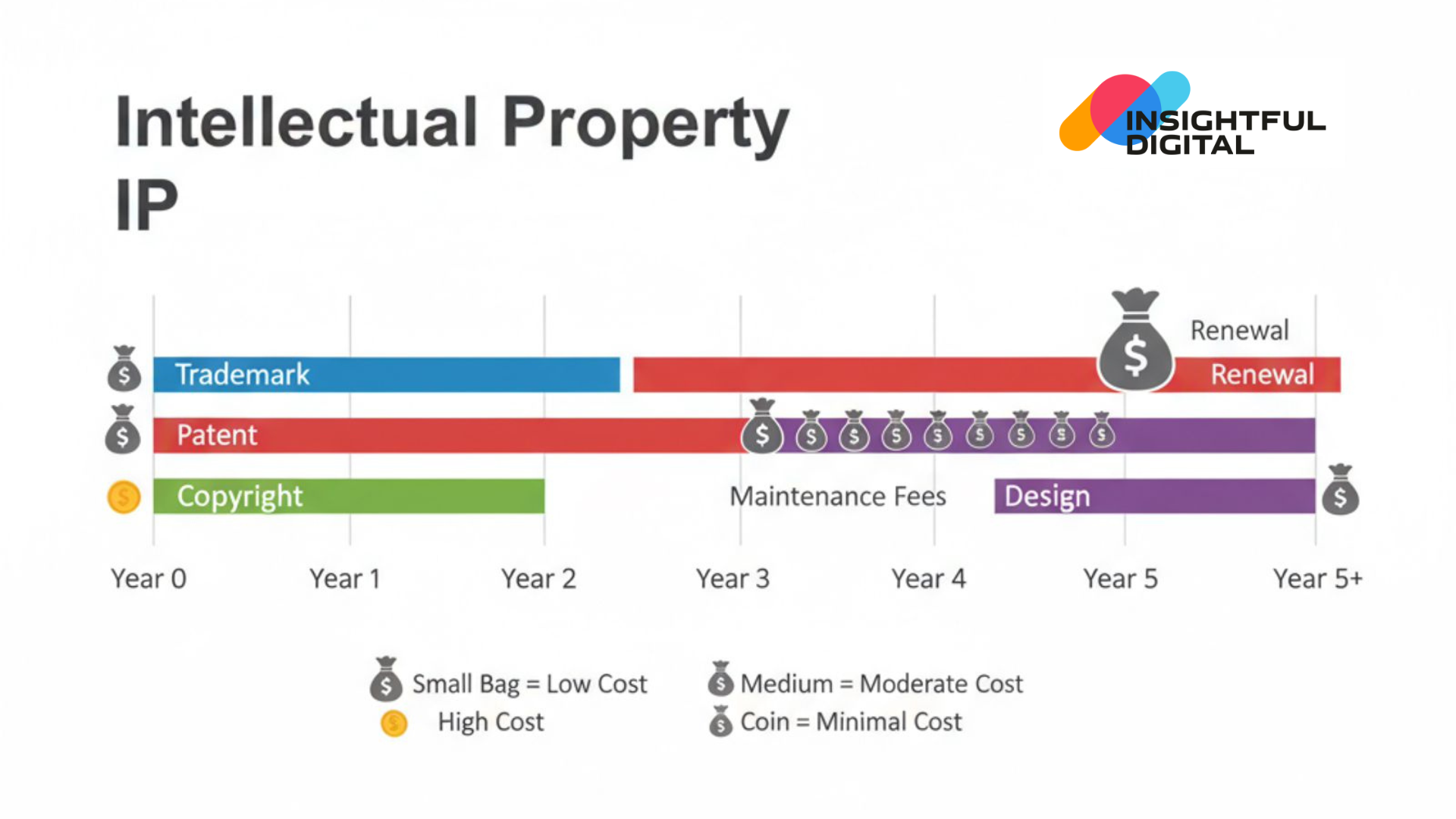
IP isn’t a single umbrella – trademarks, patents, copyrights, and trade secrets each protect different things. Startups often rely on just one (usually trademarks) and ignore others.
Think of IP like a toolkit:
Trademarks protect your brand identity
Patents protect innovation
Copyrights protect creative work
Trade secrets protect confidential know-how
Using the right combination is key to building a solid shield around your business.
7. Waiting Too Long
Perhaps the most common mistake – delaying action. By the time many startups consider IP, competitors have already staked their claims. In fast-moving industries, waiting even six months can make the difference between owning your idea and fighting to prove it’s yours.
Final Thoughts
Startups thrive on speed and creativity – but those very strengths can turn into weaknesses if you don’t secure your Intellectual Property early. You don’t need a huge legal budget from day one. What you do need is awareness and timely action.
Think of IP as an investment, not an expense. Just like you wouldn’t build a house without locking the doors, you shouldn’t build a business without protecting its ideas, brand, and creations.
If you’re starting up today, take a moment to ask yourself – have I really secured what makes my business unique?
MCQs for Readers:
1. Which of the following is a common IP mistake startups make?
a) Filing a trademark early
b) Using NDAs with partners
c) Ignoring patent protection until it’s too late
d) Registering copyrights for creative work
Answer: c) Ignoring patent protection until it’s too late
2. Why should startups check trademarks before finalizing a brand name?
a) To avoid paying extra government fees
b) To prevent legal disputes and forced rebranding
c) To secure patents faster
d) To reduce annual compliance
Answer: b) To prevent legal disputes and forced rebranding
3. What is the purpose of a Non-Disclosure Agreement (NDA) for startups?
a) To reduce tax liabilities
b) To ensure confidentiality of business ideas
c) To register trademarks automatically
d) To transfer ownership of assets
Answer: b) To ensure confidentiality of business ideas
4. Who legally owns the code if a freelance developer builds an app without a written contract?
a) The startup founder
b) The government
c) The freelance developer
d) The investor
Answer: c) The freelance developer
5. Which type of IP protects confidential know-how like formulas and business strategies?
a) Trademark
b) Copyright
c) Patent
d) Trade Secret
Answer: d) Trade Secret
6. Why is registering copyrights useful even though protection exists automatically?
a) It eliminates annual fees
b) It simplifies enforcement in case of infringement
c) It replaces the need for patents
d) It provides lifetime royalty exemption
Answer: b) It simplifies enforcement in case of infringement
7. Which IP mistake is considered the most common among startups?
a) Over-registering multiple trademarks
b) Delaying IP protection until competitors act
c) Filing too many patents early
d) Using NDAs excessively
Answer: b) Delaying IP protection until competitors act
8. What does a provisional patent offer startups?
a) Permanent rights to an invention
b) One-year priority to file the complete patent
c) Exemption from IP fees
d) Automatic copyright transfer
Answer: b) One-year priority to file the complete patent
9. Which of the following protects a brand identity like logo and name?
a) Patent
b) Trademark
c) Copyright
d) NDA
Answer: b) Trademark
10. What is the key takeaway for startups regarding IP?
a) Treat IP as a legal burden
b) Delay IP until scaling stage
c) Consider IP as an investment for growth and security
d) Focus only on trademarks
Answer: c) Consider IP as an investment for growth and security