
Every entrepreneur knows the thrill of bringing an idea to life - from sketching a logo on paper to seeing customers interact with your product for the first time. But here’s a reality check: the moment your idea is out in the open, it’s vulnerable. Competitors, sometimes even unintentionally, can copy your brand name, your design, or your invention. That’s why having a clear Intellectual Property (IP) strategy isn’t a luxury - it’s survival.
Think of it as insurance for your creativity. You don’t have to register everything at once, but you do need to understand what to protect, when it matters most, and how much you’ll have to budget for it.
Why an IP strategy is worth planning early
In the hustle of launching a startup, IP often feels like paperwork you can push to “later.” But later usually comes when a competitor has already taken your name or replicated your innovation. Suddenly, you’re spending energy on lawyers instead of customers.
The smarter approach is timing - registering the right thing at the right stage. It doesn’t just protect your work, it also signals professionalism to investors, partners, and even customers.
1. Trademarks – Your brand’s identity
When to register: Once you’ve decided on your brand name, logo, or tagline and you’re confident you’ll stick with it. Don’t wait until someone else starts using something similar.
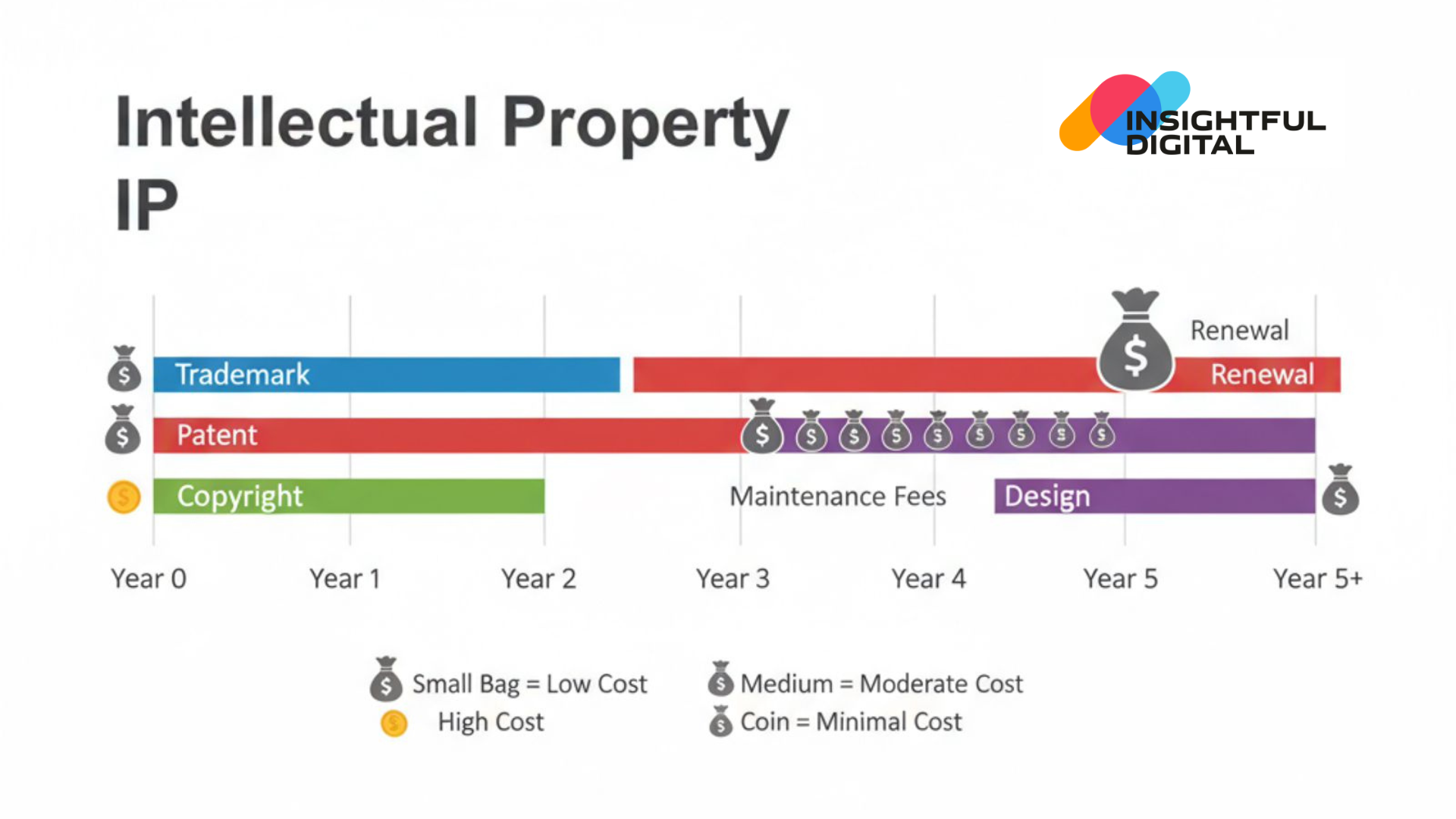
Cost involved (India example): ₹4,500–₹9,000 per class if you file online yourself. If you use an IP attorney, add their fees on top.
Why it matters: Customers often recognize your name and logo before anything else. If you lose control of those, you lose recognition.
Imagine this: You’ve built a local coffee chain with a catchy name. After two years of effort, you discover another café in another city with the same name. Without a trademark, your options are limited and messy.
2. Copyrights – Protect your creative work
When to register: When your business relies heavily on content - software code, training materials, graphics, jingles, or photographs. While copyright exists the moment you create something, registration provides stronger legal backing.
Cost involved: ₹500–₹5,000 depending on the type of work.
Why it matters: Having proof of ownership makes disputes quicker to resolve.
Picture this: A digital agency sees its carefully designed Instagram templates being reused by another competitor. With copyright registration, they can act immediately rather than wasting time gathering proof.
3. Patents – Guard your innovations
When to register: If your startup involves something truly innovative - a machine, chemical formula, or even a unique software process - register before you showcase too much publicly. Ideally, as soon as the invention is developed enough to be tested for novelty.
Cost involved: Filing starts at around ₹1,600 for individuals and up to ₹8,000 for companies. But add examination fees and legal support, and total costs can range from ₹25,000–₹2,00,000.
Why it matters: A patent gives you exclusive rights for 20 years. That’s a strong barrier against competition.
Scenario: A small med-tech startup filed patents early for their device. When bigger companies tried entering the space, their patent portfolio gave them leverage and credibility.
4. Trade secrets – The quiet protectors
When to secure: Right from Day 1. Trade secrets can’t be registered, but they can be protected through contracts, NDAs, and careful internal policies. These include recipes, formulas, algorithms, customer lists, or strategies.
Cost involved: Drafting agreements and maintaining confidentiality policies.
Why it matters: Sometimes, keeping something secret is more valuable than making it public.
Example: Think of a bakery guarding its signature recipe. The recipe itself isn’t registered, but secrecy is what keeps competitors from copying the taste.
Balancing timing and costs
For founders with tight budgets, here’s a simple order of priority:
Trademark early - it’s affordable and directly linked to your brand.
Copyright when content becomes central to your offering.
Patent only if your business relies on unique, novel technology.
Trade secrets from the start - they cost little but need discipline.
The aim isn’t to spend blindly, it’s to spend wisely and at the right moment.
Mistakes founders often make
One common mistake is thinking “we’ll handle IP later.” Later usually turns into a costly battle. Another mistake is overprotecting too early - like filing patents or trademarks in categories you don’t even use yet. Both extremes waste resources.
Final thoughts
An IP strategy is like having a growth plan for your ideas. You don’t need to do everything today, but you do need to be intentional. Whether you’re building an app, a local business, or a biotech company, protecting what makes you unique can save you stress and money down the line.
Your creativity deserves protection. A little planning now can prevent a lot of regret later.
MCQs for Readers:
Q1. What does IP stand for in business strategy?
a) Internal Planning
b) Intellectual Property
c) Investment Portfolio
d) International Policy
Answer: b) Intellectual Property
Q2. At what stage should a startup usually file for a trademark?
a) Before choosing a brand name
b) After launching the brand name
c) Only after 5 years of operation
d) When expanding overseas
Answer: b) After launching the brand name
Q3. Which of the following protects inventions and processes?
a) Trademark
b) Patent
c) Copyright
d) Trade Secret
Answer: b) Patent
Q4. Copyright protects:
a) Business slogans
b) Scientific formulas
c) Artistic and creative works
d) Logos only
Answer: c) Artistic and creative works
Q5. Which IP right is most cost-effective for a startup to secure early?
a) Trademark
b) Patent
c) Copyright
d) Industrial Design
Answer: a) Trademark
Q6. Approximate government fee for filing a trademark in India for individuals/startups is:
a) ₹4,500
b) ₹9,000
c) ₹12,000
d) ₹25,000
Answer: a) ₹4,500
Q7. Which IP right is generally the most expensive to maintain?
a) Trademark
b) Copyright
c) Patent
d) Design registration
Answer: c) Patent
Q8. Why should startups avoid delaying IP registration?
a) Competitors may copy their idea/brand
b) Costs increase every month
c) IP expires within 1 year
d) Customers demand IP certificates
Answer: a) Competitors may copy their idea/brand
Q9. Which IP type lasts the lifetime of the creator plus 60 years in India?
a) Trademark
b) Copyright
c) Patent
d) Trade Secret
Answer: b) Copyright
Q10. An IP strategy helps startups by:
a) Attracting investors
b) Building brand credibility
c) Preventing legal disputes
d) All of the above
Answer: d) All of the above