
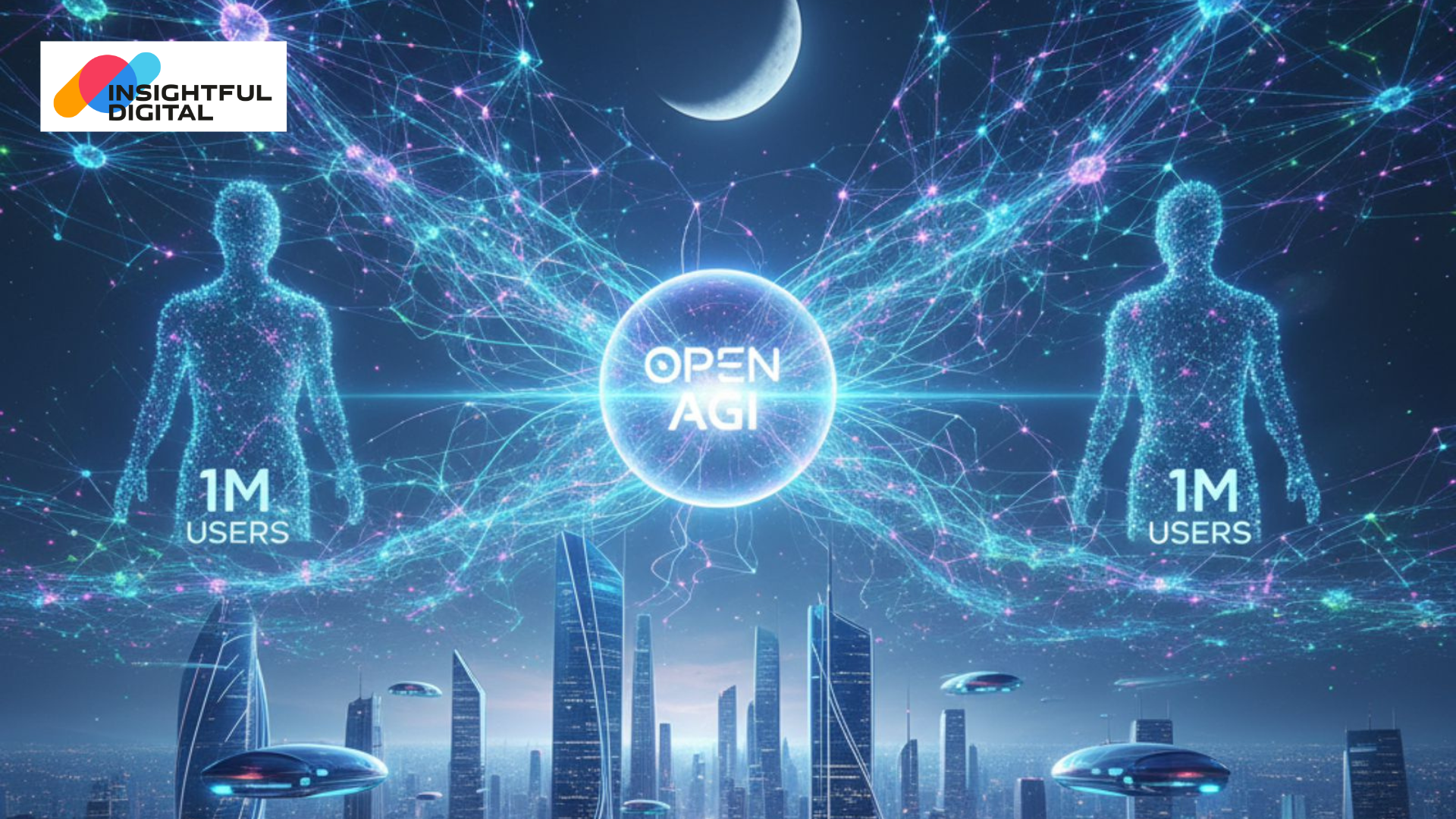
Artificial Intelligence has moved quickly in the past few years - from simple chatbots that could answer basic questions to today’s advanced generative systems. But Sentient AI’s latest move feels different. The company has rolled out an open AGI (Artificial General Intelligence) network, giving access to 2 million people around the world.
This isn’t just another product launch. It’s a shift in how we think about intelligence itself. Unlike the AI tools we already use for writing, design, or analysis, AGI is built to reason, adapt, and operate across fields - much like the human brain. In other words, this could be the closest step we’ve seen yet toward machines that can truly “think” across domains.
Why AGI Stands Out
Most AI today is narrow. It can excel at one thing - say image generation - but fails when asked to step outside that skill. AGI’s promise is different. It can switch from writing a story to solving a math problem to building a business plan, without losing context.
What makes Sentient AI’s move bold is not just the technology but the access. Instead of keeping AGI behind closed doors, the company is opening it up to a massive user base. That means faster learning cycles, more real-world feedback, and a chance for people outside big corporations to shape how AGI develops.
Highlights of the Open AGI Network
Scale without slowdown - Built to handle millions of users at once.
Collective intelligence - A shared platform where users help refine the model.
Transparency - Efforts to reduce the “black box” problem by making outputs more explainable.
Industry reach - Usable by startups, researchers, businesses, and individual creators.
How Businesses and Creators Can Benefit
For a young startup, having AGI on tap could mean faster product development and smarter customer support that actually understands context and tone. In healthcare, the technology might assist doctors by learning from vast amounts of data and suggesting tailored wellness plans.
Creators, too, could see AGI as a kind of collaborator. It can brainstorm scripts, draft music, or explore design ideas - not as a replacement but as a partner in creativity. And for researchers, this network offers the ability to test complex theories or run advanced simulations at a speed that was unimaginable a few years ago.
The Other Side of the Story
Of course, power like this doesn’t come without concerns. Open access raises a serious risk of misuse - from misinformation campaigns to security breaches. There’s also the ongoing debate about bias in AI models and the privacy of user data.
On top of that, many people worry about jobs. If AGI can take on tasks once thought too complex for automation, industries could see large-scale shifts. That’s why clear policies, ethical guidelines, and responsible use are going to be critical as adoption grows.
Looking at the Bigger Picture
What Sentient AI has done is move AGI from theory to practice. By opening the doors to millions, they’ve ensured that the technology evolves not just in labs but in the hands of everyday users. This could either create a collaborative, global intelligence network - or, if left unchecked, lead to risks that spread faster than we can manage.
The real test won’t be the technology itself but how people, companies, and governments choose to use it.
Final Thoughts
The launch of Sentient AI’s open AGI network is more than a technical milestone. It’s a social and cultural moment too. With 2 million users already part of the experiment, the future of intelligence is now a collective journey.
Handled with care, this could mark a turning point where AGI becomes a force for human progress. Mismanaged, it could become a problem bigger than we’re ready for. Either way, one thing is certain - the age of open AGI has begun.
MCQs for Readers:
Q1. What is the key difference between AGI and traditional AI?
a) AGI is only for creative tasks
b) AGI can adapt across domains
c) AI is faster than AGI
d) AGI is limited to single-task operations
Answer: b) AGI can adapt across domains
Q2. How many users are part of Sentient AI’s open AGI network launch?
a) 1 million
b) 2 million
c) 5 million
d) 500,000
Answer: b) 2 million
Q3. What major issue does the open AGI network aim to address?
a) Black box problem in AI
b) Shortage of GPUs
c) Low internet speed
d) Hardware shortages
Answer: a) Black box problem in AI
Q4. Which industries can benefit from AGI applications according to the article?
a) Startups
b) Healthcare
c) Creative industries
d) All of the above
Answer: d) All of the above
Q5. What is one of the biggest risks of open AGI access?
a) High subscription costs
b) Misuse for misinformation or cyberattacks
c) Lack of creativity
d) Limited scalability
Answer: b) Misuse for misinformation or cyberattacks
Q6. What does “collaborative intelligence” mean in the AGI network?
a) Users competing with each other
b) Shared training and refinement of the system
c) Manual coding of AI responses
d) Restricting access to certain users
Answer: b) Shared training and refinement of the system
Q7. Which type of flexibility does AGI promise compared to current AI?
a) Faster storage
b) Contextual adaptability across tasks
c) Higher server costs
d) Offline accessibility
Answer: b) Contextual adaptability across tasks
Q8. What concern arises regarding jobs and AGI?
a) More manual work
b) Job displacement in complex roles
c) Increase in human creativity
d) Lack of startup growth
Answer: b) Job displacement in complex roles
Q9. Why is Sentient AI’s launch considered a turning point?
a) It reduces internet costs
b) It opens AGI access to millions, not just labs
c) It focuses only on entertainment
d) It eliminates regulation
Answer: b) It opens AGI access to millions, not just labs
Q10. According to the article, what will shape the future of AGI?
a) Technology alone
b) How people, businesses, and governments use it
c) Faster processors
d) Free training data availability
Answer: b) How people, businesses, and governments use it