

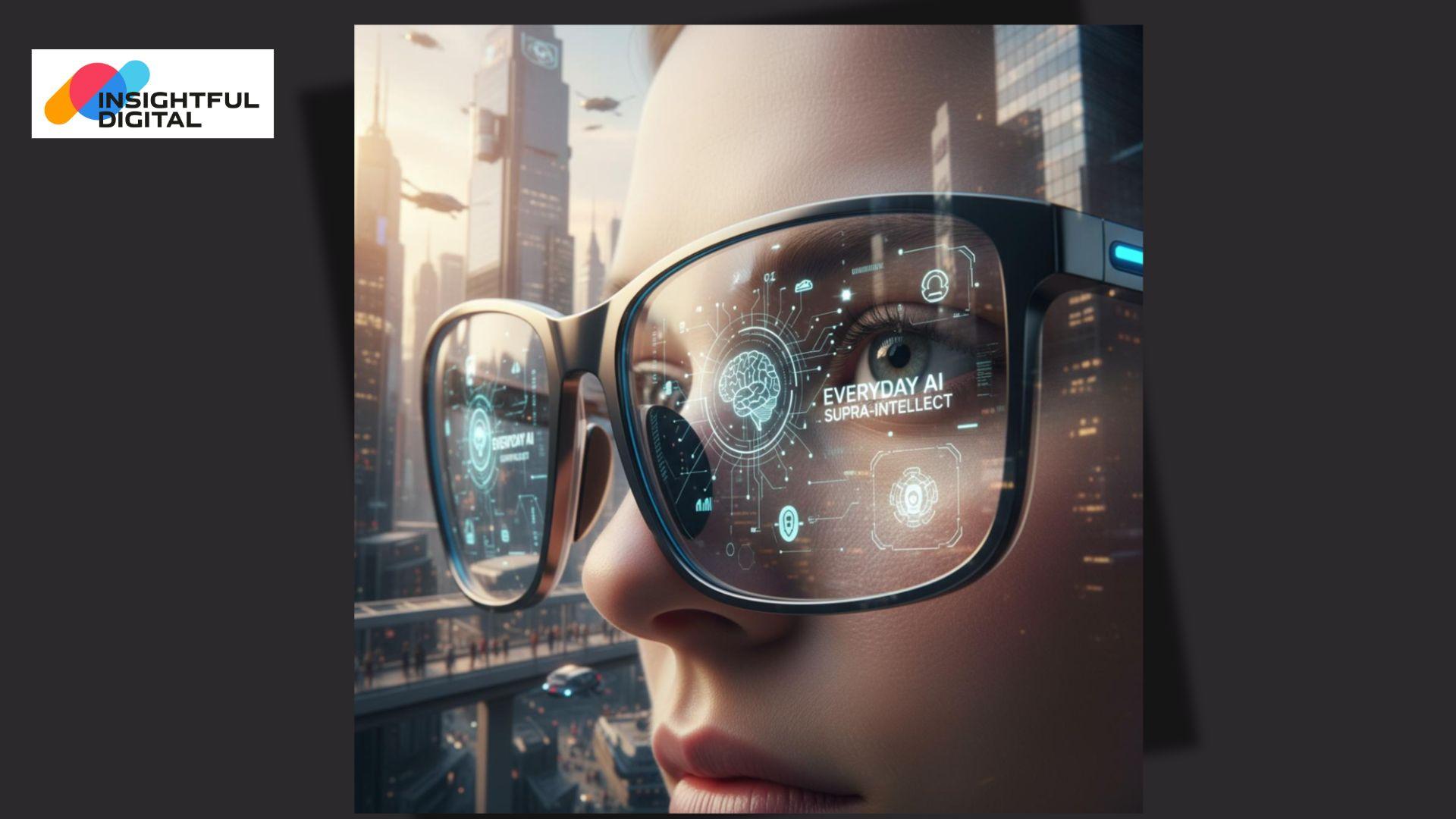
When Meta first launched its Ray-Ban Stories smart glasses, they were more of a novelty-cool for taking short videos or hands-free calls, but not exactly groundbreaking. Now, Meta has unveiled a new generation of smart glasses that come with a built-in display, and the stakes feel much higher.
This isn’t just about recording moments anymore. It’s about bringing AI and augmented reality (AR) into your everyday life in a way that doesn’t feel bulky, experimental, or futuristic-it feels usable.
A Display in Your Glasses: What’s New
Developed in partnership with Essilor Luxottica (Ray-Ban’s parent company), the new glasses feature a discreet micro-display. Imagine walking down the street and getting your navigation directions directly in your field of vision, or glancing at a notification without pulling out your phone. The glasses can even translate text in real time or summarize information through Meta’s AI assistant.
In other words, the line between your smartphone screen and your physical world is beginning to blur. Instead of looking down at your device, information simply appears where you are looking.
Why Meta is Betting Big on Wearables
Meta has been open about its long-term ambitions: to create artificial general intelligence (AGI) and eventually “superintelligence”-a system that can outperform humans in many tasks. These smart glasses may not be super intelligent yet, but they serve as a bridge.
Think of them as the middle ground between today’s smartphones and tomorrow’s fully immersive AR headsets. Apple’s Vision Pro might dominate headlines with its immersive mixed-reality experience, but it’s large, expensive, and not something you’d wear all day. Meta, on the other hand, wants AI to feel light, natural, and part of your routine.
The Everyday Use Case
The appeal of these glasses lies in their practicality:
Hands-free navigation while walking or biking.
Quick translations while traveling abroad.
Real-time object recognition (point at a plant, get its name).
Discreet notifications without interrupting conversations.
Seamless recording and calls for creators and professionals.
This practicality could help Meta overcome the stigma that has haunted wearables like Google Glass, which failed largely because it felt intrusive and awkward.
Challenges and Questions Ahead
Of course, challenges remain. Privacy concerns are huge-people may not be comfortable knowing others could be recording them without clear signs. Battery life and display quality also matter; if the experience feels clunky, adoption will stall.
There’s also the question of habit. People are deeply attached to their phones. Convincing users to adopt glasses as a daily device will require more than just cool features-it will require cultural acceptance.
The Bigger Picture
What makes this launch more than a gadget story is its connection to Meta’s bigger vision. Zuckerberg wants Meta to lead the race in consumer AI, not just social media. By combining stylish wearables, everyday usability, and AI-powered features, Meta is quietly laying the foundation for how we might all use computers in the next decade.
These glasses are less about replacing your phone today and more about getting you used to the idea that AI doesn’t live in your pocket-it lives with you.
Final Thought
Meta’s smart glasses with a built-in display are an experiment, yes, but also a glimpse of the future. If they succeed, they could normalize AI-driven wearables and accelerate the path toward AGI and, eventually, the “superintelligence” that Zuckerberg often talks about.
Whether consumers are ready for it is another question-but one thing is clear: Meta wants to put AI not just on your screen, but right in front of your eyes.
MCQs for Readers:
Q1. What is the standout feature of Meta’s newly launched smart glasses?
a) Voice recognition only
b) Built-in display
c) Fitness tracking
d) Music streaming
Answer: b) Built-in display
Q2. Meta’s smart glasses are seen as a step toward which futuristic concept?
a) Blockchain dominance
b) Quantum supremacy
c) Superintelligence
d) Virtual tourism
Answer: c) Superintelligence
Q3. Which sector is most directly influenced by Meta’s smart glasses launch?
a) Food & Beverage
b) Wearable Technology
c) Healthcare Services
d) Education Policy
Answer: b) Wearable Technology
Q4. What role does AI play in Meta’s smart glasses?
a) Enables hands-free interaction and smart assistance
b) Reduces the cost of lenses
c) Tracks medical prescriptions
d) Offers online shopping discounts
Answer: a) Enables hands-free interaction and smart assistance
Q5. The smart glasses launch reflects Meta’s push into which area?
a) Traditional hardware
b) Augmented and wearable intelligence
c) Financial services
d) Energy production
Answer: b) Augmented and wearable intelligence
Q6. What does the term ‘superintelligence’ suggest in this context?
a) Glasses with higher lens quality
b) A state where AI systems outperform human intelligence
c) Faster Wi-Fi connectivity
d) Unlimited data storage in eyewear
Answer: b) A state where AI systems outperform human intelligence
Q7. How could these glasses transform professional work environments?
a) By replacing all laptops immediately
b) Through real-time information overlays and AI assistance
c) By removing the need for electricity
d) By providing entertainment only
Answer: b) Through real-time information overlays and AI assistance
Q8. What competitive advantage might Meta aim for with these smart glasses?
a) A lead in wearable AI technology
b) Manufacturing of cheaper smartphones
c) Dominance in video editing tools
d) Faster food delivery services
Answer: a) A lead in wearable AI technology
Q9. Which other tech innovation aligns closely with smart glasses?
a) Blockchain wallets
b) Augmented Reality headsets
c) Traditional desktops
d) Radio pagers
Answer: b) Augmented Reality headsets
Q10. Why does this launch matter for consumers?
a) It makes eyewear fashionable only
b) It offers a glimpse of how AI could integrate into daily life
c) It reduces internet subscription costs
d) It replaces smartwatches completely
Answer: b) It offers a glimpse of how AI could integrate into daily life