
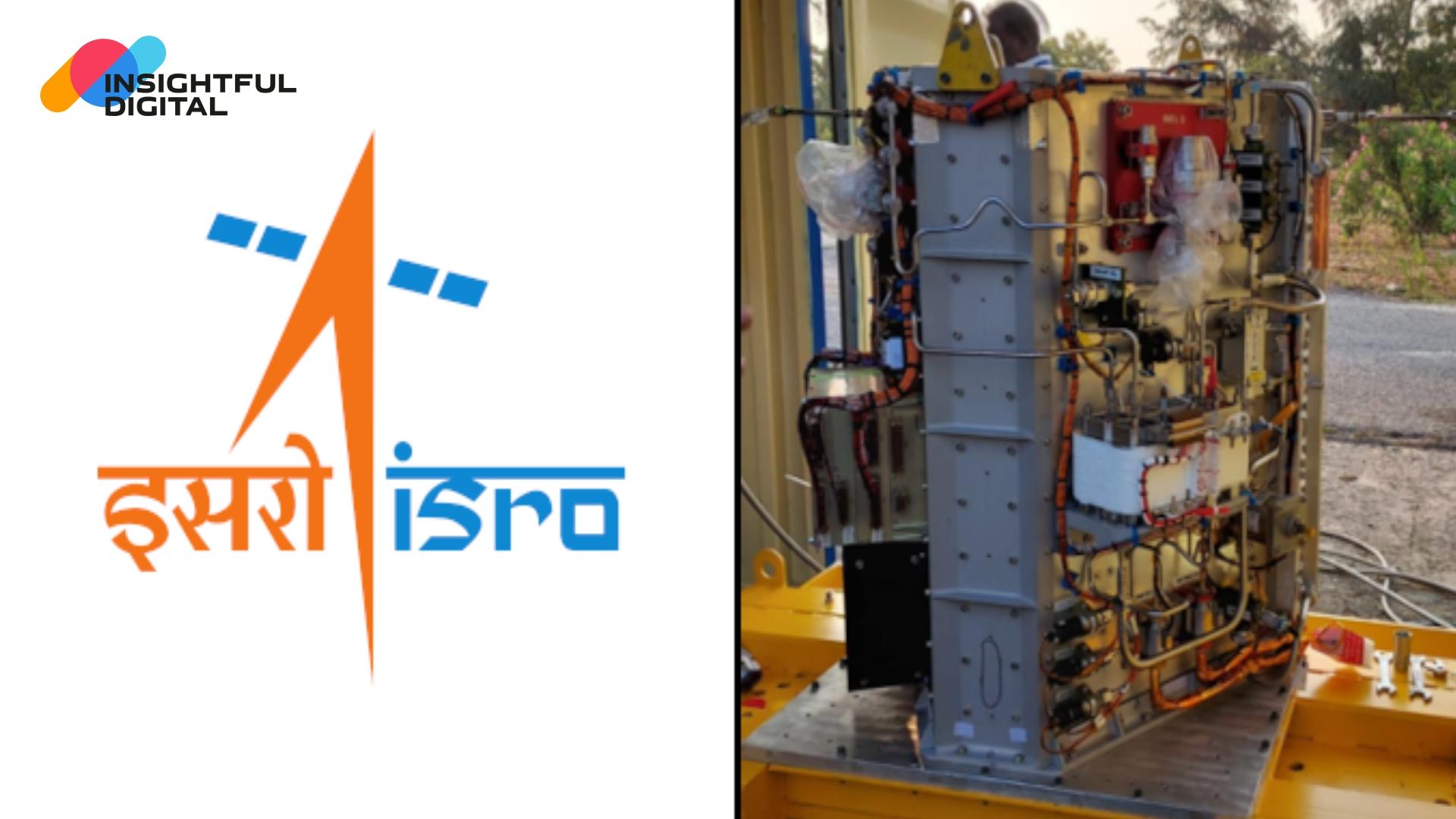
ISRO achieved a significant milestone by testing a 100 W Polymer Electrolyte Membrane Fuel Cell Power System on the POEM3 orbital platform during the PSLV-C58 mission.
On January 1, 2024, the Indian Space Research Organization (ISRO) successfully tested a 100 W class Polymer Electrolyte Membrane Fuel Cell-based Power System (FCPS) on the POEM3 orbital platform. This notable achievement occurred under the PSLV-C58 mission, marking an important step in evaluating fuel cell technology for future space missions.
Objective of the Experiment
The primary objective of this experiment was to assess the performance of Polymer Electrolyte Membrane fuel cells in the challenging environment of space. Additionally, the mission aimed to gather valuable data to improve the design of power systems for upcoming space missions.
Power Generation in Space
During the short-term test on POEM, the FCPS generated 180 W of power using hydrogen and oxygen gases stored in high-pressure vessels. This successful test provided significant data on the performance of various static and dynamic systems integrated within the power system.
Hydrogen Fuel Cells: A Game-Changer
The hydrogen fuel cells used in the FCPS have the unique capability to directly generate electricity from hydrogen and oxygen gases. Unlike traditional generators that rely on combustion reactions, fuel cells operate on electrochemical principles similar to batteries. This direct conversion process makes them highly efficient, emission-free, and ideal for space missions where power, water, and heat are essential.
Social Applications of Fuel Cells
Beyond space exploration, fuel cells hold significant potential for social applications. They are emerging as a promising solution for replacing engines in various types of vehicles, offering comparable range and fuel recharge times to traditional engines. Their distinct advantages make them a potential game-changer in achieving emission-free transportation.
FCPS and India's Space Station
The FCPS payload tested in the POEM-3 experiment has critical implications for India's proposed space station, expected to be operational by 2035. This power system, capable of producing both electricity and pure water, aligns perfectly with the essential requirements of a space station.
Mission Achievements: XPoSat and POEM-3
The successful launch of the PSLV-C58 mission also included the X-ray Polarimeter Satellite (XPoSat) mission. Additionally, the POEM-3 experiment aimed to fulfill the objectives of ten other payloads developed by start-ups, academic institutions, and various ISRO centers, including FCPS.
Future Prospects: Insights from Dr. S. Unnikrishnan Nair
Dr. S. Unnikrishnan Nair of the Vikram Sarabhai Space Centre (VSSC) highlighted the significance of payloads like FCPS during the POEM phase and emphasized their potential applications in future space stations. The successful test paves the way for incorporating advanced power systems in upcoming space exploration missions.
Advances in Battery Technology
In addition to the success of FCPS, ISRO has also qualified 10 Ah silicon-graphite anode-based high-energy density Li-ion cells. This achievement provides a lightweight and low-cost alternative to current cells, demonstrating ISRO's commitment to advancing battery technology for space applications.
Important Questions for Exams
Q.1. What was the primary objective of ISRO's experiment with the Polymer Electrolyte Membrane Fuel Cell on POEM3?
a) To generate electricity
b) To collect data for future missions
c) To communicate with satellites
Answer: b) To collect data for future missions
Q.2. Besides FCPS, which technology has ISRO developed in battery advancements?
a) Nickel-cadmium cells
b) Silicon-graphite anode-based Li-ion cells
c) Alkaline batteries
Answer: b) Silicon-graphite anode-based Li-ion cells
Q.3. Which mission was launched along with POEM3 on January 1, 2024, with PSLV-C58?
a) Mars Orbiter Mission
b) Lunar Exploration Mission
c) X-ray Polarimeter Satellite (XPoSat) mission
Answer: c) X-ray Polarimeter Satellite (XPoSat) mission
Q.4. What type of energy is generated using hydrogen fuel cells?
a) Thermal energy
b) Electrical energy
c) Mechanical energy
Answer: b) Electrical energy
Q.5. On which platform was the FCPS tested?
a) PSLV-C58
b) POEM3
c) XPoSat
Answer: B) POEM3;
Q.6. What gases are used by FCPS to generate electricity?
a) Nitrogen and oxygen
b) Hydrogen and oxygen
c) Carbon dioxide and oxygen
Answer: b) Hydrogen and oxygen
Q.7. When is India's proposed space station expected to be operational?
a) 2025
b) 2030
c) 2035
Answer: c) 2035
Q.8. What are the benefits of the FCPS payload?
a) It offers high efficiency, zero emissions, and suitability for space missions.
b) It is only useful on Earth.
c) It can only be used for testing.
Answer: a) It offers high efficiency, zero emissions, and suitability for space missions.
Q.9. Which type of high-energy density Li-ion cells has ISRO recently qualified?
a) Nickel-based cells
b) Cobalt-based cells
c) Silicon-graphite anode-based cells
Answer: c) Silicon-graphite anode-based cells
Q.10. What was the purpose of the PSLV-C58 mission?
a) To launch satellites only
b) To fulfill the objectives of various payloads including XPoSat and POEM-3
c) To search for life on Mars
Answer: b) To fulfill the objectives of various payloads including XPoSat and POEM-3