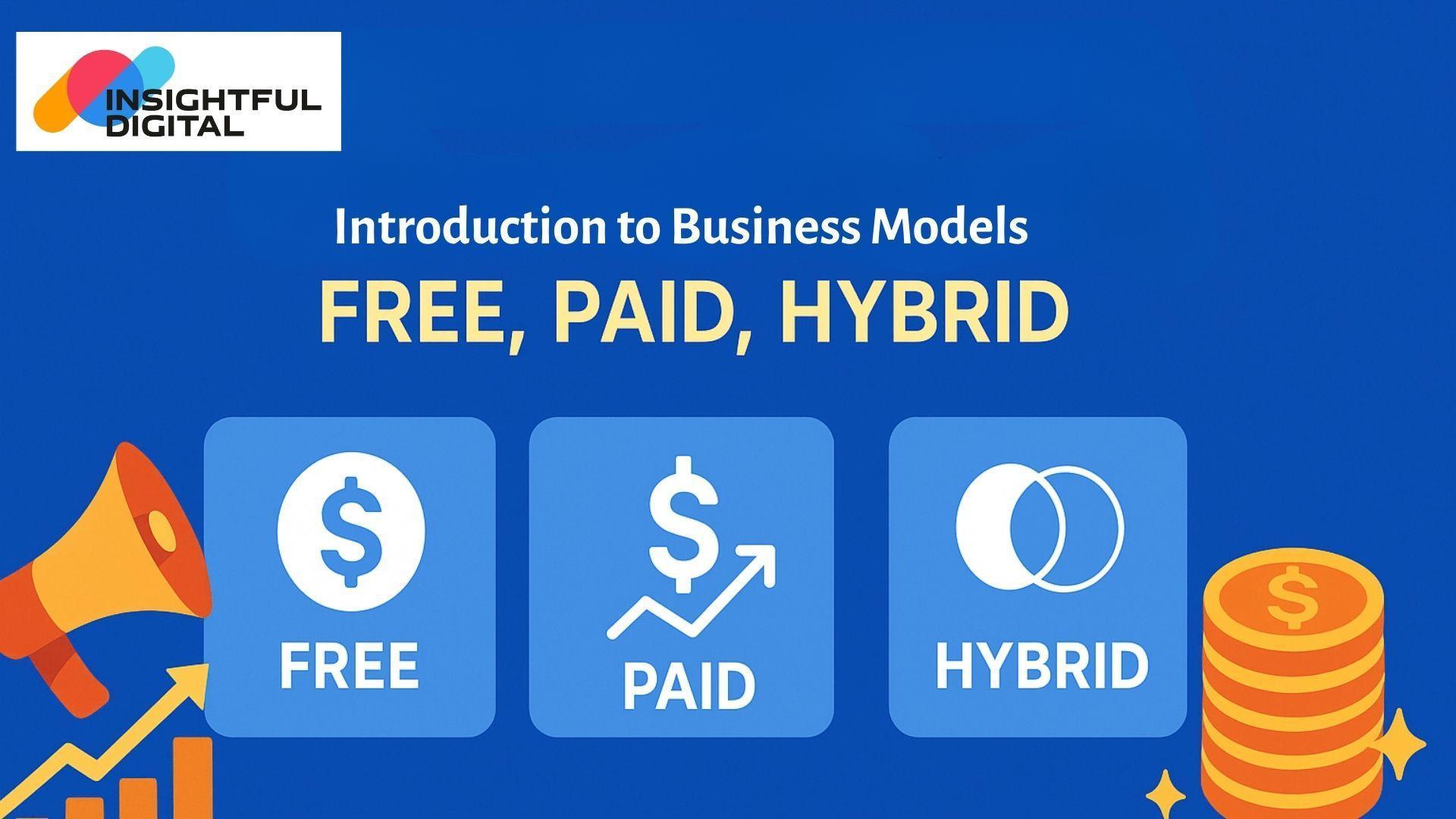
Introduction to Business Models – Free, Paid, Hybrid
When someone starts a business, the first big question is – how will this business make money? That’s where business models come in. A business model is simply a strategy that explains how a company delivers value to its customers and, in return, earns revenue. Over the years, companies have experimented with different approaches, but three models often stand out – free, paid, and hybrid. Each has its own logic, benefits, and challenges.
Free Business Model
The free model is exactly what it sounds like – users don’t pay anything upfront. This is commonly seen in industries like tech, media, and online services. A great example is Google. You don’t pay to use Google Search, Gmail, or YouTube, yet these platforms run massive businesses. How? By monetizing through advertisements, data insights, and brand partnerships.
The free model works best when you want to scale quickly and attract a large user base. Startups often use it to break into crowded markets. However, there’s a catch – the company still needs revenue, so monetization usually happens indirectly. For instance, social media platforms like Instagram or Facebook are “free” for users, but businesses pay heavily to advertise on them.
The challenge here is sustainability. If a business offers everything for free but fails to find a strong revenue stream behind the scenes, it may run into losses. Many early-stage apps fall into this trap – they get users but no solid income.
Paid Business Model
The paid model is more straightforward. Customers pay directly for a product or service, and that’s how the company survives. Think about Apple selling iPhones, or Netflix charging a monthly subscription fee. Here, the value exchange is transparent – you pay, you get the service.
The advantage of the paid model is that it builds predictable revenue. If you have 10,000 subscribers paying ₹500 per month, you know exactly what your earnings look like. This allows businesses to plan, invest, and grow steadily.
However, the barrier is convincing customers to actually pay. In a world where so much is available for free, getting people to spend money requires strong value, trust, and differentiation. That’s why paid models often demand higher-quality offerings and better customer support.
Hybrid Business Model
The hybrid model is where things get interesting. It combines elements of both free and paid approaches. You might have heard the term “freemium” – that’s a classic hybrid structure. Users get a basic version of the product for free, but advanced features require payment. Spotify, Canva, and Zoom are great examples.
This model is powerful because it lowers the entry barrier. Customers can try before they buy, which builds trust. If they find value, they’re more likely to upgrade. It also allows businesses to serve two groups – casual users (who use free services) and premium users (who pay for extras).
Of course, execution is key. If the free version is too limited, users may leave. If it’s too generous, they may never upgrade. Balancing free and paid features is what makes or breaks this model.
Which One Works Best?
There’s no single “best” business model. The right choice depends on your product, market, and audience. For a startup aiming to build a massive user base quickly, a free or freemium strategy might make sense. For a high-value niche product, a paid model could be better. Some companies even shift models over time – starting free to gain traction, then moving toward hybrid or paid once they have a loyal base.
Conclusion
Business models are not just about money; they are about building sustainable value. The free model thrives on scale and advertising, the paid model depends on direct customer trust, and the hybrid model offers flexibility by combining both. Entrepreneurs must carefully evaluate which model aligns with their goals, resources, and long-term vision. In today’s competitive world, understanding these models is not just useful – it’s essential for survival.
MCQs for Readers:
Q1. Which of the following best describes a Free Business Model?
A. Customers pay upfront for products/services
B. Revenue comes from subscriptions only
C. Users get free access, and revenue is earned through ads, sponsorships, or premium features
D. Hybrid of both free and paid features
Answer: C
Q2. A Paid Business Model primarily focuses on:
A. Monetizing user data
B. Offering everything for free with no charges
C. Charging customers directly for products or services
D. Combining free and paid elements
Answer: C
Q3. The Freemium model (often used by apps like Spotify, Canva, or Zoom) is an example of:
A. Paid Model
B. Hybrid Model
C. Free Model
D. Non-profit Model
Answer: B
Q4. Which is the biggest advantage of a Free Business Model?
A. Instant high revenue
B. Rapid user acquisition and wider reach
C. No need for advertisements
D. Customers remain loyal without competition
Answer: B
Q5. A Hybrid Business Model is most useful when:
A. The business wants to avoid offering any free services
B. The company is restricted to subscription revenue only
C. The business aims to attract free users while monetizing a portion of them through premium features
D. It does not plan to scale
Answer: C
Stay tuned for our Next Article Day 23: How to Register Your Business Legally (India Focused)