
Artificial Intelligence is no longer just a buzzword - it’s becoming a decisive factor in how economies grow, how businesses innovate, and even how governments function. But as AI advances at breakneck speed, one question keeps coming up: who gets access to these powerful tools, and who gets left behind?
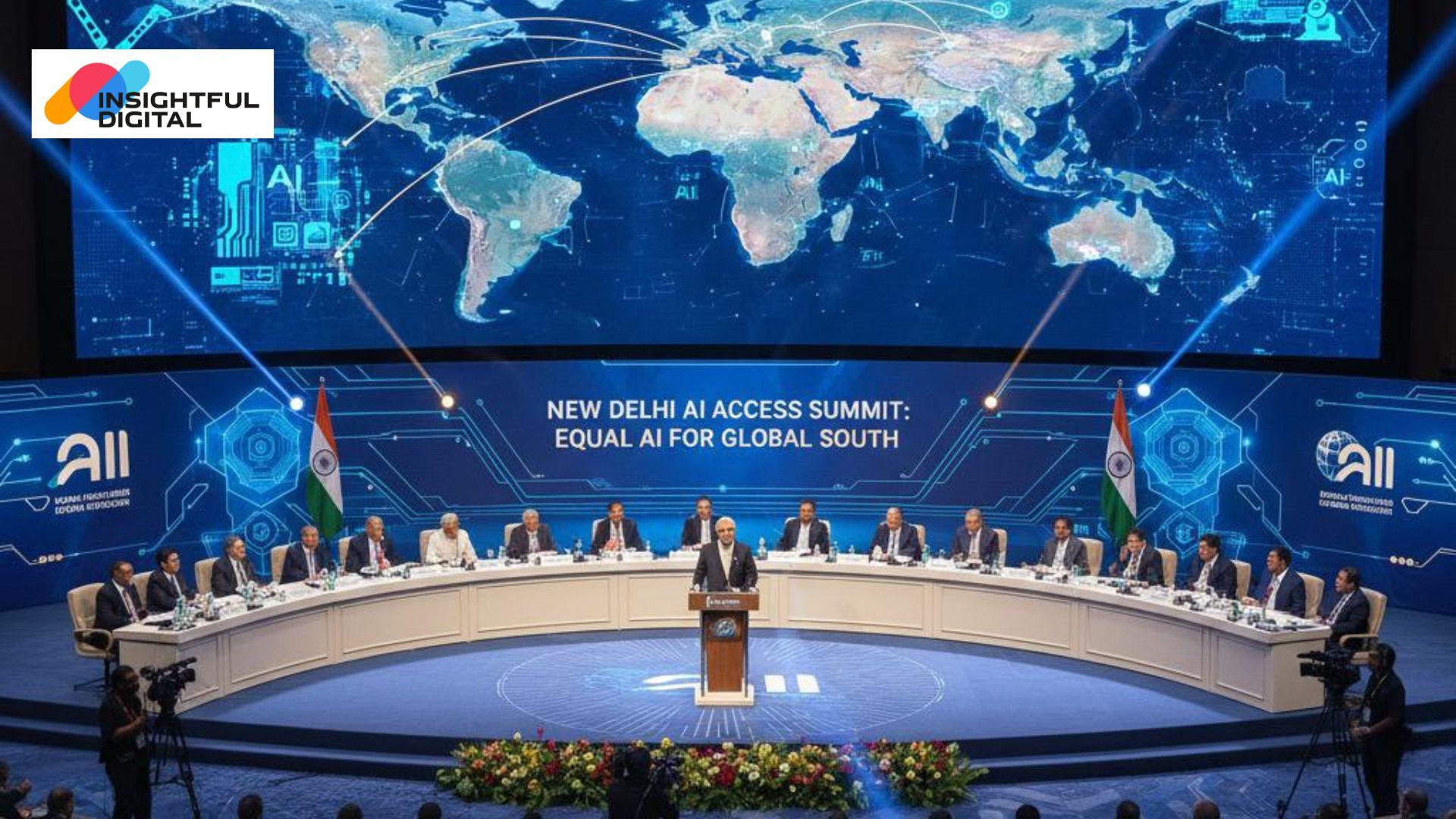
India plans to raise exactly this issue at the upcoming New Delhi Summit, where it will call for equal access to AI resources for the Global South. For policymakers in India, the concern is clear - if AI becomes concentrated only in wealthy nations, developing countries risk falling further behind in digital innovation and global competitiveness.
Why AI Access Matters
Over the last two years, AI has shifted from experimental labs to everyday life. Tools like ChatGPT, Gemini, and image generators are now widely known, but access to advanced AI infrastructure - such as large computing clusters, proprietary datasets, and enterprise-grade AI models - is still uneven.
For countries across Africa, Asia, and Latin America, this imbalance could widen the economic gap. India’s pitch is that AI should not be a luxury of the Global North but a shared resource, much like internet access or clean energy.
India’s Position at the Summit
Officials have hinted that India will frame its argument around digital equity. The idea is not only about access to AI software, but also about the hardware and cloud infrastructure that make large-scale AI possible. Without this, smaller economies will remain consumers of AI rather than active developers or contributors.
A senior official involved in the preparations noted that India wants to position itself as a bridge between the Global South and leading AI economies. The country has already shown interest in developing public digital platforms - such as UPI for payments - that could serve as models for AI accessibility.
The Larger Global Debate
Globally, AI regulation and governance are still at an early stage. While Europe is pushing through the AI Act, and the US is focusing on safety standards, the Global South’s priorities look very different. Affordability, language inclusion, and capacity-building are bigger concerns here.
This is where India sees its role. By putting the Global South’s concerns on the table, India hopes to ensure that AI is not shaped solely by Silicon Valley or Brussels, but by a more diverse set of voices.
What This Could Mean for Businesses and Citizens
If India’s push gains momentum, businesses in emerging markets could see cheaper and easier access to AI-driven tools for education, healthcare, and agriculture. For citizens, it may mean local-language AI assistants, better digital services, and new opportunities in the global job market.
Critics, however, warn that negotiations won’t be easy. Big tech companies guard their models closely, and wealthier nations often prioritize their own AI ecosystems first. Still, India’s call at the New Delhi Summit is likely to spark debate - and that, in itself, could mark a turning point.
A Step Toward Inclusive AI
For now, India is positioning itself as both a user and an advocate - a country with its own ambitions in AI, but also one speaking on behalf of other developing nations. Whether the Global South gains a stronger footing in this new AI order will depend on how seriously this call is taken in New Delhi.
MCQs for Readers:
Q1. What was India’s key proposal at the New Delhi Summit?
a) AI ban in developing countries
b) Equal AI access for the Global South
c) Free AI for startups only
d) AI regulations for the Global North
Answer: b) Equal AI access for the Global South
Q2. Why is equal AI access important for the Global South?
a) To maintain trade barriers
b) To widen the digital divide
c) To promote inclusive growth and reduce tech inequality
d) To limit innovation in developing nations
Answer: c) To promote inclusive growth and reduce tech inequality
Q3. Which challenge does India highlight in AI distribution?
a) Limited gaming access
b) Unequal access to advanced AI tools
c) Oversupply of AI engineers
d) Lack of mobile phones
Answer: b) Unequal access to advanced AI tools
Q4. What role does India see for itself in AI diplomacy?
a) Technology exporter only
b) Bridge between developed and developing nations
c) Restricting AI in South Asia
d) Focusing only on domestic AI use
Answer: b) Bridge between developed and developing nations