
I’ll never forget the evening I sat across from my college friend Rohit. He had just launched his mobile accessory startup. He looked exhausted half from the long day, half from the mental tug-of-war on funding. “Should I bootstrap or bring in investors?” he asked flatly, eyes searching. We both knew how critical that decision was.
Here’s my honest take, based on talking with founders at coffee shops, pitch meets, and late-night marathon brainstorming sessions.
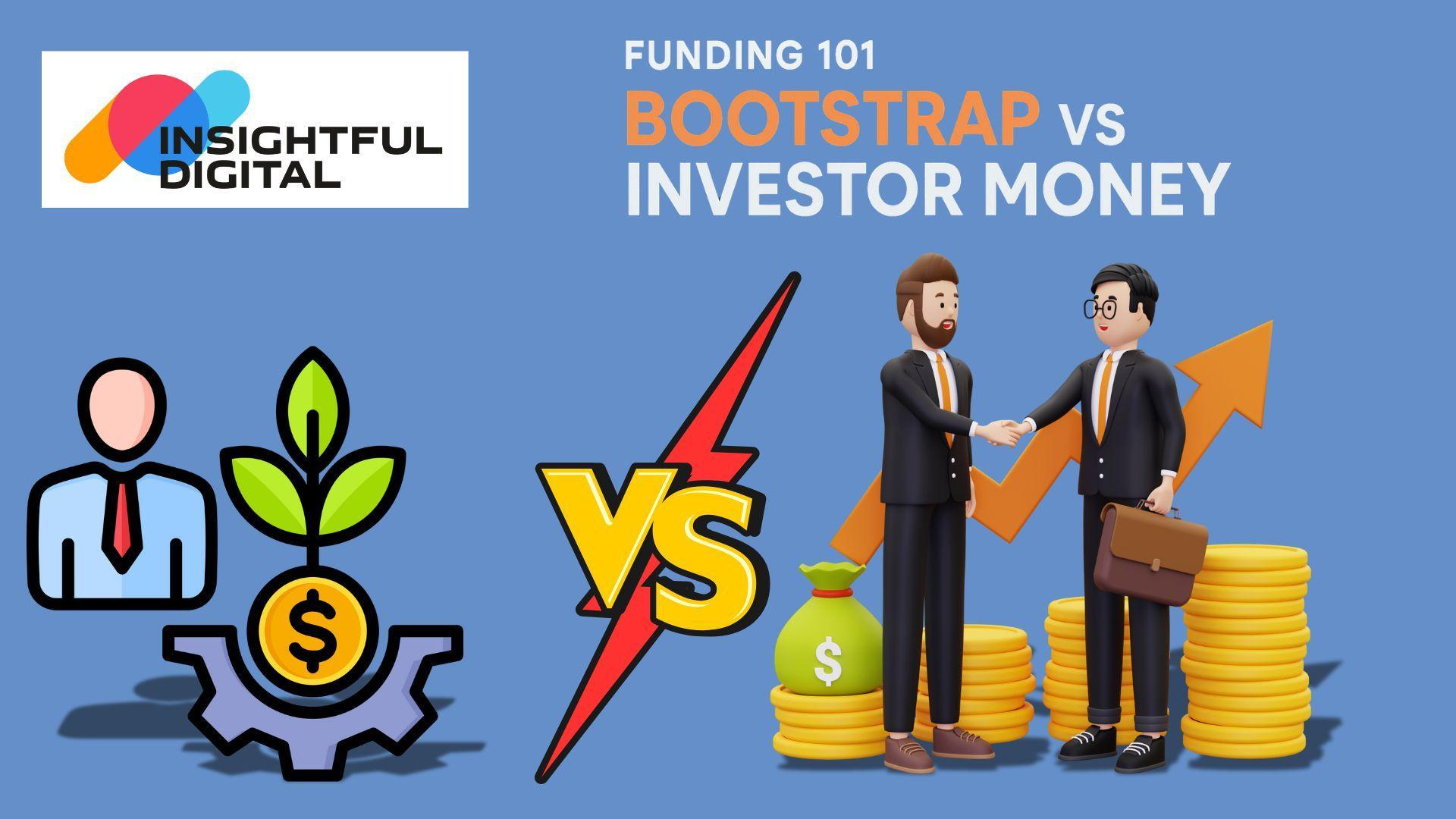
Bootstrapping - Everything on Your Own
Bootstrapping is when you fund everything with your own shoestring-personal savings, side-gigs, early revenue. One founder I know launched a consulting business this way. At first, it was just him, his laptop, and a heap of resolve. No fancy office, no pitch decks-just him and his phone, reaching out to every potential client.
What’s great about bootstrapping?
Full control-you call the shots, no one looking over your shoulder.
Lean and resourceful-you learn to do more with less, often leading to smart, sustainable models.
No dilution-your equity stays intact, and success feels deeply personal.
But it's not all smooth. Growth can feel glacial, and funds are tight. I watched that consultant founder mull over every rupee-"Should I hire or hold off this month?" It’s a high-wire act.
Investor Money - The Path of Speed
Then there’s investor funding-angel money, VC cash, crowd-sourcing. I once saw a founder accelerate their ed-tech platform from 200 to 2,000 active users in one quarter, all thanks to a successful seed round. It was like someone had flipped a growth switch.
Why investors?
Rocket-fuel growth-think marketing budgets, hiring power, faster launches.
Mentorship & networks-now you're not just funded, you're connected.
Credibility boost- “backed by X investors” goes a long way in doors opening.
Still, there’s a cost. Investors expect returns-and fast. Decisions need board-like approvals, and every move is scrutinized. You give up some ownership and, often, some of your vision along the way.
So... Which Route Is Best?
Honestly, it depends on what kind of founder you want to be:
If you value control, patience, and building a business that’s truly yours-start with bootstrapping.
If you want speed, scale, and don’t mind sharing control-investor funding could be right.
Or take a mixed route: bootstrap early, prove traction, then raise funds to level up.
That’s what many founders do. They test their idea with minimal risk, then bring investors in once they’re confident.
Final Thoughts
Funding isn’t just financial-it’s a strategic choice. One decides your path forward. Will it be a slow climb with tight margins, or a bold sprint with demands? Either way can lead to success-if you’re clear on your goals and values.
So, when someone asks, “Bootstrap or VC?”-remember it's not just about money. It's about the journey you want to take.
5 MCQs with Answers
Q1. What does bootstrapping mean in business?
a) Using personal savings or revenue to fund a startup
b) Taking a bank loan
c) Raising VC money
d) Government grants
👉 Answer: a) Using personal savings or revenue to fund a startup
Q2. Which of these is a major advantage of bootstrapping?
a) No debt and full control
b) Faster scaling
c) Easy investor networking
d) Guaranteed profits
👉 Answer: a) No debt and full control
Q3. What is a common benefit of raising investor money?
a) Founder keeps full ownership
b) Access to large capital and mentorship
c) Zero risk
d) No reporting required
👉 Answer: b) Access to large capital and mentorship
Q4. Which type of funding is often best for early-stage, small-scale startups?
a) Bootstrapping
b) Angel investors
c) Venture capital
d) Private equity
👉 Answer: a) Bootstrapping
Q5. One risk of taking investor funding is:
a) More personal savings used
b) Less control and ownership dilution
c) No mentorship
d) Limited networking
👉 Answer: b) Less control and ownership dilution
Stay tuned for our Next Article - Day 25: Building a Team – Freelancers vs Co-Founders