
Long before the Milky Way existed, the universe was dark and silent. Then, a few hundred million years after the Big Bang, the first stars came alive. Astronomers call that turning point the Cosmic Dawn. It’s one of the most mysterious chapters in cosmic history, and scientists have been trying for decades to catch its faint signals.
Now, India is preparing to join that hunt in an unexpected way-with a tiny computer system that may be small in size but carries a big role.
Listening to the universe’s faintest whispers
The Cosmic Dawn left behind traces, but not in the form of clear pictures. What we get today are extremely weak radio signals, still traveling through space after 13 billion years. The problem is that by the time they reach Earth, they are buried under louder noises-radiation from our own galaxy, cell towers, satellites, even FM radio.
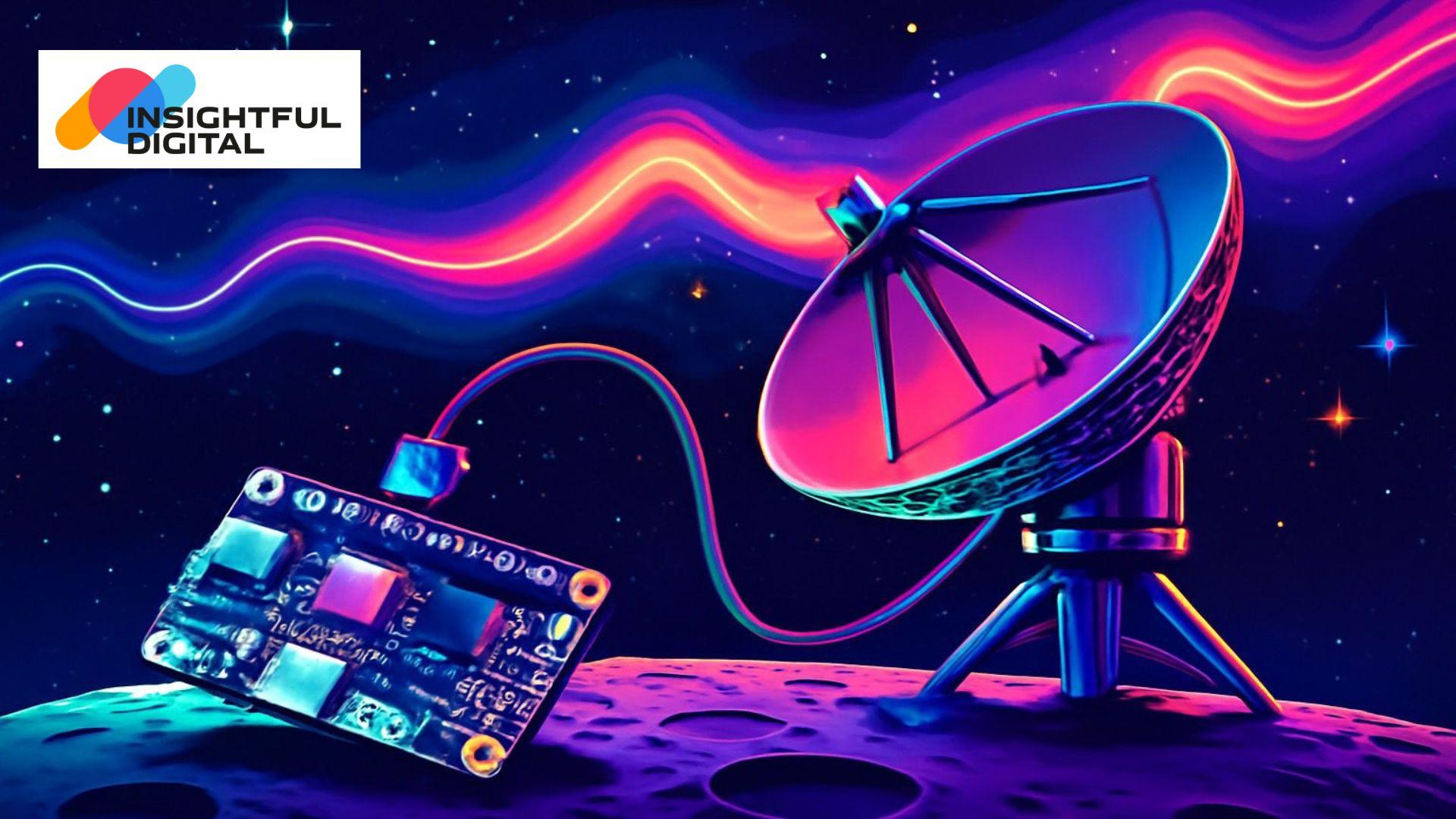
To separate the real from the noise, you need smart computing power. That’s where the compact Indian system comes in. It will sit beside a radio telescope and process data in real time. Imagine noise-canceling headphones, but instead of cutting background chatter in a café, this device cancels the universe’s static to reveal whispers from its earliest stars.
Small device, big ambition
What makes this special is efficiency. Traditional setups rely on huge computing clusters, but this device does the job in a smaller, lighter package. It’s fast, less power-hungry, and built to handle the flood of data that telescopes collect every day.
For India, it’s also about more than astronomy. With Chandrayaan-3 landing on the Moon and Aditya-L1 studying the Sun, the country has already proved its space capabilities. Now it’s showing that ground-based science and advanced engineering are equally part of the journey.
A place in the global story
India’s efforts connect with larger global projects. The Square Kilometers Array, being built in South Africa and Australia, has the same goal: uncovering the Cosmic Dawn. If India’s small but sharp computer works well, it can easily plug into such collaborations. A modest tool from India may end up helping the entire world map the universe’s first light.
The tough parts
Of course, this is not a simple road. Radio interference is the biggest challenge. Our modern world is noisy, and even the faintest human-made signal can drown out cosmic ones. That’s why observatories need quiet zones, far from cities.
Then there’s the matter of scale. A single observing session can generate terabytes of data. Handling that load on a small device means walking a fine line-power, speed, and accuracy all have to work together.
Why it matters to us
It’s easy to think this has nothing to do with everyday life. But technologies born in space science often sneak into our routines. Low-power processors, advanced filters, real-time data tools-these can influence everything from telecom and healthcare to AI systems and climate studies. So, a tool built to find the first stars might someday improve how we live on Earth.
Looking ahead
In the end, what makes this project exciting is the contrast. A device small enough to hold in your hand could help solve one of the biggest mysteries in science. The Cosmic Dawn is still waiting to be understood. With this innovation, Indian researchers are showing that sometimes the most powerful discoveries begin with the smallest tools.
MCQs for Readers:
Q1. What does the term ‘Cosmic Dawn’ refer to?
a) The Big Bang itself
b) The birth of the first stars and galaxies ✅
c) The formation of the solar system
d) The discovery of black holes
Q2. How old are the signals from the Cosmic Dawn that astronomers are trying to detect?
a) About 1 million years
b) About 500 million years
c) Nearly 13 billion years ✅
d) 50 billion years
Q3. What type of signals are scientists searching for from the Cosmic Dawn?
a) Infrared light
b) Gravitational waves
c) Faint radio signals ✅
d) X-rays
Q4. What is the main challenge in detecting Cosmic Dawn signals?
a) The signals are too close
b) Signals are buried under stronger noise ✅
c) They don’t exist anymore
d) Telescopes can’t capture light
Q5. The tiny computer developed in India works with which instrument?
a) Optical telescopes
b) Radio telescopes ✅
c) Space probes
d) Satellites
Q6. What global project is also focused on detecting the Cosmic Dawn?
a) Hubble Space Telescope
b) Square Kilometre Array (SKA) ✅
c) James Webb Space Telescope
d) Mars Rover Program
Q7. What is one of the biggest sources of interference for radio astronomy?
a) Earthquakes
b) Mobile towers and FM signals ✅
c) Ocean waves
d) Weather changes
Q8. Which recent missions highlight India’s growing role in space science?
a) Chandrayaan-3 and Aditya-L1 ✅
b) Apollo 11 and Voyager
c) Mars Rover and SpaceX Dragon
d) ISRO-NASA Mars Mission
Q9. Apart from astronomy, where could the tiny computer’s innovations be useful?
a) Medical imaging ✅
b) Agriculture
c) Oil drilling
d) Architecture
Q10. What is the main symbolic takeaway of India’s tiny computer project?
a) bigger devices always solve bigger problems
b) Sometimes the smallest tools unlock the greatest discoveries ✅
c) Cosmic Dawn is impossible to study
d) Space research has no real-world impact