
The very first step for a successful crop is healthy and high-quality seeds. However, merely selecting good seeds is not enough. Pathogens, soil-borne pests, and environmental stress can negatively affect germination and early growth. Therefore, seed treatment becomes essential to ensure seed protection, better germination, and strong initial growth of plants. Seeds can be treated either through chemicals or natural bio-products. In this article, we will discuss the benefits, methods, qualities of good seeds, categories of seeds, and ways to maintain seed quality.
Benefits of Seed Treatment
Seed treatment has multiple benefits that directly improve crop yield and farm economy:
1) Protects seeds and seedlings from soil- and seed-borne diseases and pests.
2) Improves germination speed and overall germination percentage.
3) Enhances seed viability and vigor, ensuring strong crop establishment.
4) Ensures uniform and stable crop stand even under unfavorable conditions (low moisture, high temperature).
5) Improves nodulation in legume crops.
6) More effective compared to soil or foliar applications, as treatment is target-specific.
Seed Treatment Methods
There are three main seed treatment methods: Seed Dressing, Seed Coating, and Seed Pelleting.
1. Seed Dressing
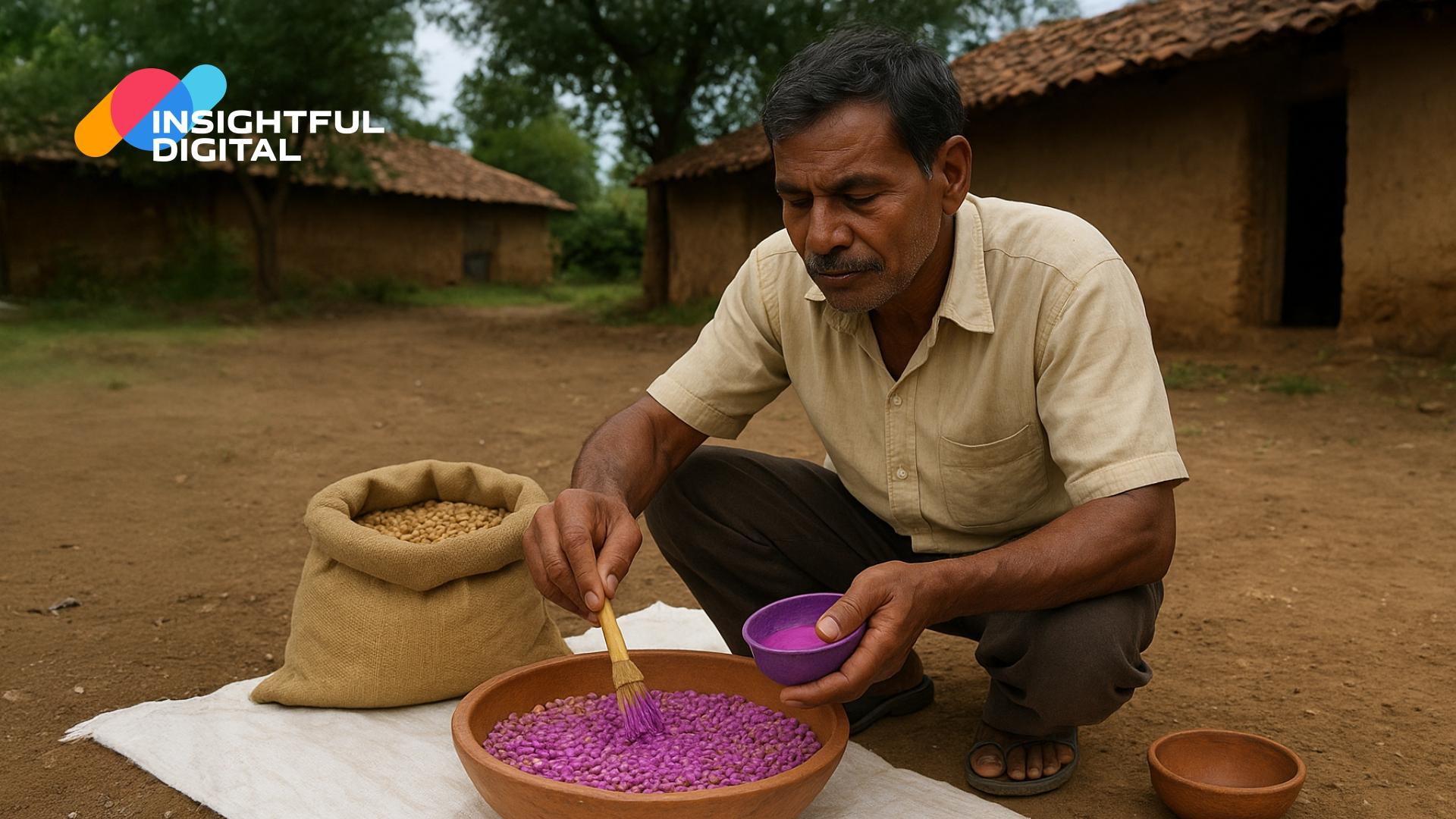
The most common and economical method. Seeds are mixed with dry or liquid formulations. Farmers generally spread seeds on plastic sheets and sprinkle chemicals, mixing manually or mechanically. Effective at both small and large scales.
2. Seed Coating
An advanced industrial method where a protective layer containing fungicides, nutrients, or microbial inoculants is applied. This improves seed handling, precision drilling, and consistent performance in the field.
3. Seed Pelleting
Involves changing the physical size and weight of seeds to make them suitable for mechanical sowing. Small seeds are enlarged into uniform pellets, allowing precision planting. Considered costly but highly effective for specific crops.
Characteristics of Good Seeds
A quality seed should have:
• Adequate moisture to support germination but free from infection.
• Free from insects, pests, and diseases.
• Free from weed seeds and foreign material.
• High genetic purity and strong germination capacity.
• Proper size, weight, and vigor.
Classes of Seeds
To maintain seed quality, seeds are classified into categories:
Nucleus Seed: Produced by plant breeders for further multiplication.
Foundation Seed: Produced under government/agriculture institutions; derived from nucleus seed with 98–100% genetic purity.
Registered Seed: An intermediate class, not common in India but used in some countries.
Certified Seed: Produced mainly for distribution to farmers; marked with certification tags for authenticity.
Causes of Seed Quality Deterioration
• Use of uncertified/local market seeds. • Improper storage (excess moisture, pests, temperature fluctuations). • Mixing of weed seeds with crop seeds. • Mixing during transport or handling. • Natural cross-pollination leading to genetic contamination.
Ways to Maintain Seed Quality
• Always use certified seeds from reliable sources. • Follow scientific methods in seed production and storage. • Maintain isolation distance during seed production to prevent cross-pollination. • Treat seeds with fungicides or bio-products before sowing. • Ensure seeds are dried, cleaned, and packed properly. • Use warehouses with controlled humidity and temperature for long-term storage.
Conclusion
Seed treatment and proper seed quality management form the backbone of modern agriculture. Right seed treatment methods, certified seeds, and scientific storage ensure strong crop establishment, better yields, and improved farmer income. Small steps like pre-sowing treatment, certified seed usage, and proper storage can create long-term benefits.
Practical Farmer Tips
• Test germination before sowing (small batch). • Choose treatment type based on soil and weather conditions. • Use nitrogen-fixing inoculants for legumes to improve nodulation. • Follow label instructions carefully and avoid storing leftover seeds in damp places.
Objective Questions for Competitive Exams (English)
Q.1. What is the main purpose of seed treatment?
a) To change seed color
b) To protect seeds from pests and diseases and improve germination
c) To increase seed weight
Answer: b) To protect seeds from pests and diseases and improve germination
Q.2. Which method is used to enlarge small seeds for precision sowing?
a) Seed Dressing
b) Seed Coating
c) Seed Pelleting
Answer: c) Seed Pelleting
Q.3. What is the main use of Foundation Seed?
a) Direct selling to consumers
b) For multiplication from nucleus seed
c) As raw material for pelleting
Answer: b) For multiplication from nucleus seed
Q.4. Which factor causes most deterioration in seed quality?
a) Proper certified seed use
b) Improper storage and use of uncertified seeds
c) Maintaining isolation distance
Answer: b) Improper storage and use of uncertified seeds
Q.5. What is one major benefit of Seed Coating?
a) Reduces seed viability
b) Improves handling, precision sowing, and controlled supply of nutrients/pesticides
c) Makes seeds lighter
Answer: b) Improves handling, precision sowing, and controlled supply of nutrients/pesticides
Q.6. How can farmers maintain seed quality?
a) Always buy uncertified seeds
b) Use certified seeds and adopt scientific storage and production practices
c) Keep seeds wet during storage
Answer: b) Use certified seeds and adopt scientific storage and production practices