

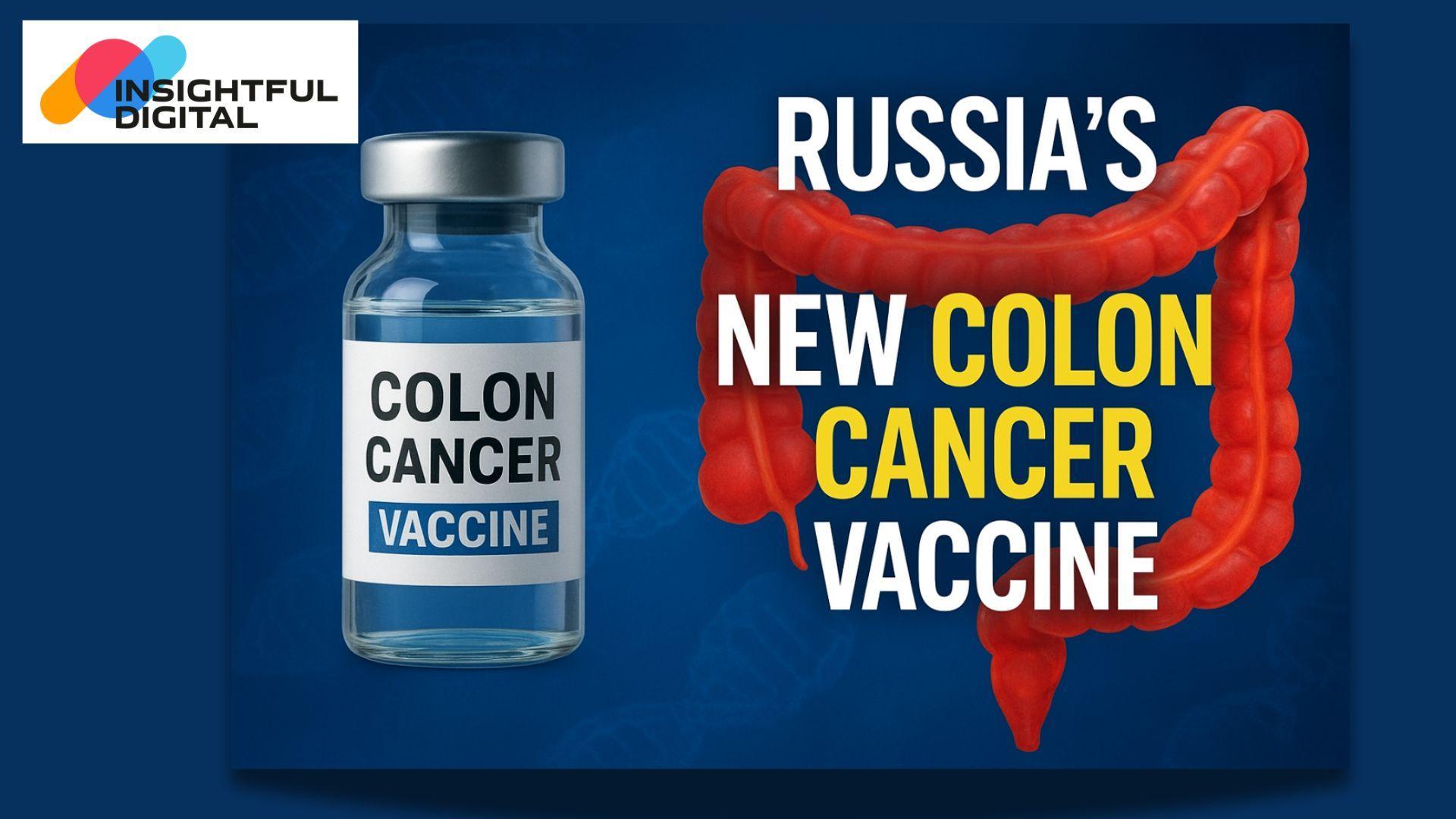
In a development that could reshape cancer care, Russian researchers have announced that they are testing a new vaccine for colon cancer. The early results, though limited, have created a buzz in the medical world – mainly because they suggest the vaccine is safe and does trigger an immune reaction in patients.
Why this is important
Colon cancer is one of the most common cancers worldwide. It kills nearly a million people every year, and treatments such as chemotherapy or radiation often leave patients drained and struggling with side effects. Even after surgery, the fear of the disease coming back is always there. That’s why any new approach that promises to give the immune system an edge is worth noting.
How the vaccine is designed to work
This isn’t like the usual vaccines people get for flu or measles. Cancer vaccines aim to teach the body to notice what it normally misses. The Russian team has used antigens – markers that are present on colon cancer cells – to “flag” the dangerous cells. Once the body learns to spot these, the immune system can attack them more aggressively.
The theory is simple: instead of blasting cancer with toxic drugs, give the body a nudge so it can do the job itself. If it works as hoped, patients could face fewer side effects and possibly a lower chance of relapse.
A cautious welcome
Still, doctors are careful not to oversell this. Early trials usually involve very small groups. It will take years – and thousands of patients across different countries – before the vaccine can be proven reliable. For now, it’s an idea that looks promising on paper and in limited testing.
Most experts believe that even if approved, such vaccines will be add-ons rather than replacements. They may work best when combined with surgery or existing therapies. But for patients, even an extra layer of protection could be life changing.
What lies ahead
If larger trials succeed, this vaccine could make colon cancer treatment less punishing and more effective. It could also make care more affordable in countries where cancer treatment costs often push families into debt.
Globally, the announcement adds to the momentum around cancer immunotherapy. Labs in the US, Europe, and China are pursuing similar projects. Russia entering this race suggests that progress is likely to speed up, whether through competition or collaboration.
Final word
It’s too early to call this a cure, but the vaccine signals that cancer research is moving in a hopeful direction. For now, patients and doctors will be waiting for stronger evidence. Still, any step that hints at safer, smarter treatment is a step worth celebrating.
MCQs for Readers:
Q1. What did Russia recently announce in the field of cancer treatment?
A. A new colon cancer vaccine after promising trial results ✅
B. A cure for all types of cancer
C. A new chemotherapy drug
D. A radiation-free cancer scanner
Q2. How does the Russian colon cancer vaccine work?
A. By boosting chemotherapy effects
B. By teaching the immune system to recognize cancer cells ✅
C. By replacing surgery
D. By using radiation
Q3. Why are experts cautious despite the positive results?
A. Early trials involve small groups and need larger studies ✅
B. The vaccine has severe side effects
C. It is too expensive for patients
D. It is only effective in children
Q4. Is the colon cancer vaccine expected to replace chemotherapy soon?
A. Yes, it will completely replace it
B. No, it may work best as part of combined treatment plans ✅
C. It only works for lung cancer
D. It is already approved worldwide
Q5. Colon cancer is the ______ most common cancer globally.
A. First
B. Second
C. Third ✅
D. Fourth