
A friend of mine who runs a small fintech startup once told me, “I lose sleep thinking about data leaks, but at least I know our encryption is solid.” I didn’t want to scare him, but here’s the truth: in a few years, that confidence might not be enough. That’s because quantum computing is on its way – and it has the power to turn today’s unbreakable security into an open book.
What is Quantum Computing, Really?
When people hear the word “quantum,” they imagine something mysterious. In reality, it’s just a new way of doing computing. Traditional computers use bits – 0s and 1s – like tiny on/off switches. Quantum computers use qubits, which can be both 0 and 1 at the same time.
Imagine flipping a coin. Normally it’s either heads or tails. But in the quantum world, it’s like the coin is spinning in the air – it’s both heads and tails until it lands. That’s superposition. Combine it with another principle, entanglement, and suddenly computers can solve problems that normal machines would take decades or even centuries to figure out.
Why Cybersecurity Feels the Heat
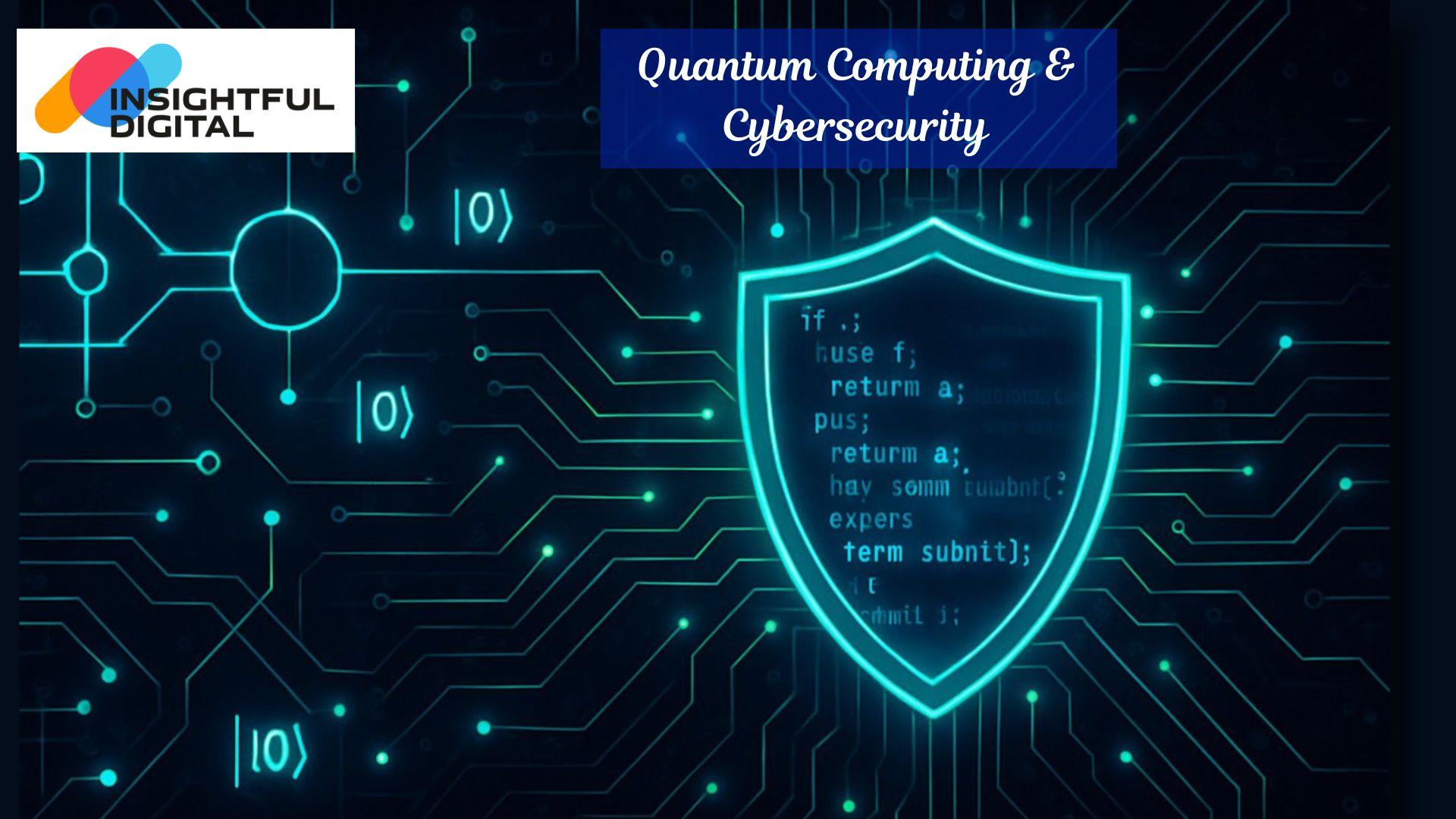
Today, almost everything we do online – from WhatsApp chats to billion-dollar banking transactions – depends on encryption. Encryption is like a lock that scrambles information so only the right key can unlock it.
The good news: with current computers, breaking that lock would take thousands of years. The bad news: a powerful enough quantum computer could smash through it in hours.
Your bank transactions? Decoded.
Government records? Vulnerable.
Even old encrypted files sitting in storage? Hackers could be collecting them now, waiting until quantum computing makes them readable.
It sounds like a sci-fi movie, but cybersecurity experts are already calling this the “Q-Day” problem – the day when quantum machines become strong enough to break widely used encryption.
Real-World Risks
Financial sector – Banks rely on RSA and ECC encryption to protect millions of transactions daily. If quantum computers break those codes, the financial system could face chaos.
Healthcare data – Imagine hospitals storing patient records for decades. Hackers don’t even need to use the data today. They could just steal and hold it, waiting until quantum power makes it readable.
Startups and small businesses – Many entrepreneurs think quantum threats are “too big” to affect them. But if you’re storing customer data or building apps, your business isn’t invisible. Attackers often go after the smaller, easier targets first.
The Flip Side – Quantum Can Help Too
Here’s the interesting part: quantum computing isn’t just a threat, it can also make cybersecurity stronger.
Post-quantum cryptography – Researchers are already building new encryption methods that quantum computers won’t easily crack. Organizations like NIST are testing these for future standards.
Quantum Key Distribution (QKD) – This sounds like magic, but it’s real. It uses quantum mechanics to create secret keys. If someone tries to spy on the key exchange, the system immediately knows and changes the key.
Better defenses – Quantum computers can also help analyze massive amounts of data to detect attacks faster than traditional systems.
What Businesses Can Do Right Now
Stay aware – You don’t need to be a scientist, but knowing what “post-quantum security” means could save you years of trouble later.
Start small – Talk to your IT team about future-proofing encryption. Even simple awareness puts you ahead of many competitors.
Plan long-term – If your industry deals with data that needs to be secure for decades (healthcare, finance, government), you can’t afford to wait.
Final Thought
Quantum computing is like a double-edged sword. On one hand, it promises breakthroughs in medicine, AI, and global problem-solving. On the other, it could dismantle the locks that keep our digital lives safe.
Let’s be real – most of us won’t be building quantum computers ourselves. But we will be living in a world shaped by them. The smartest thing entrepreneurs and businesses can do is prepare early. Because once Q-Day arrives, there won’t be time to play catch-up.
So, whether you’re running a global company or a small startup, ask yourself one question: If quantum computing makes today’s security obsolete, is my business ready for tomorrow?
MCQs for Readers:
Q1. What is the main concern of quantum computing in cybersecurity?
a) Faster internet speed
b) Breaking traditional encryption
c) Improving cloud storage
d) Enhancing AI performance
Answer: b) Breaking traditional encryption
Q2. Which encryption method is considered vulnerable to quantum attacks?
a) RSA and ECC
b) AES 256-bit
c) Blockchain hashing
d) Quantum key distribution
Answer: a) RSA and ECC
Q3. What does "post-quantum cryptography" aim to do?
a) Build faster quantum computers
b) Protect data from quantum threats
c) Replace traditional firewalls
d) Improve 5G connectivity
Answer: b) Protect data from quantum threats
Q4. What is quantum key distribution (QKD)?
a) A new type of internet protocol
b) A secure communication method using quantum mechanics
c) A blockchain algorithm
d) A cloud storage technique
Answer: b) A secure communication method using quantum mechanics
Q5. Which industry is expected to be most impacted by quantum cybersecurity threats?
a) Agriculture
b) Banking and finance
c) Tourism
d) Fashion
Answer: b) Banking and finance
Q6. What is the current status of large-scale quantum computers?
a) Already widely used in businesses
b) Still in the research and development stage
c) Completely secure and risk-free
d) Only available for military use
Answer: b) Still in the research and development stage
Q7. Why is quantum computing both an opportunity and a threat in cybersecurity?
a) It can create new digital currencies
b) It can both break and secure encryption
c) It can replace cloud technology
d) It can only help AI development
Answer: b) It can both break and secure encryption
Q8. Which organization is working on post-quantum cryptography standards?
a) Google
b) Microsoft
c) NIST (National Institute of Standards and Technology)
d) UNESCO
Answer: c) NIST (National Institute of Standards and Technology)