
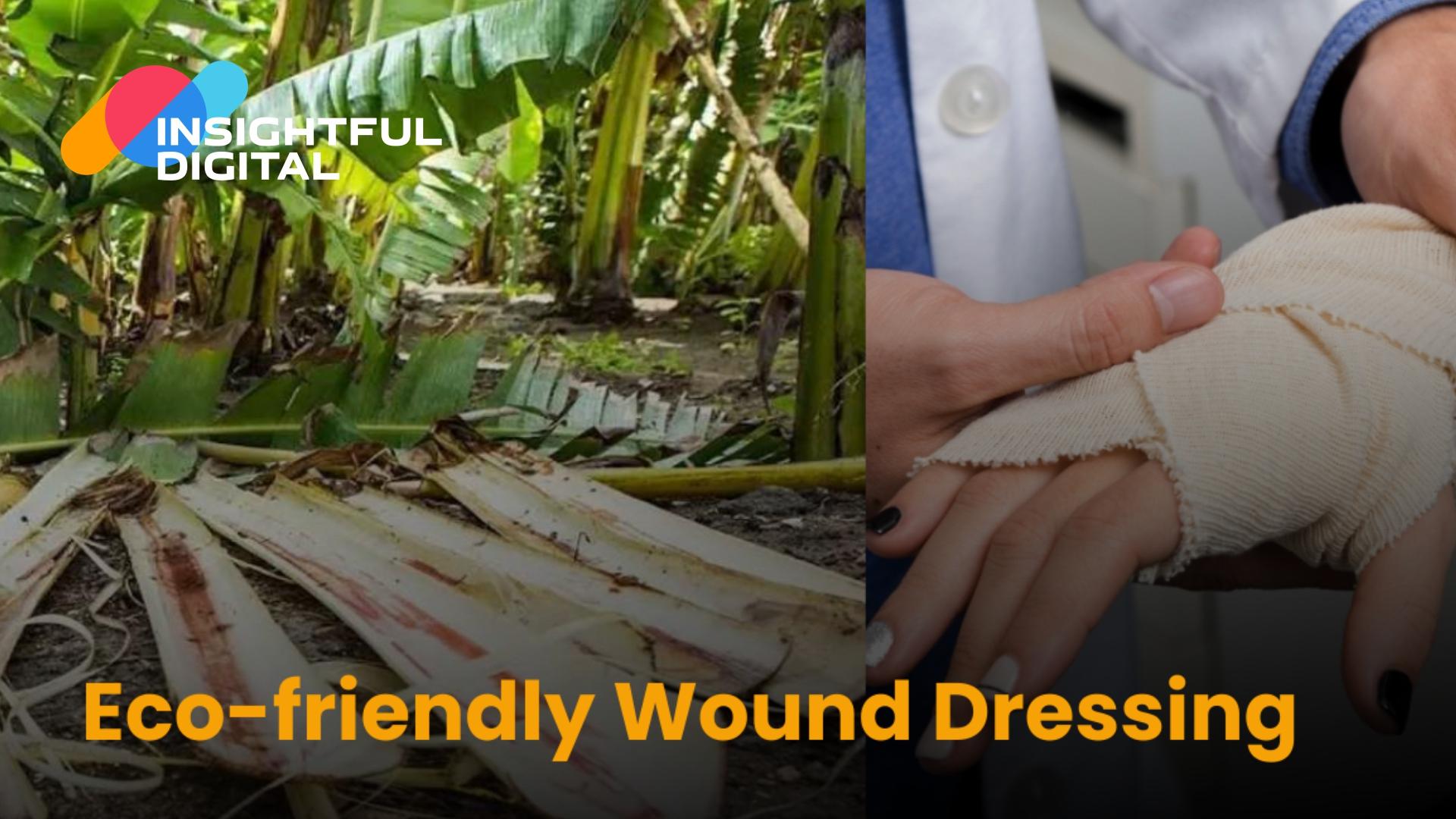
Scientists at the Institute of Advanced Study in Science and Technology have transformed banana pseudo-stems, typically considered agricultural waste, into environmentally-friendly wound dressing.
In an unprecedented initiative, researchers from the Institute of Advanced Study in Science and Technology (IASST), an autonomous institute under the Department of Science and Technology, have successfully converted banana pseudo-stems, commonly regarded as agricultural waste, into eco-friendly wound dressing material.
Innovative Multifunctional Patch
Led by Professor Debashis Choudhury and Professor (Retd.) Rajlakshmi Devi, the research team created a multifunctional patch by combining banana fibers with biopolymers such as chitosan and guar gum, resulting in excellent mechanical strength and antioxidant properties.
Harnessing Nature's Gift
The researchers loaded the patch with extracts from the Vitex negundo L. plant, demonstrating its capabilities in drug delivery and as an antibacterial agent. All materials used are natural and locally available, making the manufacturing process simple, cost-effective, and non-toxic.
A Sustainable Solution
The wound dressing material offers a sustainable solution for wound care, utilizing abundant banana plants and reducing environmental impact. Professor Choudhury emphasizes the innovation's potential in biomedical research, providing a low-cost, reliable, and eco-friendly option.
Published in the International Journal of Biological Macromolecules by Elsevier, this groundbreaking research highlights its significance within the scientific community.
Objective Questions for Competitive Exams
Q.1. What material did IASST scientists use to create eco-friendly wound dressing?
a) Coconut fibers
b) Banana pseudo-stems
c) Bamboo fibers
Answer: b) Banana pseudo-stems
Q.2. What biopolymers were combined with banana fibers to create the wound dressing?
a) Aloe vera and turmeric
b) Chitosan and guar gum
c) Coconut oil and honey
Answer: b) Chitosan and guar gum
Q.3. With which plant extract was the patch loaded?
a) Neem
b) Tulsi
c) Vitex negundo L.
Answer: c) Vitex negundo L.
Q.4. In which journal was this research published?
a) Nature
b) Elsevier
c) Science
Answer: b) Elsevier
Q.5. What is the main benefit of this wound dressing?
a) Low cost
b) Environmentally-friendly
c) Both
Answer: c) Both
Q.6. What type of materials are used to create the wound dressing?
a) Natural and locally available
b) Artificial and imported
c) Synthetic and expensive
Answer: a) Natural and locally available