
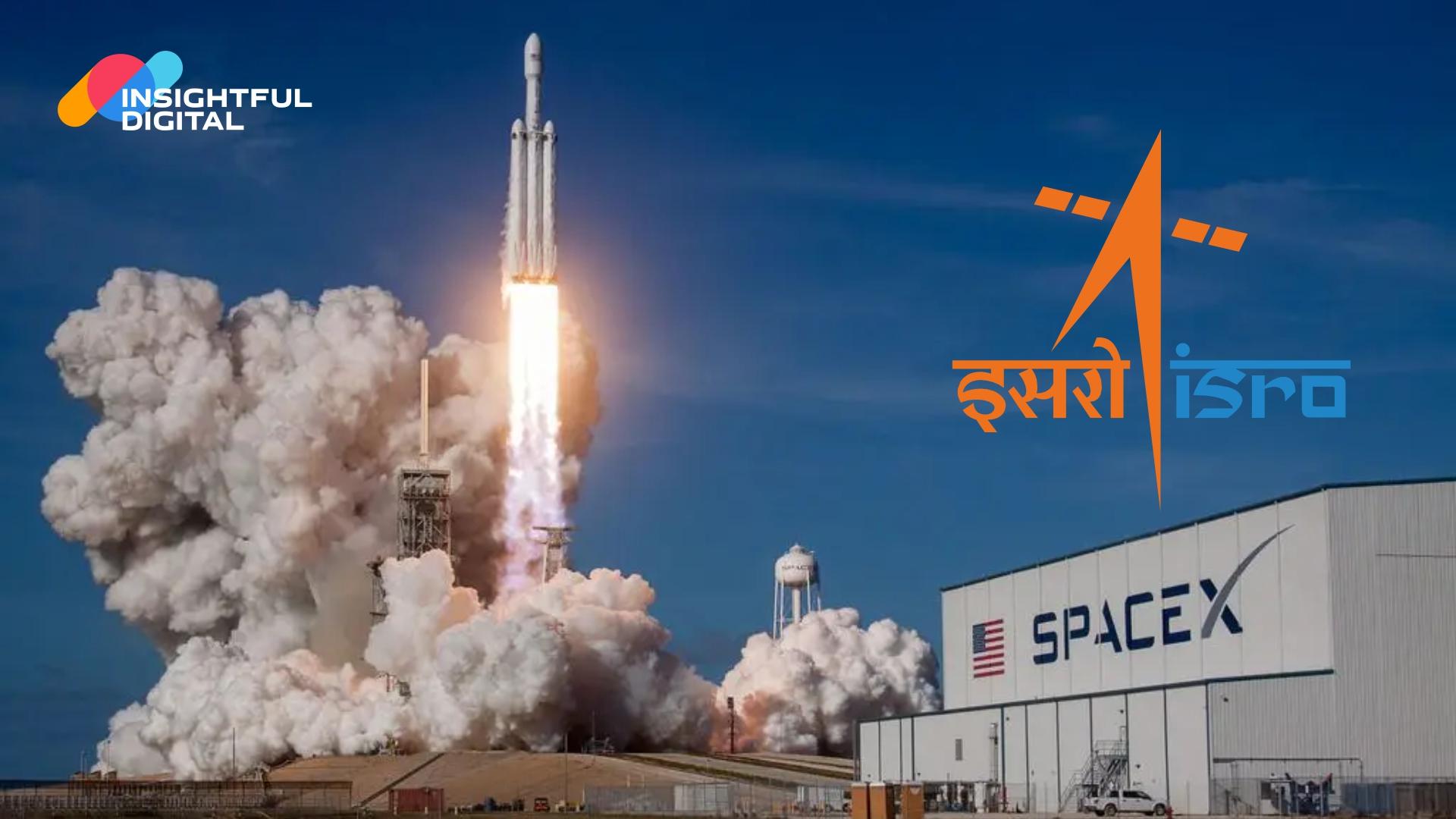
ISRO's commercial arm, NewSpace India Limited (NSIL), has announced a historic collaboration with SpaceX to launch the communication satellite GSAT-20 for the first time.
In an unprecedented move, the commercial arm of the Indian Space Research Organization (ISRO), NewSpace India Limited (NSIL), has announced a collaboration with billionaire Elon Musk's company SpaceX to launch the communication satellite GSAT-20. This is India's first partnership with SpaceX, highlighting significant advancements in space exploration and satellite deployment.
Unveiling of GSAT-20: A Ka-band HTS Satellite
GSAT-20, now renamed GSAT-N2, is a high-throughput Ka-band satellite designed to meet India's growing broadband communication needs. Ka-band satellites like GSAT-20 provide high-speed broadband internet connectivity and facilitate digital video and audio transmission. The satellite boasts an impressive Ka-band HTS capability with 32 beams, providing coverage across India, including remote areas such as the Andaman and Nicobar Islands and Lakshadweep.
Weighing 4,700 kilograms, GSAT-20 offers a substantial HTS capacity of approximately 48 Gbps, specifically tailored to meet the service requirements of remote and underserved regions in the country.SpaceX's Falcon-9 Rocket: The Launch Vehicle
The launch of GSAT-20 will be facilitated by SpaceX's Falcon-9 rocket, a reusable, two-stage launch vehicle known for its reliability and safety in transporting payloads to Earth's orbit and beyond. Falcon 9 is renowned as the world's first orbital-class reusable rocket, contributing to reducing the cost of space access through the reusability of its components.
The Collaboration and Elon Musk's Vision
This collaboration between NSIL and SpaceX marks India's entry into a new era of space exploration, partnering with one of the most innovative and leading companies in the aerospace industry. SpaceX and Tesla CEO Elon Musk is not only facilitating the launch of GSAT-20 but has also expressed interest in expanding his satellite broadband project, Starlink, in India. This dual initiative is set to bring advanced satellite technology and high-speed internet connectivity to various parts of the country.
‘Demand-Driven Satellite Mission’ and GSAT-20
As part of the space sector reforms announced by the Government of India in June 2020, NSIL has been tasked with launching “demand-driven satellite missions” to cater to the specific service requirements of users. GSAT-20, set to be launched in the second quarter of 2024, falls under this category, primarily providing cost-effective Ka-Ka band HTS capacity for broadband, in-flight and maritime connectivity (IFMC), and cellular backhaul service requirements.
Important Questions for Exams
Q.1. What is the primary purpose of GSAT-20, now known as GSAT-N2?
a) Weather monitoring
b) Agricultural research
c) Broadband communication
Answer: c) Broadband communication
Q.2. What is the weight of the high-throughput Ka-band satellite GSAT-20?
a) 2,500 kg
b) 4,700 kg
c) 6,000 kg
Answer: b) 4,700 kg
Q.3. Which rocket will launch the GSAT-20 satellite into orbit?
a) Atlas V
b) Delta IV
c) Falcon-9
Answer: c) Falcon-9
Q.4. What makes Falcon-9 unique in the world of space exploration?
a) First reusable orbital rocket
b) Largest payload capacity
c) Fastest launch speed
Answer: a) First reusable orbital rocket
Q.5. What is the primary goal of ISRO's commercial arm NSIL's collaboration with SpaceX?
a) Launch of a weather satellite
b) Launch of a communication satellite
c) Launch of a research satellite
Answer: b) Launch of a communication satellite
Q.6. What type of services is GSAT-20 designed to provide?
a) Educational services
b) Medical services
c) Broadband and communication services
Answer: c) Broadband and communication services