

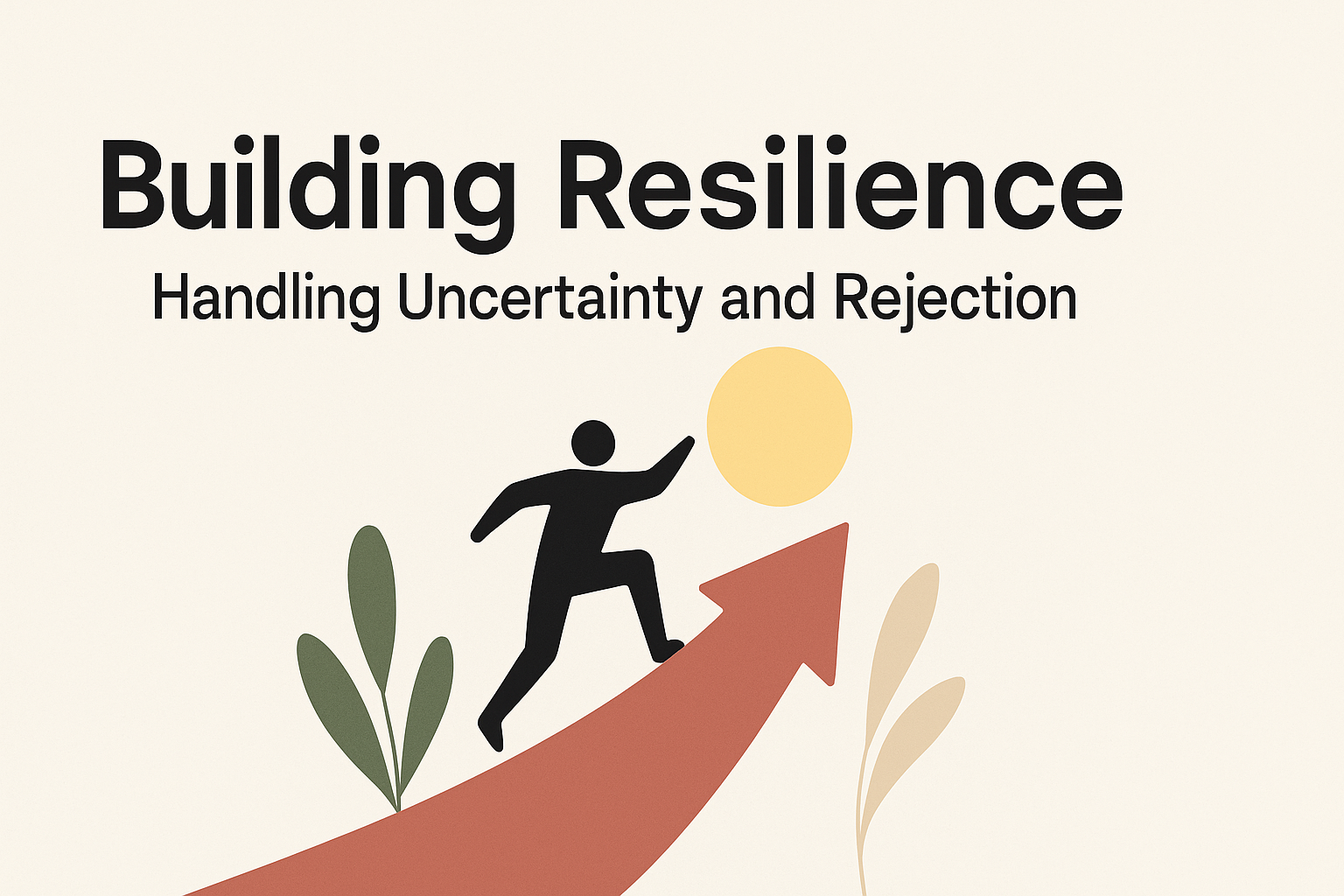
Building Resilience - Handling Uncertainty and Rejection
Let’s be honest – no one likes uncertainty. And rejection? Well, that stings even more. But here’s the thing – if you’re trying to build something, whether it’s a business, a career, or even a personal goal, both of these are going to show up sooner or later. You can’t really avoid them… but you can get better at handling them.
Think about it – uncertainty is basically the space between where you are and where you want to be. The part where things are a little blurry, the answers aren’t clear yet. Most people freeze in that gap. But resilient people? They keep moving, even when the path isn’t fully visible. Why? Because they’ve learned to trust their own process more than the situation.
So, how do you get there?
- Start small. Face minor unknowns daily. It’s like building muscle – the more you lift, the stronger you get.
- Detach from the outcome. If you make every result a personal identity test, rejection will crush you. Treat each setback as a data point, not a definition.
- Keep perspective. A “no” today doesn’t mean “never.” Sometimes it just means “not right now.”
- Build a support network. Even the strongest minds need other voices to remind them they’re not alone.
Rejection , on the other hand, can either break you or build you – depending on how you frame it. When someone says “no,” they’re not necessarily saying you are no good. They’re saying this particular offer, at this particular time, doesn’t work for them. That’s it. The quicker you learn to separate self-worth from other people’s approval, the faster you bounce back.
The truth? Resilience isn’t about never falling – it’s about getting back up, even when it’s inconvenient, even when it hurts a little, and even when you’d rather just stay down. Over time, you stop fearing the unknown and start seeing it as part of the game.
Quick MCQs – Test Yourself
1. What’s the main difference between resilient and non-resilient people when facing uncertainty?
a) Resilient people avoid uncertainty entirely
b) Resilient people keep moving without full clarity
c) Resilient people wait for guarantees before acting
Answer: b) Resilient people keep moving without full clarity
2. According to the article, how should you view rejection?
a) As proof you’re not good enough
b) As a personal insult
c) As feedback and timing, not personal worth
Answer: c) As feedback and timing, not personal worth
3. Which is NOT mentioned as a strategy to handle uncertainty?
a) Start small
b) Keep perspective
c) Avoid all risks
Answer: c) Avoid all risks
4. What does “detach from the outcome” mean in this context?
a) Stop caring about results entirely
b) Focus on the process rather than identity-based wins or losses
c) Let other people decide your goals
Answer: b) Focus on the process rather than identity-based wins or losses
5. Why is having a support network important?
a) So others can do your work
b) To get constant reassurance and reminders you’re not alone
c) To avoid making your own decisions
Answer: b) To get constant reassurance and reminders you’re not alone
Stay tuned for our next article Day 7: Setting SMART Goals for Your Entrepreneurial Journey