
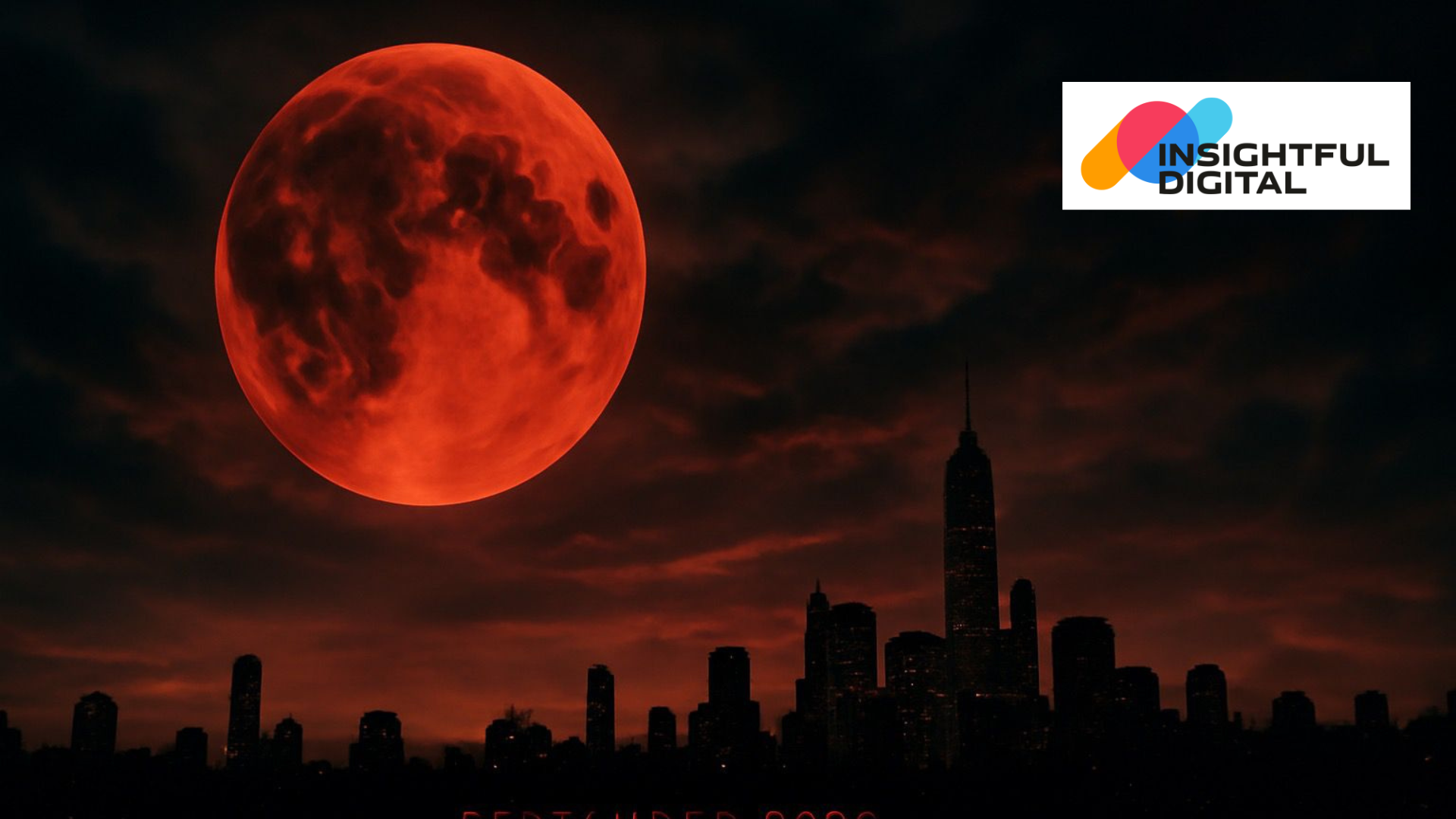
September 7–8, 2025. Mark the date. On this night, millions of people across Asia, Africa, and Europe will look up and see something unusual – the Moon glowing red for more than an hour. Not orange, not grey… but a deep fiery red. That’s the Blood Moon, and trust me, it’s worth staying awake for.
So, what’s happening?
During a total lunar eclipse, Earth slips between the Sun and the Moon. Its shadow covers the Moon, but instead of disappearing, the Moon glows red. Why? Because Earth’s atmosphere bends sunlight. Blue light scatters away, and the reddish tones sneak through and paint the Moon.
It sounds simple, but when you see it, the effect is haunting. Some people even find it a bit spooky. In old times, kings and priests thought it was a bad omen. Today, it’s more like a cosmic performance – free, live, and visible to everyone.
Why this eclipse is special
Not every eclipse is the same. This one’s going to be long – around 82 minutes of totality. That means you won’t just catch a glimpse. You’ll have plenty of time to call your friends outside, grab a camera, or just sit and watch.
And it’s not just for a few lucky countries.
In Asia, people from India, China, and beyond will get a full view.
Across Africa, almost the entire continent can see it.
In Europe, especially central and eastern regions, skies will light up too.
Only the Americas might feel left out – they’ll catch just part of the show.
When to look up
It’ll happen on the night of September 7–8, 2025. The exact timing depends on where you are, but the best part is, you don’t need any expensive gear. Step outside, find a dark spot, and look up. That’s it.
Of course, if you own binoculars or a telescope, even better. You’ll notice more detail – the way shadows crawl across the surface, the way the red changes from bright copper to deep crimson.
Why scientists care (and why we should too)
For researchers, eclipses are like free experiments. By studying how the Moon looks during an eclipse, they can learn about Earth’s air – how much dust, pollution, or volcanic ash is floating around. The color of the Moon is basically Earth’s fingerprint.
For the rest of us? It’s about the experience. Kids pointing at the sky, photographers racing to get the perfect shot, neighbors stepping out of their houses just to share the moment. A Blood Moon turns into a mini festival of sorts.
A few quick tips
Avoid city lights if you can. The darker the place, the better the view.
Check the local timings – you don’t want to miss the main 82-minute phase.
If you’re into photography, even a smartphone on a tripod will do.
Don’t spend the whole time looking through a screen – just enjoy it.
Final note
We don’t get nights like this often. The Blood Moon of September 2025 isn’t just about astronomy. It’s about pausing for a while, looking up at something bigger than us, and realizing that the universe is always moving, always surprising.
So, when the Moon turns red this September, make sure you’re there to see it. Who knows – years later, you might remember where you were when the sky turned crimson for 82 magical minutes.
MCQs for Competitive Exam:
When will the rare Blood Moon lunar eclipse of 2025 occur?
a) August 15–16, 2025
b) September 7–8, 2025
c) October 10–11, 2025
d) December 1–2, 2025
Answer: b) September 7–8, 2025
How long will the totality of the September 2025 Blood Moon last?
a) 52 minutes
b) 68 minutes
c) 82 minutes
d) 95 minutes
Answer: c) 82 minutesWhich regions will see the Blood Moon most clearly in September 2025?
a) North and South America
b) Asia, Africa, and Europe
c) Australia and Antarctica
d) Only South Asia
Answer: b) Asia, Africa, and EuropeWhat causes the reddish color of the Moon during a Blood Moon?
a) Solar flares
b) Earth’s atmosphere filtering sunlight
c) Reflection from Mars
d) Moon’s volcanic activity
Answer: b) Earth’s atmosphere filtering sunlightWhat is another name for a Blood Moon?
a) Blue Moon
b) Total Lunar Eclipse
c) Harvest Moon
d) Supermoon
Answer: b) Total Lunar EclipseWhich wavelength of light is scattered away, allowing the Moon to appear red during the eclipse?
a) Green light
b) Yellow light
c) Blue light
d) Violet light
Answer: c) Blue lightWhy is the September 2025 lunar eclipse considered rare?
a) It will last more than 80 minutes
b) It will be visible only in America
c) It coincides with a solar eclipse
d) It will make the Moon appear blue
Answer: a) It will last more than 80 minutesWhat cultural significance has been associated with Blood Moons historically?
a) Symbol of prosperity
b) Seen as an omen or sign of change
c) Used for navigation
d) Considered good luck in farming
Answer: b) Seen as an omen or sign of changeWhat tools can enhance viewing the Blood Moon, though not necessary?
a) Satellites
b) Binoculars or a telescope
c) Microscope
d) Infrared cameras only
Answer: b) Binoculars or a telescopeWhich continents will mostly miss the full eclipse?
a) Asia and Europe
b) Africa and Australia
c) North and South America
d) All continents will see it
Answer: c) North and South America