

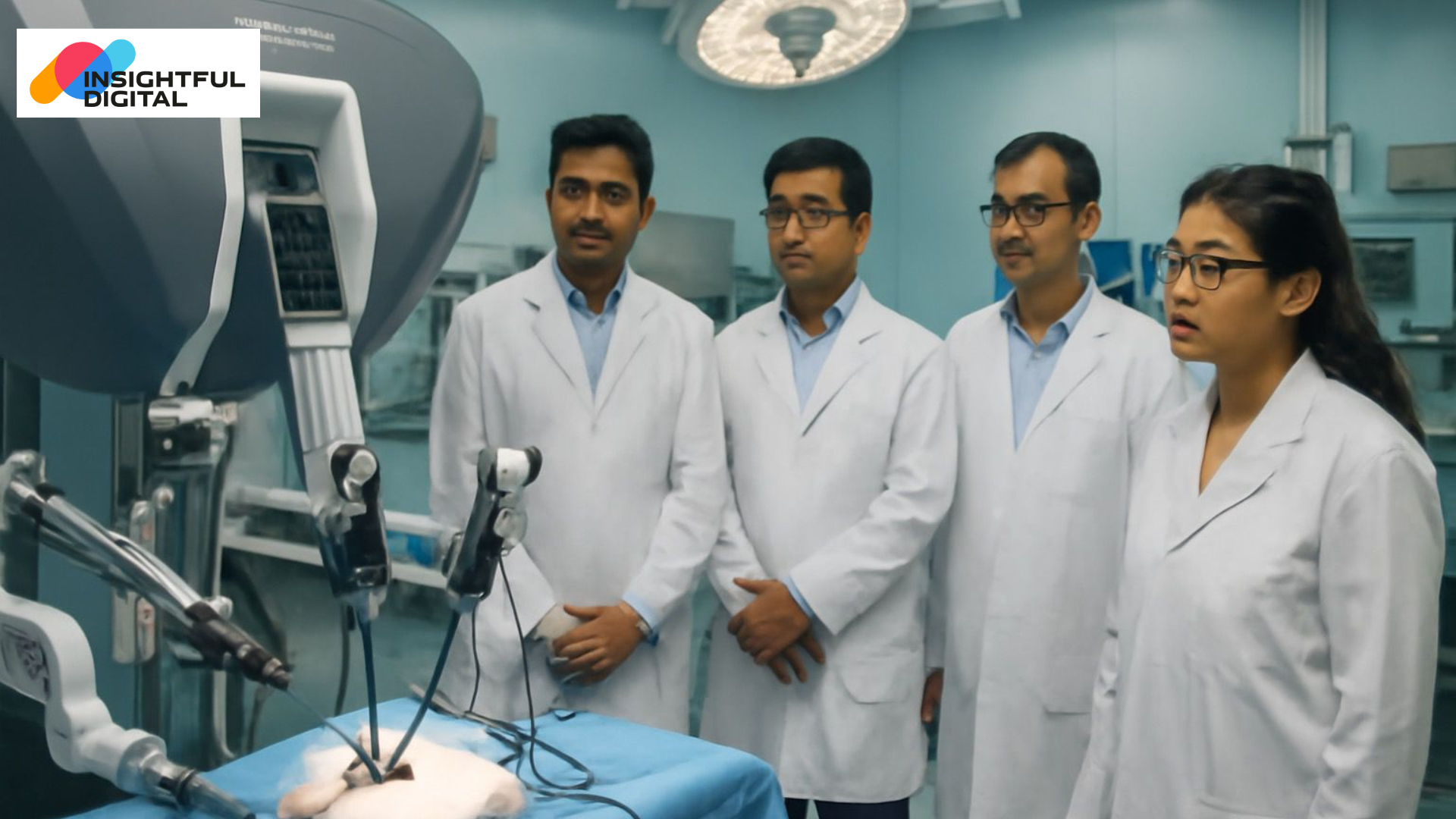
The world of medicine is changing fast, and technology is right at the center of it. One of the clearest signs of this progress is the growing use of surgical robots. India has just reached a new milestone with AIIMS becoming the country’s first government medical college to formally train doctors on the da Vinci robotic surgical system.
Why It Matters
Until now, robotic surgeries in India were mostly performed at private hospitals. These institutions had the machines, the resources, and the specialists to use them. Government medical colleges, on the other hand, relied on conventional surgical methods. With AIIMS introducing official robotic training, the balance is shifting. Students at a public institution will now get hands-on experience with one of the most advanced surgical technologies available today.
The da Vinci Advantage
The da Vinci robot is not just a machine – it’s like an extension of the surgeon’s own hands, but far steadier and more precise. With 3D vision, tiny robotic arms, and enhanced dexterity, the system makes it possible to perform complex procedures through small incisions. This means less pain, reduced blood loss, and faster recovery times for patients.
For young surgeons, learning to use such a system is a game-changer. Instead of spending years perfecting certain manual skills, they can rely on robotic assistance to achieve greater accuracy much earlier in their careers.
A Big Step for Public Healthcare
The introduction of robotic training at AIIMS is not just about keeping up with technology – it’s also about making advanced care more accessible. If doctors in government hospitals are trained on robotic systems, patients from different socio-economic backgrounds could benefit. Imagine someone in need of advanced surgery not having to choose an expensive private hospital simply because that’s where the robots are.
In fact, this move could gradually push more public institutions to adopt robotic surgery. Over time, it may lead to reduced costs, wider adoption, and a larger pool of trained surgeons across India.
Challenges Ahead
Of course, the road won’t be without hurdles. Robotic systems like da Vinci are extremely costly, and maintaining them adds another layer of expense. Training faculty, updating infrastructure, and ensuring continuous access for students will also require strong planning. Still, this first step at AIIMS sets a precedent that other government colleges can follow.
Looking Forward
For the students at AIIMS, this is an exciting time. They’re not only learning medicine in traditional ways but also preparing for the future of surgery. For the healthcare system, it signals a shift toward more technology-driven treatment. And for patients, it brings hope of better, safer, and more effective surgical care without the burden of unaffordable bills.
AIIMS has always been seen as a pioneer in public healthcare. By embracing robotic training, it is once again showing that the future of medicine in India doesn’t belong only to private institutions – it can thrive in government setups too.
MCQs for Readers:
1. Which institution became the first government medical college in India to train on the da Vinci robot?
a) JIPMER
b) AIIMS
c) PGI Chandigarh
d) NIMHANS
Answer: b) AIIMS
2. What is the da Vinci robot primarily used for?
a) Radiology scans
b) Robotic surgeries
c) Drug development
d) Patient monitoring
Answer: b) Robotic surgeries
3. What is one major advantage of robotic-assisted surgeries?
a) Larger incisions
b) Increased blood loss
c) Faster recovery
d) Higher costs for patients
Answer: c) Faster recovery
4. Why is AIIMS training on da Vinci robots significant for public healthcare?
a) Reduces government spending
b) Makes advanced care more accessible
c) Eliminates the need for doctors
d) Replaces traditional medicine
Answer: b) Makes advanced care more accessible
5. What is a key challenge in adopting robotic surgery in public hospitals?
a) Lack of patients
b) High costs of systems
c) Limited medical staff
d) Ban on new technology
Answer: b) High costs of systems