
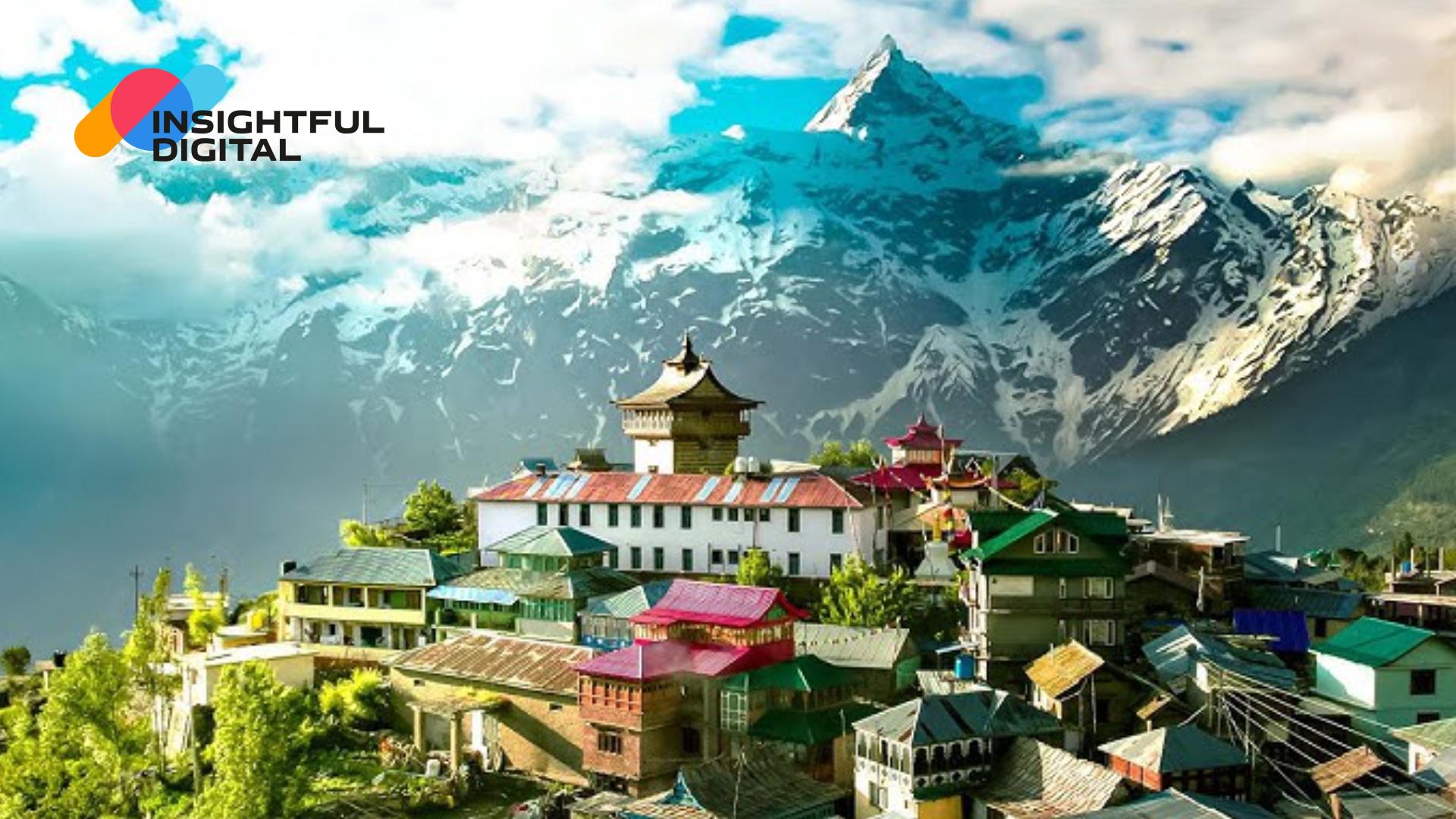
Himachal Pradesh, nestled in the lap of the Himalayas, is one of India’s most picturesque states, often referred to as “Dev Bhoomi” (Land of Gods) and “Veer Bhoomi” (Land of the Brave). Known for its breathtaking landscapes, snow-clad mountains, lush valleys, rivers, and spiritual heritage, Himachal Pradesh has long been a destination of cultural and natural richness.
The state has not only contributed to India’s cultural and religious heritage but also played a significant role in shaping tourism, hydroelectric power, and horticulture. With hill stations like Shimla, Manali, Dharamshala, and Dalhousie, it attracts millions of tourists each year. For students and competitive exam aspirants, Himachal Pradesh is important because of its rich history, unique traditions, and contribution to India’s economy, especially in agriculture, horticulture, and hydropower.
Historical Significance
- Himachal’s history dates back to the Indus Valley Civilization, with settlements in Kangra and Mandi regions.
- Mentioned in ancient texts like the Rigveda and Mahabharata.
- It was ruled by Mauryas, Guptas, and later by Rajput dynasties such as Katoch, Chandel, and Tomar rulers.
- During the medieval period, many hill states were formed under small princely rulers.
- The Mughals and later the Sikhs exerted influence in Kangra and adjoining regions.
- In the colonial era, the British developed Shimla as their Summer Capital of India.
- Himachal Pradesh played a modest role in the freedom movement, with contributions from Praja Mandal movements.
- It became a Union Territory in 1948 and attained statehood on 25 January 1971 (18th state of India).
Geography & Location
- Area: 55,673 sq. km.
- Borders: Jammu & Kashmir, Punjab, Haryana, Uttarakhand, and Tibet (China).
- Rivers: Beas, Sutlej, Ravi, Chenab, Yamuna.
- Climate: Ranges from subtropical to alpine, with heavy snowfall in high-altitude areas.
- Capital: Shimla (Summer Capital: Dharamshala also hosts Himachal’s winter legislature).
- Important Cities: Shimla, Dharamshala, Manali, Kullu, Mandi, Kangra, Solan.
- Districts (12): Bilaspur, Chamba, Hamirpur, Kangra, Kinnaur, Kullu, Lahaul-Spiti, Mandi, Shimla, Sirmaur, Solan, Una.
Culture & Traditions
- Festivals: Dussehra of Kullu (UNESCO recognized), Minjar Fair, Shivratri (Mandi), Phulaich (Kinnaur).
- Dance & Music: Nati (famous folk dance), Kinnauri and Lahauli folk songs.
- Cuisine: Siddu, Babru, Chha Gosht, Dham (traditional festival meal), Tudkiya Bhath.
- Attire: Men wear woolen caps (pahari topi) and kurta, women wear ghagra, shawls, and choli.
- Crafts: Himachali shawls (Kullu, Kinnauri), carpets, wood carvings, metal crafts.
Language & Literature
- Official Language: Hindi.
- Other Languages/Dialects: Pahari, Kangri, Kinnauri, Lahauli, Punjabi.
- Literary Heritage: Folk ballads, myths, and heroic tales are part of the oral tradition.
- Several scholars have preserved pahari folk literature and devotional poetry.
Demographics & Society
- Population: ~74.5 lakh (Census 2011; projected 2024 ~75–78 lakh).
- Literacy Rate: 83.8% (among the highest in India).
- Major Religions: Hinduism (dominant), followed by Buddhism (Lahaul-Spiti & Kinnaur), Islam, Christianity, Sikhism.
- Communities: Rajputs, Brahmins, Gaddis, Gujjars, Kinnauris, Tibetans.
- Urban vs Rural: Majority live in rural regions, though urban hubs like Shimla, Dharamshala, and Solan are growing rapidly.
Economy & Development
- Agriculture: Wheat, maize, barley, rice.
- Horticulture: Apples, peaches, plums, apricots → Himachal is called “Apple State of India.”
- Industry: Hydropower generation, pharmaceuticals (Baddi hub), tourism.
- Hydropower: A major contributor to India’s clean energy supply.
- Tourism: Major source of revenue with attractions like Manali, Shimla, Dharamshala, Spiti, and Kinnaur.
Education & Institutions
- Universities: Himachal Pradesh University (Shimla), Dr. Yashwant Singh Parmar University of Horticulture & Forestry (Solan), NIT Hamirpur, Central University of Himachal Pradesh.
- Research: Institutes focusing on forestry, horticulture, Himalayan ecology, and Tibetan studies (Dharamshala).
Tourist Attractions
- Shimla: Former British summer capital.
- Manali & Rohtang Pass: Adventure sports hub.
- Dharamshala & McLeod Ganj: Headquarters of Tibetan Government-in-Exile, Dalai Lama’s residence.
- Kinnaur & Spiti Valley: Scenic valleys with monasteries and Buddhist influence.
- Kullu: Famous for Dussehra festival.
- Chamba & Kangra: Ancient temples and forts.
- UNESCO Sites: Kalka-Shimla Railway, Great Himalayan National Park.
Why Himachal Pradesh is Important
- Religious & Cultural: Dev Bhoomi with temples and monasteries.
- Economic: Hydropower, horticulture, and tourism.
- Strategic: Border with Tibet/China makes it geopolitically important.
- Educational & Environmental: Leader in literacy and eco-tourism.
Conclusion
Himachal Pradesh is truly a jewel of India — where spiritual heritage, natural beauty, and cultural traditions coexist with modern development. Its snow-covered mountains, fertile apple orchards, historical sites, and monasteries make it unique. For students, travelers, and exam aspirants, Himachal Pradesh is a state that represents India’s unity in diversity, progress with tradition, and balance with nature.
Objective Questions for Competitive Exams
Q.1. What is the capital of Himachal Pradesh?
a) Dharamshala
b) Shimla
c) Solan
d) Manali
Answer: b) Shimla
Q.2. Himachal Pradesh attained statehood in which year?
a) 1947
b) 1956
c) 1971
d) 1980
Answer: c) 1971
Q.3. Which folk dance of Himachal Pradesh is UNESCO recognized?
a) Lavani
b) Bhangra
c) Nati
d) Ghoomar
Answer: c) Nati
Q.4. Which fruit is Himachal Pradesh famous for?
a) Mango
b) Apple
c) Orange
d) Grapes
Answer: b) Apple
Q.5. Kalka-Shimla railway is recognized by UNESCO as:
a) Heritage Train
b) World Heritage Site
c) Mountain Railway of India
d) Toy Train of India
Answer: c) Mountain Railway of India
Q.6. Who was the first Chief Minister of Himachal Pradesh?
a) Yashwant Singh Parmar
b) Virbhadra Singh
c) Prem Kumar Dhumal
d) Jai Ram Thakur
Answer: a) Yashwant Singh Parmar
Q.7. Which river flows through Kullu Valley?
a) Sutlej
b) Beas
c) Ravi
d) Yamuna
Answer: b) Beas
Q.8. Dharamshala is famous for being the headquarters of:
a) Buddhist Monasteries in Ladakh
b) Tibetan Government-in-Exile
c) Hindu Monks
d) Indian Army
Answer: b) Tibetan Government-in-Exile
Q.9. Which district is known for Buddhist monasteries and cold desert?
a) Kullu
b) Spiti
c) Kangra
d) Solan
Answer: b) Spiti
Q.10. Great Himalayan National Park is located in which district?
a) Kangra
b) Kullu
c) Mandi
d) Chamba
Answer: b) Kullu