
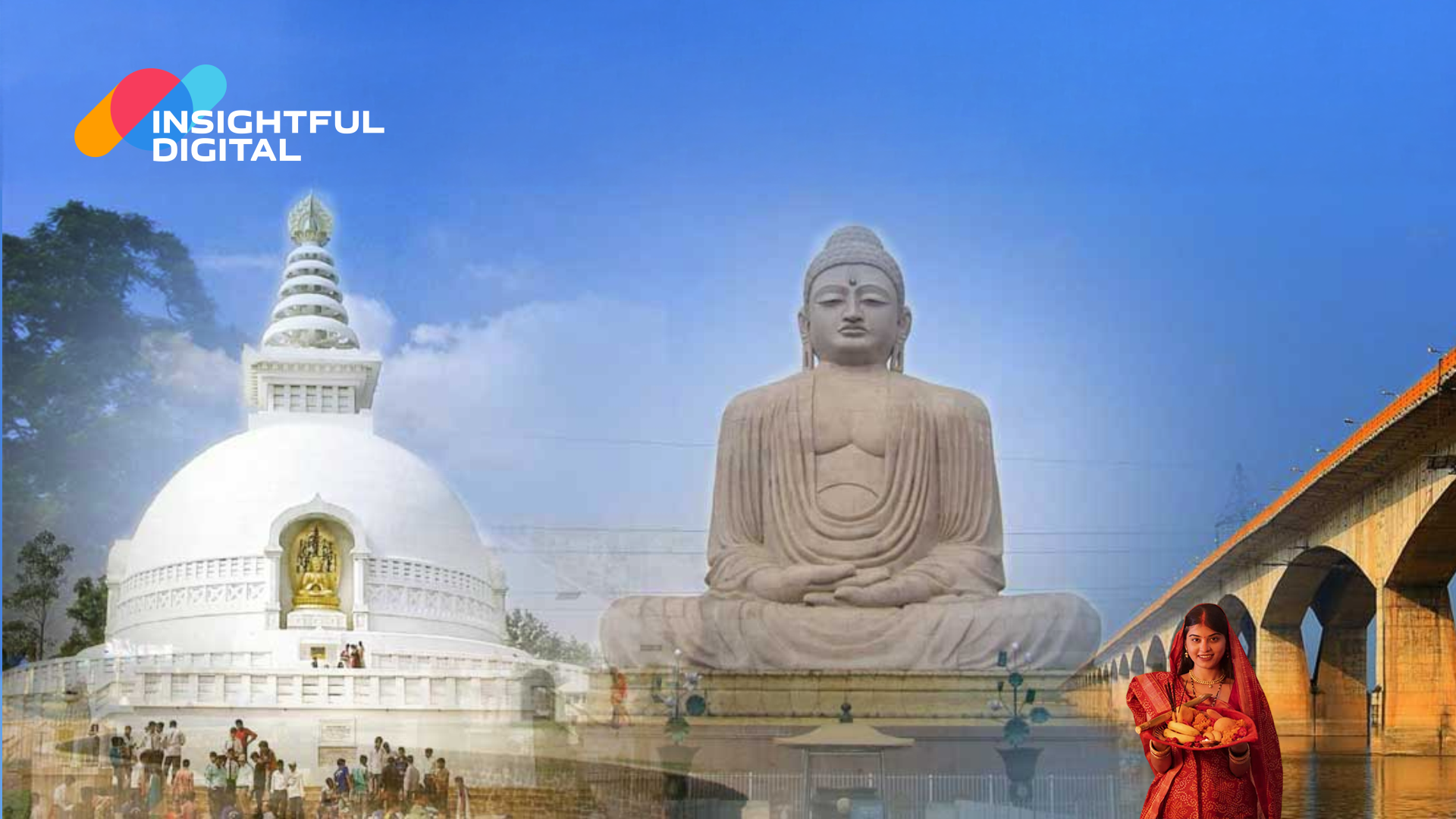
Bihar, often called the “Cradle of Indian Civilization”, holds an unparalleled place in India’s history, culture, and spirituality. Located in the eastern part of India, Bihar is the land of ancient empires, renowned scholars, and spiritual revolutions. It is here that great religions like Buddhism and Jainism were born, where Nalanda and Vikramshila universities flourished, and where dynasties like the Mauryas and Guptas ruled and spread India’s glory across Asia.
The Ganga river flows majestically through Bihar, nourishing its fertile plains and supporting agriculture for centuries. Known as the land of Chanakya, Aryabhata, Ashoka, and Gautama Buddha, Bihar represents the intellectual, political, and cultural strength of ancient India.
In modern times, Bihar has played a key role in India’s freedom struggle, with leaders like Dr. Rajendra Prasad (India’s first President) and Jayaprakash Narayan inspiring generations. Today, Bihar is undergoing socio-economic transformation, with focus on education, agriculture, infrastructure, and cultural revival.
For students and competitive exam aspirants, Bihar is one of the most significant states to study. Its historical landmarks like Nalanda, Bodh Gaya, Rajgir, and Vaishali often appear in exam questions. Moreover, Bihar’s role in shaping India’s politics, demographics, and economy makes it a must-know topic for GK, History, and Current Affairs.
Thus, Bihar is not just a state—it is a symbol of India’s civilizational depth and resilience, connecting the past with the present.
Historical Significance
Bihar’s history is deeply intertwined with the rise of ancient Indian civilization:
Ancient Period:
- Known as Magadha in ancient texts, Bihar was the seat of the Mahajanapadas (16 great kingdoms).
- Buddhism was born here when Gautama Buddha attained enlightenment at Bodh Gaya.
- Jainism also developed here, with Lord Mahavira spending much of his life in Bihar.
- Nalanda and Vikramshila Universities were international centers of learning, attracting scholars from across Asia.
Maurya Empire:
- Founded by Chandragupta Maurya with guidance from Chanakya (Kautilya).
- Emperor Ashoka the Great, after the Kalinga War, embraced Buddhism and spread it worldwide from Bihar.
Gupta Empire:
- Known as the “Golden Age of India”, the Guptas made significant contributions to art, literature, and science.
- Scholars like Aryabhata (mathematics & astronomy) belonged to Bihar.
Medieval Period:
- Bihar came under the Delhi Sultanate and Mughal rule. Its culture blended Islamic architecture with Hindu traditions.
Freedom Struggle:
- Bihar was a center of political awakening during the colonial era.
- Champaran Satyagraha (1917) led by Mahatma Gandhi against indigo planters began here.
- Leaders like Dr. Rajendra Prasad, Jayaprakash Narayan, and Sri Krishna Sinha shaped modern Indian politics.
Heritage sites such as Bodh Gaya (UNESCO), Nalanda ruins, Rajgir, Vaishali, Vikramshila, and Patna Sahib (Guru Gobind Singh’s birthplace) are living legacies of Bihar’s glorious history.
Geography & Location
- Area: ~94,163 sq km
- Borders: Uttar Pradesh (west), Jharkhand (south), West Bengal (east), Nepal (north).
- Rivers: Ganga, Kosi, Gandak, Son, Falgu.
- Climate: Humid subtropical, with hot summers, heavy monsoons, and mild winters.
- Natural Resources: Fertile alluvial soil, water resources, minerals (mica).
- Important Cities: Patna (capital), Gaya, Muzaffarpur, Bhagalpur, Darbhanga, Nalanda, Ara, Begusarai.
- Districts (38): Araria, Arwal, Aurangabad, Banka, Begusarai, Bhagalpur, Bhojpur, Buxar, Darbhanga, East Champaran, Gaya, Gopalganj, Jamui, Jehanabad, Kaimur, Katihar, Khagaria, Kishanganj, Lakhisarai, Madhepura, Madhubani, Munger, Muzaffarpur, Nalanda, Nawada, Patna, Purnia, Rohtas, Saharsa, Samastipur, Saran, Sheikhpura, Sheohar, Sitamarhi, Siwan, Supaul, Vaishali, West Champaran
Culture & Traditions
- Festivals: Chhath Puja (unique to Bihar), Diwali, Holi, Eid, Sonepur Cattle Fair.
- Dance & Music: Jat-Jatin, Jhijhiya, Bidesia folk theatre, Bhojpuri songs.
- Cuisine: Litti-Chokha, Thekua, Sattu Paratha, Dal-Pitha, Khaja (sweet).
- Attire: Dhoti-Kurta (men), Saree (women).
- Crafts: Madhubani Painting (world famous), Sikki and bamboo crafts, stone carving.
Language & Literature
- Official Languages: Hindi and Urdu.
- Regional Languages: Bhojpuri, Maithili, Magahi, Angika, Bajjika.
- Literary Contributions: Vidyapati (Maithili poet), Phanishwar Nath Renu (Hindi novelist), Ramdhari Singh Dinkar (poet), Harivansh Rai Bachchan (originally from Bihar).
- Rich folk literature, storytelling, and proverbs add to Bihar’s oral traditions.
Demographics & Society
- Population: ~12.4 crore (2011 Census: 10.4 crore, projected ~13.5 crore in 2025).
- Density: 1,102 per sq km (one of the highest in India).
- Literacy Rate: ~61.8% (male 71%, female 51%).
- Urban vs Rural: Predominantly rural (~89%).
- Religions: Hinduism (majority), Islam (large minority), Buddhism, Sikhism, Jainism.
- Communities: Bhojpuri, Maithil, Magahi, Bihari diaspora across India and abroad.
Economy & Development
- Agriculture: Rice, wheat, maize, sugarcane, pulses, oilseeds.
- Industries: Handloom, handicrafts, sugar, dairy, food processing.
- Specialty: Bihar is known for Madhubani art, silk (Bhagalpur silk), and agriculture exports.
- Tourism: Bodh Gaya, Nalanda, Rajgir, Vaishali.
- Despite challenges, Bihar has one of the fastest-growing GDP rates among Indian states in recent years.
Education & Institutions
- Ancient Centers: Nalanda & Vikramshila Universities.
- Modern Universities: Patna University, Nalanda University (revived), Chanakya National Law University, IIT Patna, NIT Patna.
- Research Centers: Agriculture universities, medical colleges.
- Several literacy drives are improving education though challenges in rural areas remain.
Tourist Attractions
- UNESCO Sites: Mahabodhi Temple Complex (Bodh Gaya), Nalanda ruins.
- Religious Sites: Bodh Gaya, Rajgir hot springs, Vaishali (Buddhist & Jain heritage), Patna Sahib Gurudwara.
- Historical Sites: Golghar, Agam Kuan, Vikramshila ruins.
- Nature: Valmiki National Park, Kakolat Waterfall.
Why This State is Important
- Political Importance: Center of ancient empires and modern democratic movements.
- Cultural Importance: Birthplace of Buddhism, Jainism, and Madhubani art.
- Economic Importance: Emerging growth hub with agriculture, silk, and tourism.
- National Contribution: Produced leaders, thinkers, and reformers who shaped India’s past and present.
Conclusion
Bihar is not just a state; it is the soul of India’s civilization. From the Mauryan and Gupta empires to Nalanda’s scholarly heights, from Gandhi’s Champaran Satyagraha to the cultural vibrancy of Chhath Puja and Madhubani art—Bihar continues to inspire India and the world.
For students, exam aspirants, and travelers, Bihar is an essential chapter in understanding India’s unity in diversity, resilience, and cultural depth. Truly, Bihar is the land where India’s past meets its future.
Objective Questions for Competitive Exams
Q.1. Which ancient kingdom was centered in present-day Bihar?
A. Magadha
B. Kuru
C. Avanti
D. Gandhara
Answer: A. Magadha
Q.2. Where did Gautama Buddha attain enlightenment?
A. Rajgir
B. Nalanda
C. Bodh Gaya
D. Vaishali
Answer: C. Bodh Gaya
Q.3. Which Mauryan ruler spread Buddhism worldwide?
A. Chandragupta Maurya
B. Ashoka
C. Bindusara
D. Brihadratha
Answer: B. Ashoka
Q.4. The Champaran Satyagraha (1917) was related to which crop?
A. Wheat
B. Rice
C. Indigo
D. Sugarcane
Answer: C. Indigo
Q.5. Nalanda University was destroyed by whom?
A. Bakhtiyar Khilji
B. Alauddin Khilji
C. Sher Shah Suri
D. Babur
Answer: A. Bakhtiyar Khilji
Q.6. Who was the first President of India from Bihar?
A. Zakir Husain
B. Rajendra Prasad
C. V.V. Giri
D. Radhakrishnan
Answer: B. Rajendra Prasad
Q.7. Which folk art of Bihar is world famous?
A. Warli
B. Madhubani
C. Pattachitra
D. Kalamkari
Answer: B. Madhubani
Q.8. Which river is most important to Bihar’s geography and economy?
A. Yamuna
B. Ganga
C. Kosi
D. Son
Answer: B. Ganga
Q.9. Patna Sahib Gurudwara is associated with which Sikh Guru?
A. Guru Nanak
B. Guru Gobind Singh
C. Guru Arjun Dev
D. Guru Tegh Bahadur
Answer: B. Guru Gobind Singh
Q.10. Which is the only national park in Bihar?
A. Manas
B. Kaziranga
C. Valmiki National Park
D. Rajaji National Park
Answer: C. Valmiki National Park
Q.11. Who was the mathematician-astronomer from Bihar who invented “zero”?
A. Aryabhata
B. Bhaskara
C. Varahamihira
D. Panini
Answer: A. Aryabhata
Q.12. The state festival unique to Bihar is?
A. Bihu
B. Chhath Puja
C. Pongal
D. Onam
Answer: B. Chhath Puja